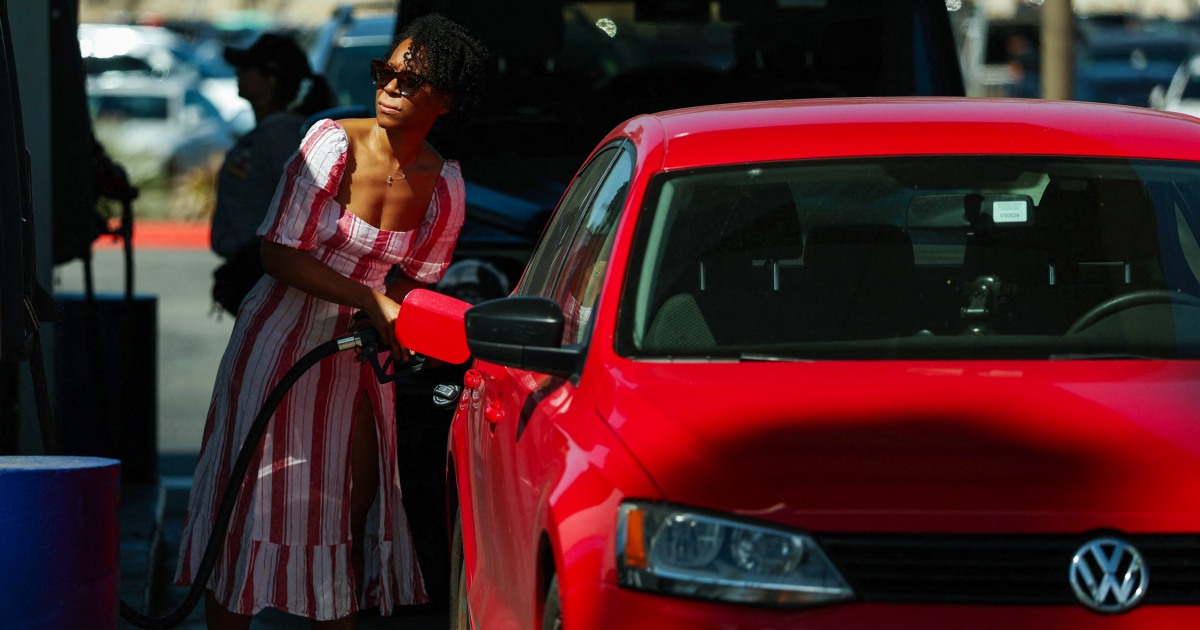
Barely a week after President Donald Trump hailed falling gas prices as one of his economic triumphs, his actions are sending the cost per gallon back up.
The war Trump launched with strikes on Iran has spread across the Middle East, where more than a quarter of the world’s oil is produced.
Gas prices spiked almost immediately, undercutting a key data point in Trump’s argument to skeptical Americans that the economy is soaring.
“Gasoline, which reached a peak of over $6 a gallon in some states under my predecessor — it was, quite honestly, a disaster — is now below $2.30 a gallon in most states, and in some places, $1.99 a gallon,” Trump said in his State of the Union address.
Though his numbers were rosier than the real figures, gas prices looked to be a strong talking point for Republicans heading into November’s midterm elections.
Energy Secretary Chris Wright pumped gas to underscore the message that the administration was making fuel cheaper for Americans.
But that was last week.
In the week since the State of the Union address, the average price of a gallon of gas in America rose 16 cents to nearly $3.11, according to AAA. It’s impossible to know how much of that is attributable to war in the Middle East, but many experts believe there is a strong correlation. Prices do tend to rise anyway from lows in February into the peak summer season.
Asked about the issue Tuesday, Secretary of State Marco Rubio said the administration expected prices might go up.
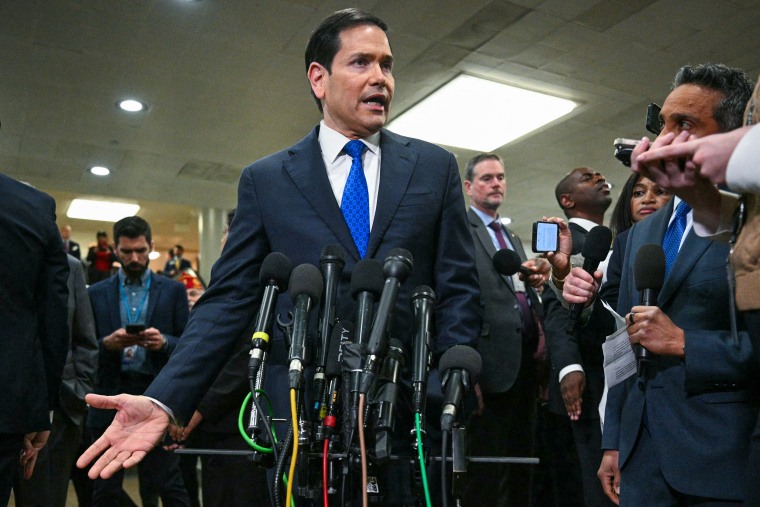
“We knew that going in would be a factor,” he said.
Trump said he believes the increase would be a short-term problem. However, administration officials have given a range of projections for how long the hostilities will last, and it would be hard for the U.S. to stop fighting if Iran continues to strike American assets and allies.
“As soon as this ends, those prices are going to drop, I believe, lower than even before,” Trump said Tuesday at the White House.
Republican strategists hope he is right. Their party is trying to hold on to majorities in the House and the Senate at a time when Trump’s approval ratings remain far underwater. In particular, voters have said in poll after poll that they are dissatisfied with the state of Trump’s economy broadly and the prices of staple goods specifically.
The duration could be meaningful for GOP candidates.
“A small, short spike — even if it happens — won’t be an issue,” said Matt Gorman, a veteran Republican political operative.
A second GOP operative who is working on midterm campaigns said the price increase will probably be temporary. But if it is not, he said, the effects could be devastating.
“If it sustains at all, it’s really bad,” said the second operative, who spoke on the condition of anonymity to avoid angering the White House. “Grocery prices are still high. Housing prices are still high. Gas is lower than it was. If that changes, and obviously high fuel prices increase the price of goods, where does that end?”
Despite the political risk of gas prices’ rising because of the war, some Republicans credit Trump for taking action against Iran.
“Trump did what was in the best interest of America despite the political headwinds higher oil prices will create,” said Dan Eberhart, a Republican donor who owns an oilfield services company called Canary.
Democratic critics of the Iran war have said surging gas prices are just one of the reasons they are concerned about the strikes. Many of them have said neither the conflict nor the byproduct of a gas-pump squeeze matches the “America First” slogan Trump has promoted as his brand for more than a decade.
Rep. Ro Khanna, D-Calif., who is widely viewed as a potential 2028 presidential candidate, excoriated Trump in an op-ed column published Tuesday.
“This country does not want to see more dead Americans. Americans don’t want higher gas prices, which will spike at the pump because of this stupid conflict,” he wrote. “They don’t want us to waste tens of billions of dollars on this war, all while millions of Americans lose their healthcare. They don’t want to throw the Middle East into more chaos and unpredictable violence while well-connected Pentagon contractors enrich themselves.”
Sen. Chris Murphy, D-Conn., told NBC News on Tuesday: “The Republican base doesn’t want this. The Democratic base doesn’t want this. Independent voters don’t want this. Nobody in America is asking for their gas prices, their grocery prices, their construction prices to go through the roof. Nobody is asking in this country for more American soldiers to die in a war of choice in the Middle East.”
During his 2024 campaign, Trump pummeled President Joe Biden over stubborn inflation, promising to end it. And while the rate of inflation has slowed during Trump’s second term, it has remained elevated on his watch — and Americans’ budgets remain squeezed.
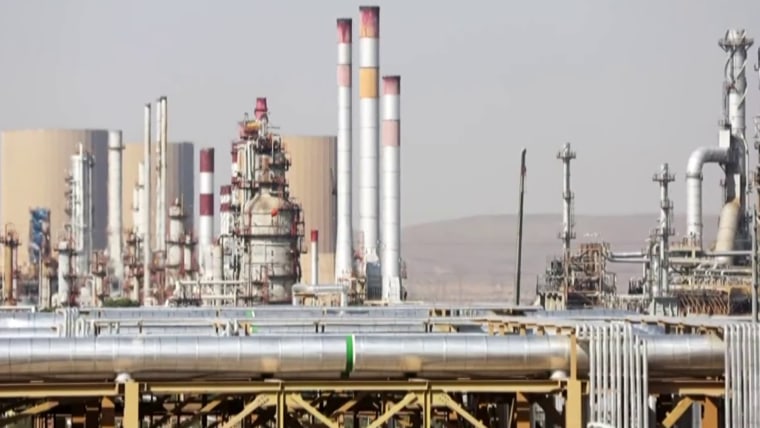
White House officials note that domestic oil production is a bulwark against international disruptions and say they are paying close attention to the impact of the war on American gas prices.
“The Trump administration’s policies have led to the highest production of U.S. oil ever with even more oil from our newfound market and agreements with Venezuela,” White House press secretary Karoline Leavitt said in a statement. “The Departments of Energy and Treasury will continue to monitor oil markets and do everything possible to keep prices stable.”
Mark Bednar, a Republican strategist and former aide to then-House Speaker Kevin McCarthy, R-Calif., said Trump understands the dynamics of markets and politics well enough to adjust to the wartime fluctuations.
“If there’s anyone who knows the political value of affordable gas, it’s President Trump,” Bednar said. “His 2024 victory is owed, in part, to his ‘Energy Dominance’ agenda, and thus far his long-term policies of encouraging American production and cutting through Biden-era regulatory burdens have been a huge success.”
The administration’s adjustments, including Trump’s announcement Tuesday that the U.S. International Development Finance Corporation will insure tankers and that the Navy may escort them through the Strait of Hormuz, “will be essential in keeping energy prices palatable for the American electorate,” Bednar said.