NEWYou can now listen to Fox News articles!
Jet fuel prices in the U.S. have more than doubled in a matter of weeks as Middle East tensions squeeze supply, fueling concerns airlines could run short of fuel.
Prices jumped from about $2.17 to $4.56 per gallon by March 20, according to the Argus U.S. Jet Fuel Index. Airlines warn inventories could run dry within weeks, raising the risk of higher airfares and flight cancellations.
Airlines are already adjusting. United Airlines CEO Scott Kirby said the carrier will cut about 5% of planned flights in the near term as fuel costs surge, warning that if prices persist, jet fuel alone could add $11 billion in annual expenses.
OIL, GAS PRICES JUMP AS TRUMP FLIRTS WITH STRIKING IRANIAN OIL INFRASTRUCTURE
United is also scaling back service during off-peak periods and suspending select international routes, including Israel and Dubai due to the conflict.
Meanwhile, Delta Air Lines CEO Ed Bastian said on Tuesday the jet fuel spike added as much as $400 million in costs in March alone. Speaking at a J.P. Morgan industrial conference, Bastian said airlines are moving quickly to pass those higher costs on through fare increases.
American Airlines expects fuel to add about $400 million to its first-quarter expenses.
The impact is also spreading beyond U.S. carriers.
TRUMP PROMISED LOWER COSTS; THE IRAN CONFLICT NOW THREATENS THAT PLEDGE
Dark clouds pass over an Airbus A320 landing at Stuttgart Airport. (Christoph Schmidt/picture alliance via Getty Images)
European airline chiefs, including executives from Lufthansa and Air France-KLM, warned Thursday that a prolonged conflict in the Middle East will push fares higher and strain already tight fuel supplies, with some cautioning that jet fuel could run out if disruptions persist.
Airlines are already acting on those pressures. Air France-KLM plans to raise long-haul ticket prices, while Cathay Pacific and several Asian carriers are increasing fuel surcharges. SAS said it will cancel about 1,000 flights in April due to rising costs, while Qantas and Thai Airways are also adjusting fares and schedules.
Jet fuel, one of airlines’ largest expenses, is especially volatile due to thin inventories, specialized storage and limited spot trading, which can amplify price swings when supply tightens.
That sensitivity is now in focus as traders watch the Strait of Hormuz, where tanker traffic has slowed to a crawl as regional tensions intensify.
THE UNLIKELY TOOL TRUMP IS EYEING TO TACKLE RISING OIL PRICES AMID THE IRAN CONFLICT
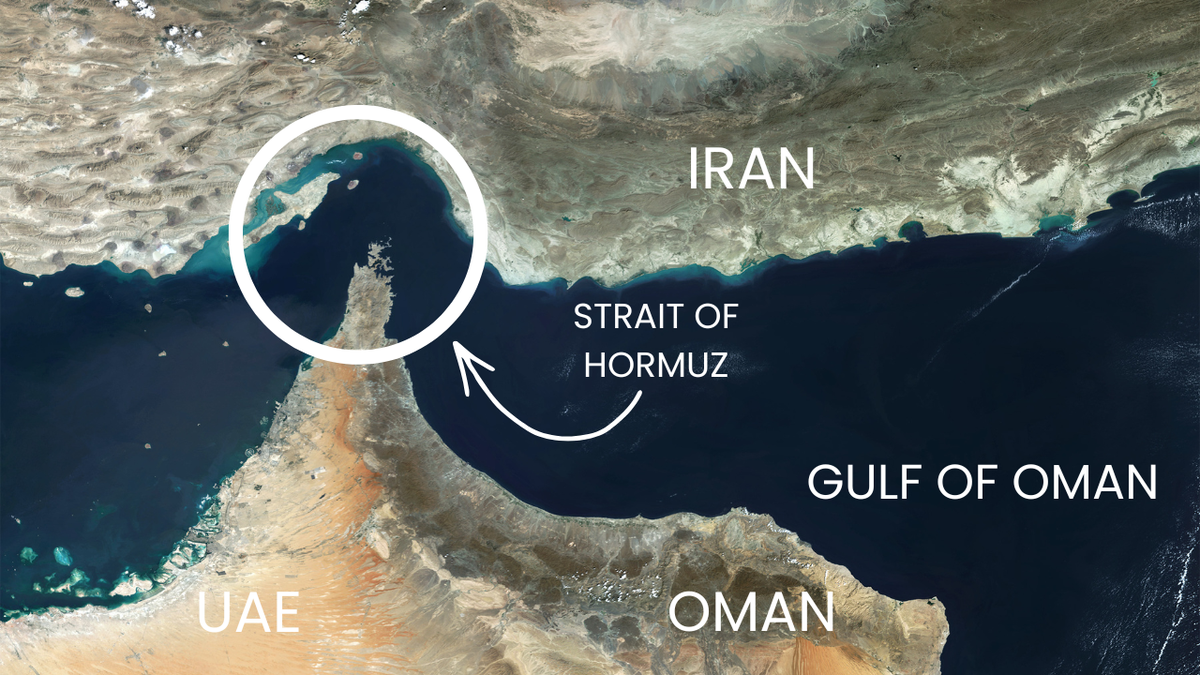
A satellite image shows the Strait of Hormuz, a key maritime passage connecting the Persian Gulf to the Gulf of Oman, vital for global energy supply. (Amanda Macias/Fox News Digital)
Just 21 miles wide at its narrowest, the waterway between Iran, the United Arab Emirates and Oman is a critical energy choke point.
The waterway carries roughly 20 million barrels of oil per day and about one-fifth of global liquefied natural gas, along with significant volumes of jet fuel.
CLICK HERE TO DOWNLOAD THE FOX NEWS APP
The Middle East exports about 1.1 million barrels per day of jet fuel—roughly 17% of global consumption—according to Jaime Brito, executive director of refining and oil products at OPIS.
With supplies already stretched, even minor disruptions could quickly tighten the market and keep fuel prices elevated.