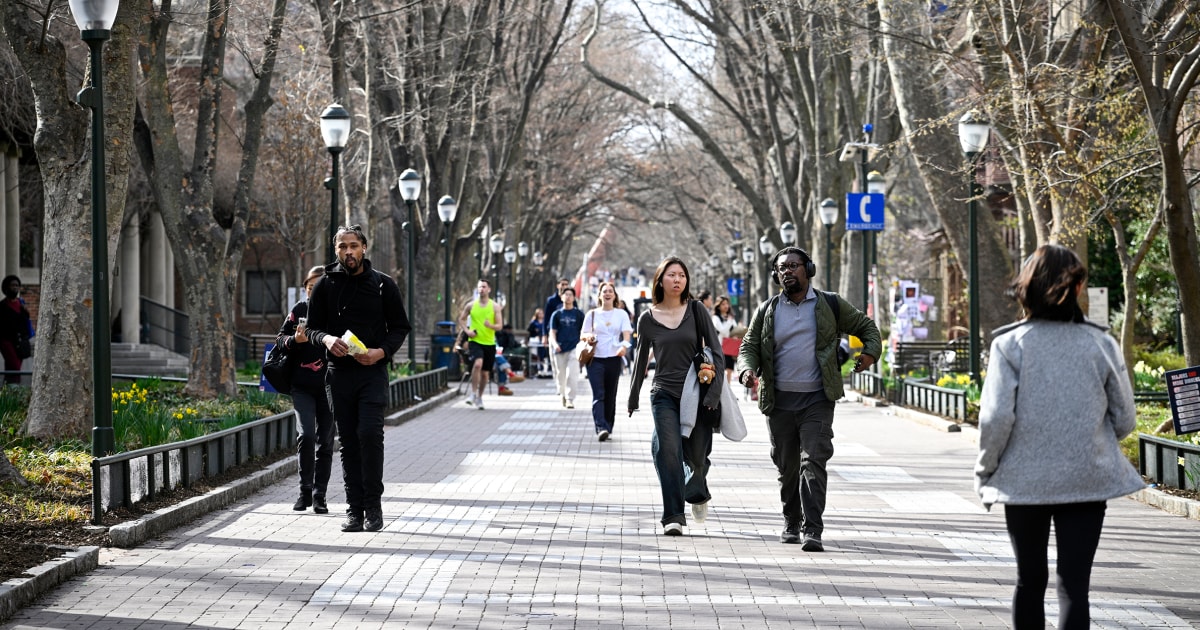
The University of Pennsylvania must comply with a subpoena from the Trump administration seeking information related to Jewish employees, a federal judge ruled Tuesday.
Subscribe to read this story ad-free
Get unlimited access to ad-free articles and exclusive content.

The subpoena comes as the Equal Employment Opportunity Commission, a federal agency, investigates a “pattern or practice” of harassment of Jews at the Ivy League school. It requested, among other things, lists of school groups and organizations “related to the Jewish religion,” including personal contact information for Penn employees in those groups.
“Though ineptly worded, the request had an understandable purpose—to obtain in a narrowly tailored way, as opposed to seeking information on all university employees, information on individuals in Penn’s Jewish community who could have experienced or witnessed antisemitism in the workplace,” U.S. District Judge Gerald Pappert wrote Tuesday. “Penn resisted the subpoena on various grounds and when the parties could not resolve their differences, the EEOC filed this subpoena enforcement action.”
The decision is largely a win for the Trump administration, though Pappert did say Penn “need neither reveal any employee’s affiliation with a specific Jewish-related organization, nor provide information regarding MEOR, Penn Hillel and the Chabad Lubavitch House,” referencing some notable organizations for Jewish life on campus.
“The Court grants accordingly the EEOC’s application for enforcement and orders Penn to respond to the subpoena, though without revealing any employee’s affiliation with a specific organization,” Pappert added.
A spokesperson for Penn, who said the school intends to appeal the ruling, questioned the constitutionality of the subpoena.
“We continue to believe that requiring Penn to create lists of Jewish faculty and staff, and to provide personal contact information, raises serious privacy and First Amendment concerns. The University does not maintain employee lists by religion,” the spokesperson said in a statement.
“We remain committed to confronting antisemitism and all forms of discrimination, and have taken multiple steps to prevent and address these despicable events. While we acknowledge the important role of the EEOC to investigate discrimination, we also have an obligation to protect the rights of our employees,” the statement said.
The White House did not immediately respond to a request for comment on the ruling.
The judge’s ruling comes as the Trump administration has taken aim at higher education institutions across the country, investigating them for alleged antisemitism following widespread campus unrest in the wake of the Oct. 7, 2023, Hamas attack on Israel.
Penn’s former president, Liz Magill, stepped down from her post in December 2023 in the wake of a hearing before Congress probing claims of antisemitism.
The EEOC first accused Penn of antisemitic harassment against faculty and staff in late 2023, requesting the identities of witnesses for its investigation. The commission filed a lawsuit in November of last year, arguing that the university was not complying with the agency’s requirements and asking a judge to enforce a subpoena on requested information.
Penn challenged the subpoena, saying in January that it would not disclose “sensitive personally identifiable” employee information.