It was 1989, and the word was out.
Subscribe to read this story ad-free
Get unlimited access to ad-free articles and exclusive content.

Only weeks before Michigan began playing in the NCAA men’s basketball tournament, the team’s coach had accepted a job at another school. Though the coach had planned to leave at the season’s end, Michigan’s athletic director and famed football coach, Bo Schembechler, immediately dismissed the coach, and replaced him with someone deemed more loyal.
“A Michigan man is going to coach Michigan,” Schembechler said.
The line only grew more memorable when the Wolverines, weeks later, won the school’s first basketball national championship. Over time, the quote became something of an unofficial job requirement in Ann Arbor.
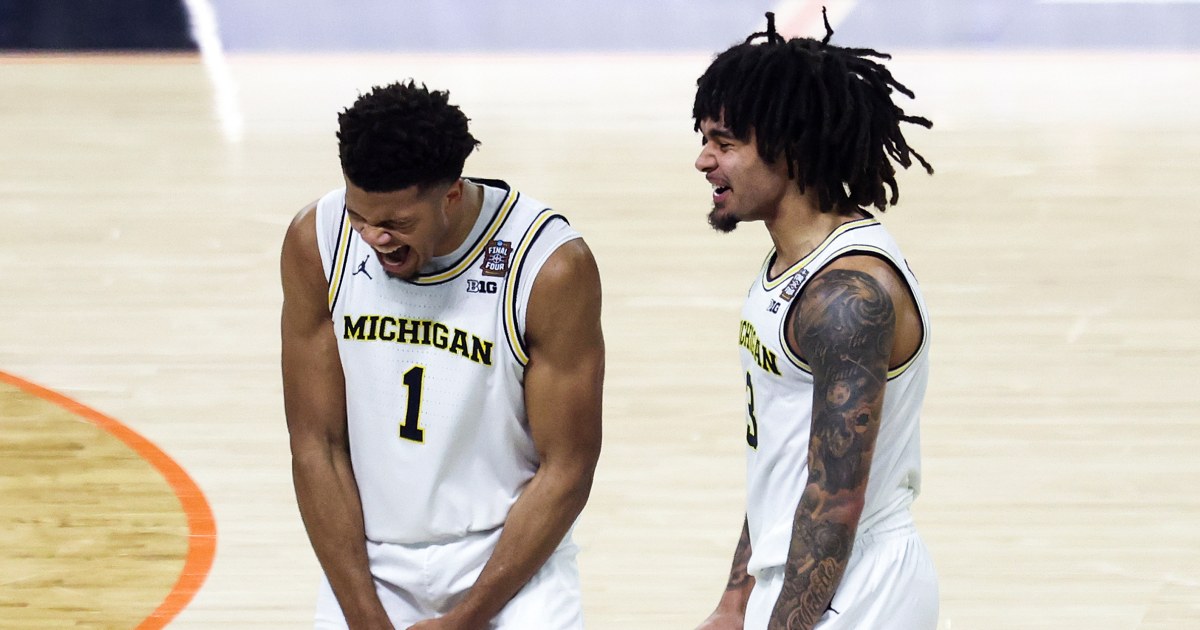
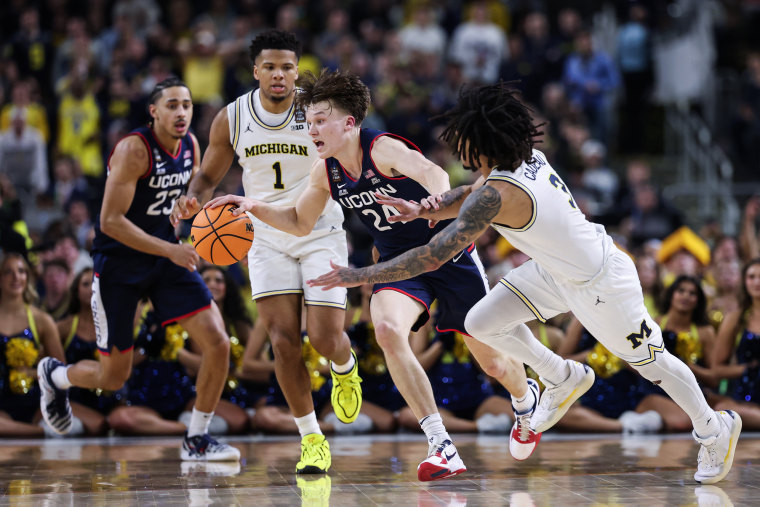
Thirty-seven years later, Michigan won its second national title on Monday night when it beat Connecticut 69-63 — and this time, being part of Michigan basketball no longer required a maize-and-blue pedigree.
Wolverines coach Dusty May was an Indiana man, one who had spent his college years as a student manager learning from iconic coach Bob Knight, a longtime Michigan rival. And May deployed a starting five this season made up entirely of transfers. It marked the first time in NCAA basketball history that a team with an all-transfer starting five won the championship.
Celebratory confetti was still falling inside Lucas Oil Stadium in Indianapolis when Yaxel Lendeborg, a transfer from UAB who had become this season’s leading scorer, took pleasure while hinting at criticism of his team.
“They might still be calling us mercenaries, but we’re the hardest playing team in national basketball. We’re the best team in college basketball,” Lendeborg told TBS when asked in a postgame interview how this team would be remembered.
Such a roster construction might have been unthinkable once. But in a more permissive NCAA era — where athletes are often incentivized to transfer by big-dollar name, image and likeness payments, and rules that no longer require transfers to sit out one season — it’s a modern prototype for wealthy schools.
“Look, I know this is going to set off a Twitter firestorm, but I think we all are better in certain situations than others,” May told reporters Sunday when asked about building the Wolverines’ roster in his second season. “There’s an environment that’s right for me. There’s an environment that’s right for you. Sometimes you don’t choose the right environment from the beginning or sometimes as people we change and we need something different, for a number of reasons.
“… And when the Oklahoma City Thunder won the (NBA) championship last year — and I’m friends with coach (Mark) Daigneault and a lot of people in that organization — I wasn’t judging them because Shai (Gilgeous-)Alexander was drafted by the Clippers or because they signed Isaiah Hartenstein as a free agent. I thought, ‘wow, those guys played beautiful basketball, that’s a great team, that’s a real model for young players to watch, a group that obviously cared about each other, that played the game the right way, that represented their organization, their city, their families, their last name.’”
May says he builds a roster looking for players who fit a “connected culture.” By recruiting incoming freshmen, as well, May tries to pair long-term development with short-term infusions of talent at position of need.
“Whatever the rules are, we’re going to go at it, but our job is to put a competitive roster-team on the floor that represents Michigan the way we think they deserve to be represented,” he said.
Monday night saw the reward for a successful one-year makeover like Michigan’s. The award for the Most Outstanding Player of the Final Four went to point guard Elliott Cadeau, who was playing for North Carolina last season.
But doing it this way came with risks, too. The transfer portal works both ways — and bringing in a crop of new players can have the effect of pushing out existing players.
When May took the Michigan job in 2024, one year after he’d led Florida Atlantic to a shocking Final Four, he inherited a Michigan big man named Tarris Reed Jr. But when Michigan brought in commitments from two new centers, Reed transferred to UConn. He had 13 points and 14 rebounds in Monday’s title game, and nearly worked to upset his former team.
It was why May said he credited players already on Michigan’s roster including Roddy Gayle Jr., Will Tschetter and Nimari Burnett — the team’s fifth starter, who had played at two other schools before transferring to Michigan three years ago — for actually helping recruit players like Cadeau, Lendeborg, big man Morez Johnson Jr. from Illinois and center Aday Mara from UCLA.
Those four combined for 52 of Michigan’s 69 points.
“It’s not always common for guys that could potentially lose minutes, shots, accolades, personal ambition things for the betterment of the group,” May said. “And that’s why we’re here, because our guys have put the team, the unit above themselves.”
Not every school pursues such a transfer-centric roster. For some, the reasons are financial. Michigan posted an operating budget for its men’s basketball program of $14.3 million in 2024-25, May’s first season, the 25th-highest total among public universities, according to records gathered in one analysis. (Connecticut spent $21.5 million the same season.) That total didn’t include NIL payments, which figure to be sizable, as well, considering Lendeborg told the AP in March that he had turned down an offer from Kentucky last offseason between “$7 to $9 million.”
Michigan could afford to spend big because, as a member of the Big Ten Conference, it annually earns a share of the conference’s broadcast rights fees that are the largest of any conference in the country. Michigan’s projected budget for this year is $266 million, making it one of the largest in the NCAA, and that revenue has gone to sharing some $26 million in revenue with its athletes, the school reported.
Though Connecticut invests heavily in its men’s basketball program, as well, Huskies coach Dan Hurley holds a different philosophy for building a roster.
“We want to have a lot of continuity,” Hurley told reporters Sunday. “Our culture is unique. It’s specific. Takes a certain type of player to play for me. It takes a certain type of player to play at UConn. I think when those relationships are forged through a recruiting period as a high school player, they really buy in and believe in your program.”
Hurley added that the foundation of his ideal roster would be “home-grown boys, high school players you recruit out of high school or multiyear transfers,” he said, with one-year transfers used to “supplement.”
The Big Ten’s financial might has enabled spending power across the conference, and has seen it become the first conference since the SEC, in 2007, to sweep national titles in football and men’s and women’s basketball in the same academic year. Impactful, star transfers boosted Indiana football and UCLA women’s basketball to titles, too.
Such changes concerning the rules and realities of roster-building in college sports has happened rapidly. In the process, they have led to the inversion of a second, famous Schembechler quote.
“Those who stay will be champions,” he said in 1969. Yet these days, champions are just as likely to arrive from somewhere else, too.