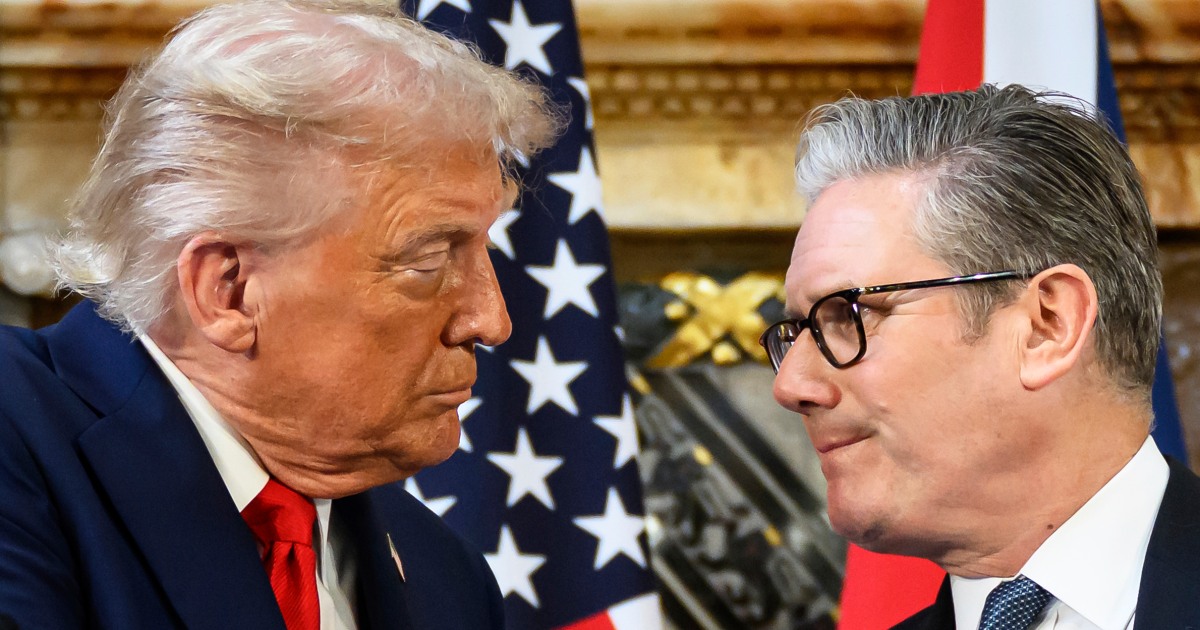
In Britain, Starmer must also factor in his own voters’ dislike of the American-Israeli assault on Iran, (59% against and 25% for, according to YouGov), and their long-standing antipathy toward Trump himself, whose net favorability in the United Kingdom is currently at minus 65.
The British prime minister is only marginally less disliked by Britons, with his net favorability of minus 48 one of the worst since YouGov started tracking this metric in the 1970s.
As a serious former human rights lawyer and public prosecutor, Starmer could not be further from Trump’s style and substance. He nonetheless made an unashamed effort to woo Trump during a visit to Washington in February last year, even producing the flourish of a signed state-visit invite from King Charles III.
Some Britons criticized what they saw as the spectacle of Starmer overtly pandering to Trump’s ego.
“Starmer’s approach to Trump has followed a familiar script in British politics: flattery, acquiescence, and a kind of diplomatic sane-washing,” said James Schneider, Labour’s former director of communications under Starmer’s leftist predecessor Jeremy Corbyn.
But for Starmer’s team the priority has always been building that relationship, the former adviser said, at a time when other leaders’ outspokenness may have frozen them out.
Britain often touts the importance of its “special relationship” with Washington and, in return, U.S. leaders have said there was no greater bond than the one with London.
No one country trades more with Britain than the U.S., and London has become deeply reliant on American intelligence, as well as technical know-how for its nuclear weapons program.
It’s not all one way, though.
The U.S. often needs military bases in Britain and throughout Europe to launch sorties over the Middle East. And this is what has earned Trump’s ire.
Starmer was slow to grant permission for American bombers to launch defensive strikes against Iran from U.K. bases, citing concerns that any strikes must have a “lawful basis” — an echo of the still-lingering regret among many in Britain over its backing of the U.S.-led invasion of Iraq in 2003.
Starmer eventually allowed them to help defend the Strait of Hormuz amid a looming global oil and supply chain crisis.
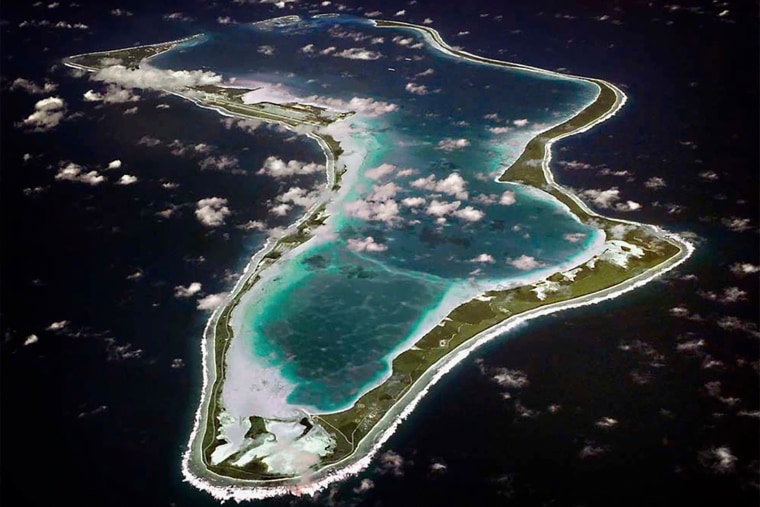
That stance was tested over the weekend when Iran fired missiles at the joint British-U.S. Diego Garcia military base in the Indian Ocean. Even before striking Iran, Trump had criticized Britain over its agreement to hand back the Chagos Archipelago, on which the base is situated, to Mauritius.
Trump has derided Starmer as being “no Winston Churchill” while saying he was “not happy” with the man he last year called a friend. For Britons, the ultimate indignity came this weekend, with Trump sharing the “Saturday Night Live UK” skit.
A spokesperson for No. 10 Downing St. declined to comment on the president’s repost. The White House did not immediately respond to a request for comment on the British criticisms of Trump’s conduct.
The prime minister has framed himself as someone standing up for British opposition to the war despite the jibes from his transatlantic ally.
“I’m utterly focused on what is in the best interests of our country and I am unapologetic about that,” he told a parliamentary committee Monday when asked about Trump’s “quite rude” behavior. “Notwithstanding the pressure that comes from elsewhere, I will remain laser focused on what is in the British national interest.”