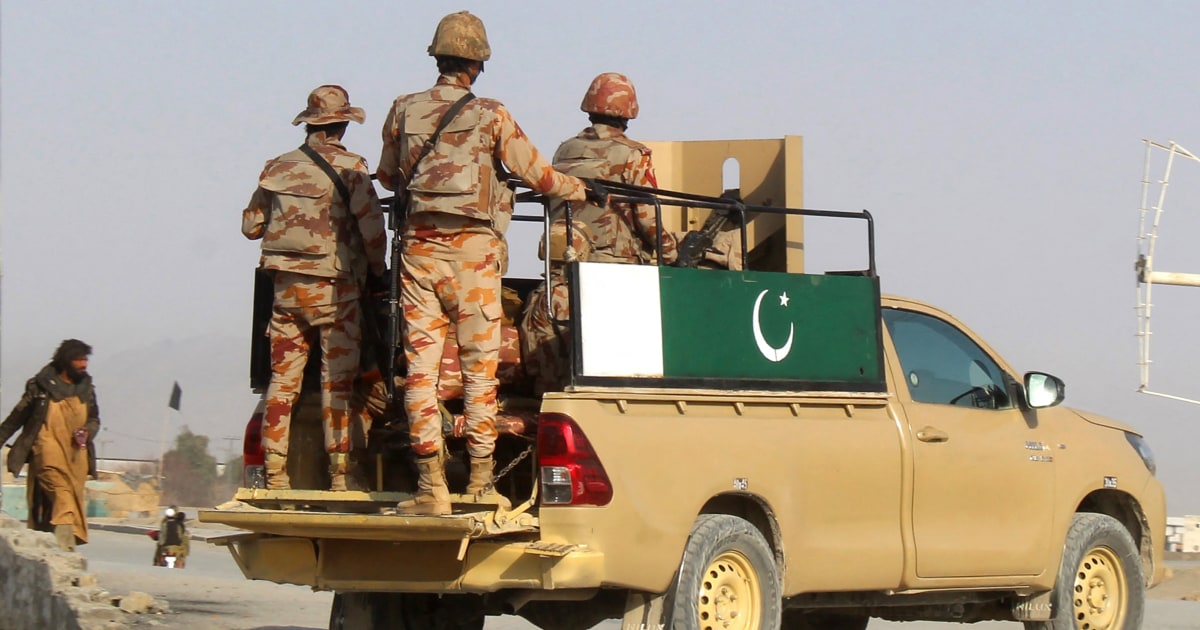
Pakistan denies targeting the civilian facility, a former NATO and U.S. military base, saying it “precisely targeted military installations and terrorist support infrastructure.”
Amnesty International says the site’s use as a drug rehabilitation center has been well documented since 2016 and that “any reasonable assessment and information gathering would have concluded that the camp had a high civilian presence.” Vantor satellite imagery of the site from three days before the strike shows groups of people gathered in the treatment center’s courtyard.
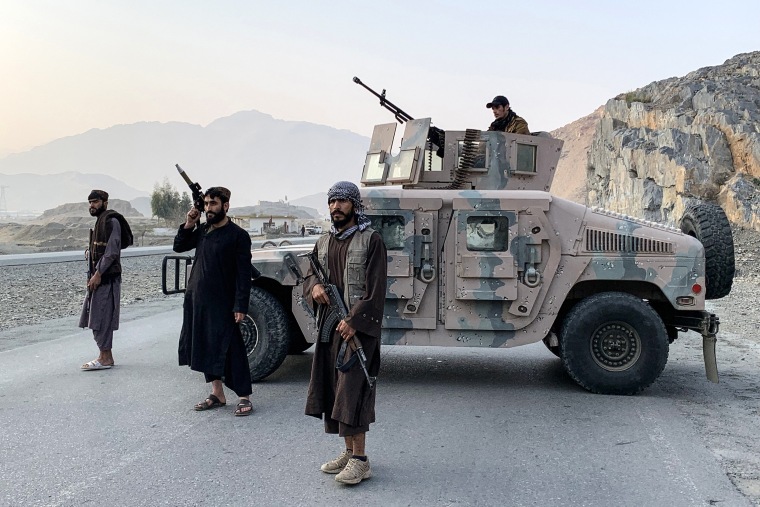
Pakistan blames Afghanistan for a surge in militant attacks since the U.S. withdrew in 2021, though the Taliban deny that militants are using Afghanistan as a base.
Years of diplomatic efforts to address the issue have failed, said Ali Sarwar Naqvi, a former Pakistani diplomat and executive director of the Center for International Strategic Studies, an Islamabad-based think tank.
“There’s this wrong impression that we are waging a war against Afghanistan,” he said, when “the Afghans are the ones who have been allowing terrorist acts to be carried out against Pakistan.”
On Wednesday, Pakistan and Afghanistan resumed talks in China, which is serving as mediator, two government officials in Islamabad and two government officials in Kabul confirmed to NBC News. The discussions will include how to extend a ceasefire, open border crossings and restore trade and economic activities, according to the officials, who asked not to be identified because they were not authorized to speak with the media.
In the meantime, their conflict threatens to further destabilize a region where terrorist outfits such as the Islamic State group and Al Qaeda are trying to remobilize.
When it comes to Iran peace talks, “the challenge is ensuring that Pakistan’s ambitions don’t collapse under the weight of the contradictions of its internal instabilities and regional instabilities,” said Chietigj Bajpaee, a senior research fellow for South Asia at Chatham House, a London-based think tank.
00:16
Protesters storm and batter U.S. consulate in Pakistan
00:0000:00
But if Pakistan is able to hold the talks successfully, “this would be a feather in their cap,” he said.
“Its status with the U.S., its status in the Islamic world, and status in South Asia, would go up,” Bajpaee said.
Pakistan is in a “unique position” to mediate in the Iran war because it has good relations with all five permanent members of the U.N. Security Council — the U.S., Britain, China, France and Russia — and is also a current member of the council itself, Naqvi said.
“Therefore we should play our rightful role of trying to bring the combatants together,” he said.
Pakistan’s relations with the U.S. have improved considerably under Trump, who met twice last year with Pakistan’s powerful army chief, Field Marshal Asim Munir, and has called him his “favorite field marshal.” Pakistan also curried favor by joining Trump’s Board of Peace and nominating him for the Nobel Peace Prize.
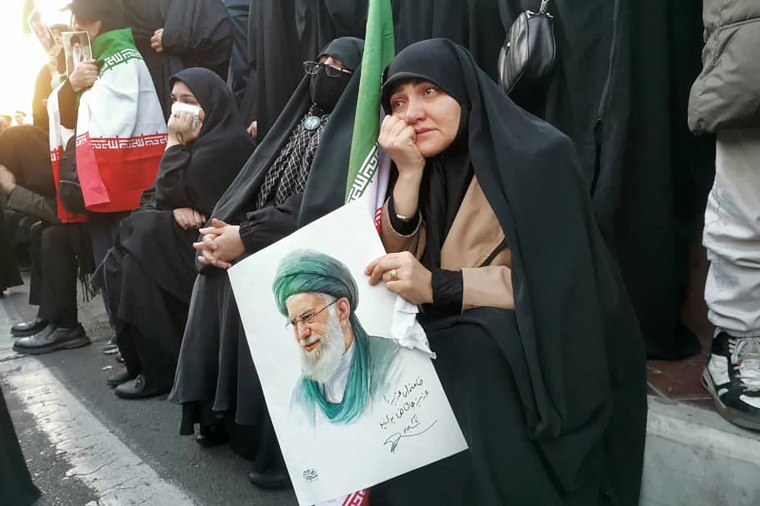
But the Iran war is highly unpopular in Pakistan, which has the world’s second-largest population of Shia Muslims after Iran. When a U.S.-Israeli strike killed Ayatollah Ali Khamenei, Iran’s supreme leader and a central figure in Shia Islam, demonstrators marched toward U.S. diplomatic missions in deadly protests.
There are other potential stumbling blocks in Pakistan’s peace efforts, Bajpaee said.
For one thing, Pakistan has no formal ties with Israel, which doesn’t appear to be involved in any U.S.-Iran talks and has vowed continued strikes.
And while Pakistan and Iran have strong cultural and religious ties, their relationship has also been under strain, said Rajiv Dogra, a former Indian diplomat who was based in Pakistan, with the two countries exchanging strikes in 2024 over Baloch separatists operating on both sides of the border.
Dogra also cited Pakistan’s failure to protect its minority Shia Muslims from targeted attacks by Sunni militants.
“All this is noted in Tehran and noted with displeasure,” he added.
During a call Saturday with Pakistani Prime Minister Shehbaz Sharif, Iranian President Masoud Pezeshkian praised Pakistan’s peace efforts but stressed “the need to build trust,” according to a Pakistani readout of the call.
Nonetheless, Iran has referred to Pakistan as a friendly nation in recent days, and according to Pakistan is allowing 20 more Pakistani-flagged ships to transit the Strait of Hormuz after 10 passed through last week.
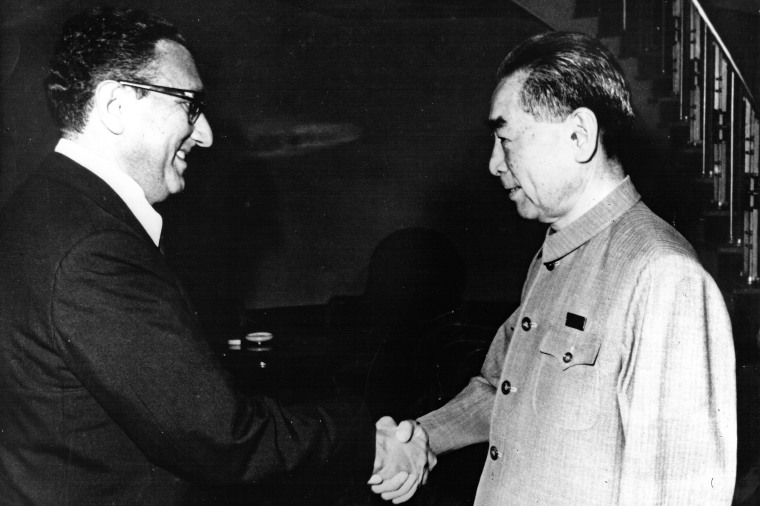
Pakistan has long played a central role in U.S. dealings across the region.
In 1971, Henry Kissinger famously traveled to China secretly via Pakistan ahead of President Richard Nixon’s historic visit to Beijing. Pakistan also helped facilitate the Soviet withdrawal from Afghanistan in the 1980s and the U.S. deal with the Taliban ending their war in Afghanistan during Trump’s first term.
“We have done a number of times this kind of work to establish peace and stability in the region,” Naqvi said. “That is our objective.”
Mushtaq Yusufzai reported from Peshawar, Pakistan, Mithil Aggarwal from New Delhi and Marin Scott from New York.