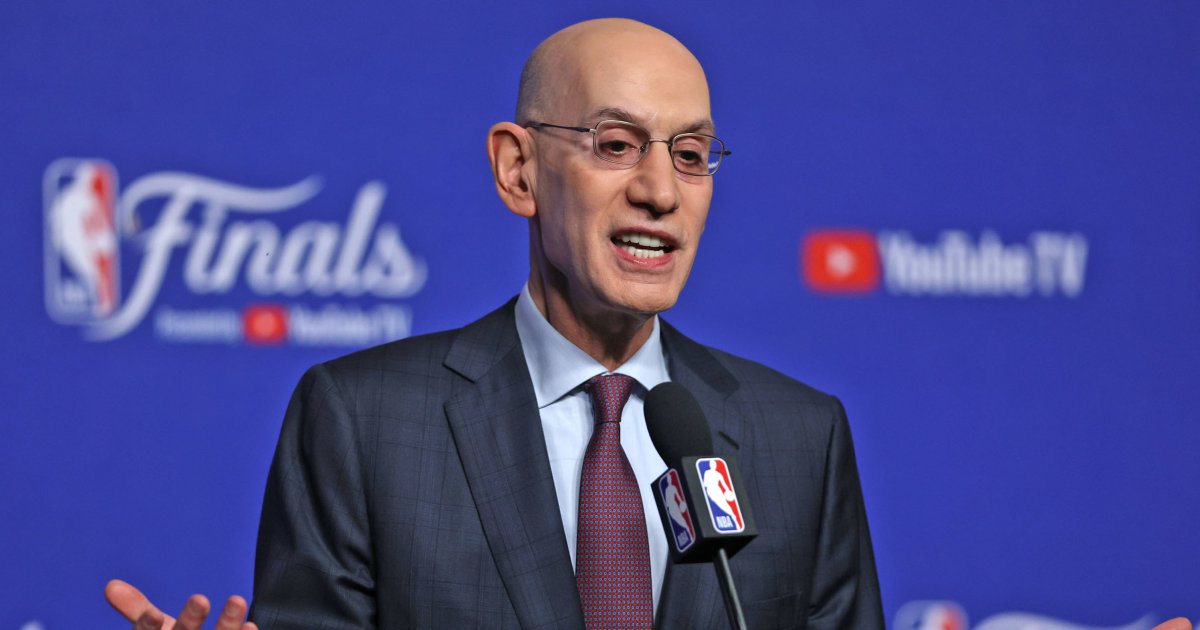
Decades after the NBA first took an interest in Europe, it took a significant step this week toward establishing a new basketball league on the continent. It heard from potential investors, who valued some clubs in the proposed league there at $1 billion.
Subscribe to read this story ad-free
Get unlimited access to ad-free articles and exclusive content.

In the fall of 2027, the NBA expects to open a league of 14 to 16 teams in 12 European cities. Yet while the NBA has been public in recent years about its desire for a league across the Atlantic, it didn’t have a formal measure of interest on the European side. That was until this week, when potential investors had until Tuesday to submit nonbinding bids.
The NBA received multiple bids worth more than $500 million, including some at and over $1 billion, according to a person with knowledge of the matter who was not authorized to speak publicly. The person said that more than 120 investors were involved in the bid process.
“The level of engagement and the scale of the bids reflect the marketplace’s belief in our proposed model and the enormous, untapped potential for European basketball,” said Mark Tatum, the NBA’s deputy commissioner and chief operating officer, in a statement. “We will now review the bids in more detail and shortlist the partners who share our vision and commitment to accelerating the growth of the game across the continent.”
More Sports from NBC News
With multiple bids in hand, the NBA now plans to select those it considers the best, using input from its Board of Governors. Because of that process, teams in the European league are expected to be announced in stages, instead of all at once.
The NBA has long wanted a permanent foothold in Europe, going back to the 1980s and the tenure of former Commissioner David Stern. The league believes basketball’s popularity in Europe — its data suggests there are 270 million basketball fans there — is a largely untapped business opportunity, with large markets such as London and Rome devoid of top-flight basketball teams.
Stern pushed for NBA players to take part in the 1992 Olympics in Barcelona. The league took teams abroad for exhibitions against European clubs. Eventually Stern’s successor, Adam Silver, began hosting regular-season NBA games on the continent, too, with stops in Berlin and London as recently as January.
Yet the proposed league, which is also backed by FIBA, international basketball’s governing body, is not intended to act as an easternmost conference of the current 30-team NBA, which is mulling its own domestic expansion in Las Vegas and Seattle.
Instead, the NBA’s European league would be its own, distinct entity, anchored by 10 to 12 permanent members, with the remaining league slots earned by teams that qualify through other competitions, similar to European soccer leagues. At a March meeting of the NBA’s Board of Governors, Silver said 12 cities were being targeted for the launch but did not go into detail. Currently, the league is focused on placing teams in London, Manchester, Paris, Lyon, Madrid, Barcelona, Rome, Milan, Berlin, Munich, Athens and Istanbul.
That doesn’t mean the NBA and its European cousin would be entirely separated. The NBA has already looked at creating competitions that could pit NBA teams against their European counterparts, said one person with knowledge of plans. Tatum, the NBA’s deputy commissioner, last fall described a “preseason cup” as one hypothetical possibility in the short term.
“Five, 10 years down the road, you could see a situation where the winners of the top two finishers in the European league get entered into the NBA Cup tournament,” Tatum told Sports Business Journal.
The NBA’s in-season cup tournament, which began in 2023, drew inspiration from European soccer, whose popularity in the U.S. has partly factored into the league’s belief that now is the right time to launch a league on the continent. Despite the time difference, U.S. fans have gotten used to watching England’s Premier League on weekends, plus European competitions during the week.
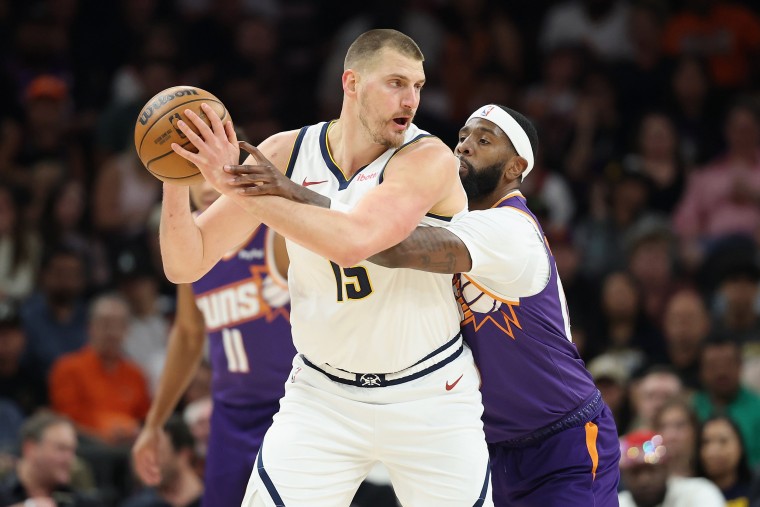
The geographic divide also hasn’t limited interest in the NBA from abroad. European-raised NBA superstars such as Giannis Antetokounmpo, Luka Doncic and Nikola Jokic led to record viewership numbers for the NBA in Europe last season.
The European cities the NBA has targeted come with complications. Though Manchester and London have arenas that would meet the league’s state-of-the-art standard, others would likely need renovations.
Not all cities currently have top-flight basketball clubs, either, which is why any new European league would require some clubs founded from scratch.
The NBA has also sought to determine whether established, high-profile soccer clubs in some of their desired markets would be open to adding a basketball team. And while some cities do have established and high-profile clubs, they currently play in EuroLeague, a closed league of 20 teams including such powers as Real Madrid and Barcelona.
The bids that arrived by Tuesday’s deadline followed discussions in recent weeks between the NBA and more than a dozen existing European basketball teams about potential inclusion. Among those interested were teams that currently play in the EuroLeague, one of the people said. Under the NBA and FIBA’s proposal, the only way a team can guarantee a permanent place in their European league would be to go through its investment process.
The NBA and EuroLeague are expected to resume talks soon that would explore a potential collaboration, rather than a collision.
“I think for the betterment of European basketball, the best outcome would be if we came together with the EuroLeague here and that we came up with a systematic approach to growing the game throughout Europe,” Silver told reporters last month.
EuroLeague had taken a defiant tone as the NBA’s interest in Europe became public; in January, it reportedly warned the NBA of legal action if it spoke to EuroLeague-affiliated clubs. But in March, EuroLeague hired Chus Bueno, a new chief executive with a more conciliatory stance. He previously worked as an executive in the NBA league office for 12 years.
“If they raise the money, the most logical thing would be a joint competition,” Bueno told Spain’s Mundo Deportivo in March. “Having two top-level competitions would split the market and lower the average level. It wouldn’t help anyone. The best thing is to do it together, even if it means compromises from both sides.”