Illinois head coach Brad Underwood knew something needed to change. Before this season, he had taken nine different teams to the NCAA Tournament, yet none had advanced past the Elite Eight. His teams were always championship contenders but not good enough to get over the hump.
Subscribe to read this story ad-free
Get unlimited access to ad-free articles and exclusive content.

Then he made a call to Miško Ražnatović.
Ražnatović, a 59-year-old Serbian, is one of the most powerful agents in basketball. He represents many of the best amateur and professional European players, including Denver Nuggets superstar Nikola Jokić, a three-time NBA MVP. Ražnatović told Underwood he had some players from the Balkans he might be interested in.
Underwood didn’t want just one. He wanted them all.
“It’s pretty unusual to have five, six guys from eastern Europe,” Ražnatović told NBC News. “[Underwood] said, ‘In the NBA, eastern European players, and in general European players, the last couple of years are dominating, like Jokić or [Luka] Dončić, so why shouldn’t we do something similar in college?’”
“Of course I liked this idea. … I prioritized Illinois in choosing the direction for the guys. At the end of the day, we ended up with all five there,” Ražnatović said.
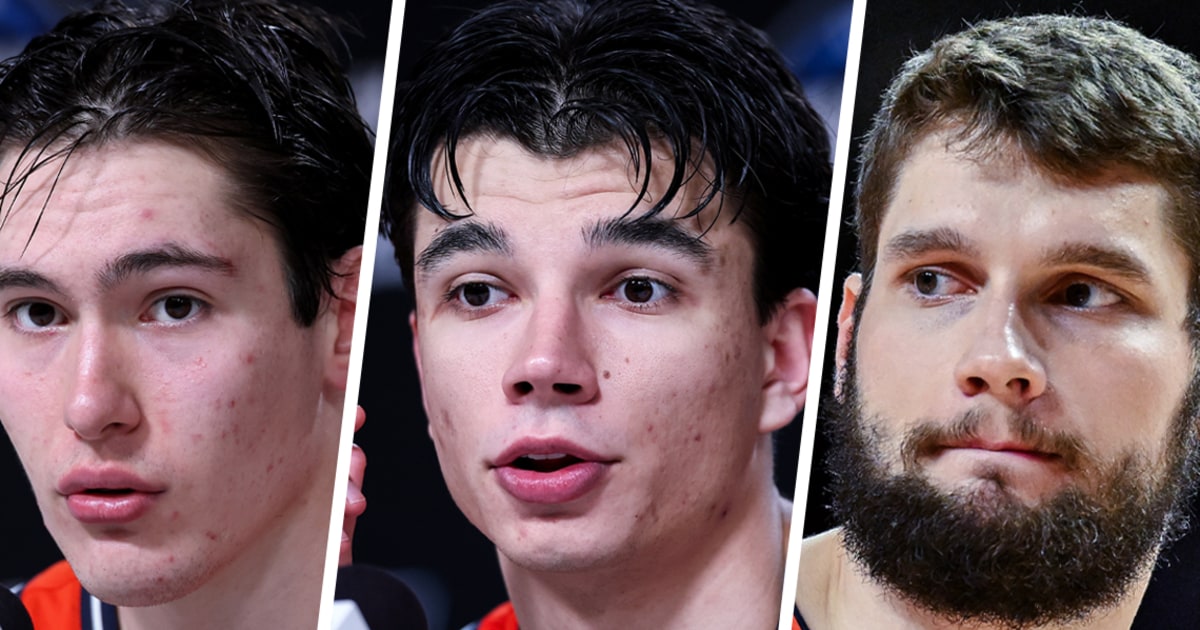
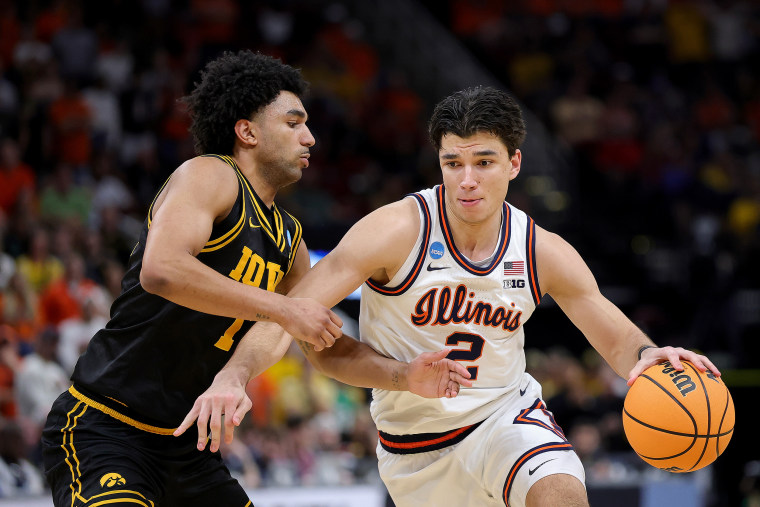
He’s referring to David Mirković, Mihailo Petrović, Zvonimir Ivišić, Tomislav Ivišić and Toni Bilić, his five clients who all chose to attend Illinois. Alongside Andrej Stojaković, the Greek Serbian American son of legendary NBA sharpshooter Peja Stojaković, Underwood’s roster has an international makeup unlike any other in college basketball history.
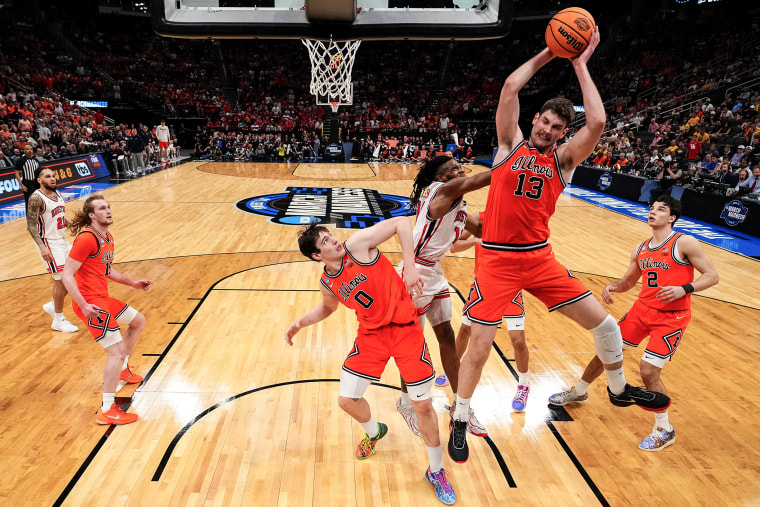
And on Saturday, they’ll face UConn for a spot in the national championship.
“It’s a great marriage and a great fit,” Underwood said at a recent news conference. “So we’ll continue it. I would think others will continue to migrate over there and keep trying to recruit those guys.”
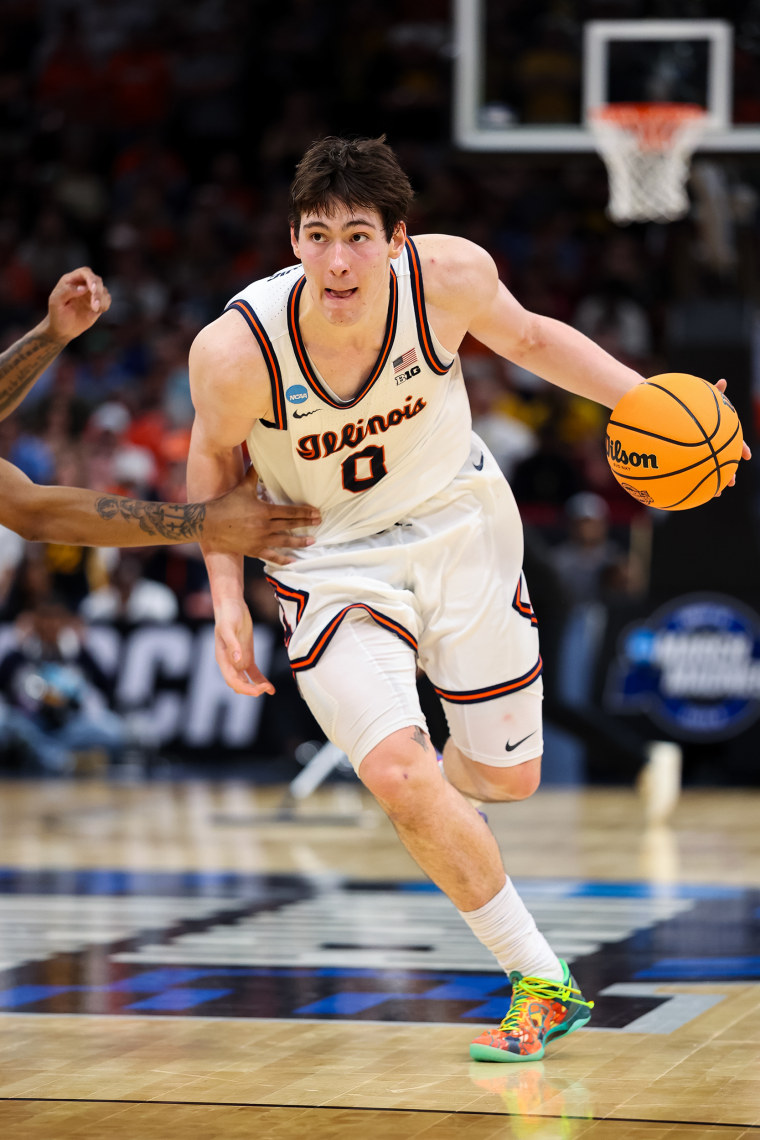
Though they aren’t the only factors in Illinois’ success this season — star freshman Keaton Wagler (from Shawnee, Kansas) and senior Kylan Boswell (Champaign, Illinois) have had major impacts — it’s safe to say the arrival of the “Balkan Five” has made a major difference. That group accounts for 53.9% of the team’s scoring and 57.4% of its rebounding this season.
It never would have happened five years ago.
For decades, the top teenage European players often bypassed American colleges to play professional basketball before they entered the NBA draft. When one pathway offered money and the other offered scholarships, it was a fairly easy choice at the time.
But thanks to the introduction in 2021 of NIL, which allows student-athletes to be compensated for their names, images and likenesses, everything changed.
“The NIL has opened the floodgates up for international players to come over here because they literally can make more money,” ESPN basketball analyst Fran Fraschilla told NBC News. “They can make more money in one or two years than some of them will make in their professional careers over a 10-year period in Europe.”
He added that at FIBA Europe under-18 and under-20 tournaments, “you’ll find upwards of 100 Division I schools” watching the players.
College boosters have no problem footing the bill to bring elite international talent to their campuses, especially with the recent success of programs like Illinois. Fraschilla pointed out that many players from eastern Europe are also more prepared than the typical American student because they have a higher level of experience at the same age.
“These guys are all young players who have come up through club systems where they play with pros,” he said. “So they’re much more mature than your typical 18- or 19-year-old because they’ve been around professional basketball players in their former country since they were 16.”
Petrović, Mirković and both Ivišić brothers competed with veteran players in the highly touted Adriatic League before they came to Illinois. Mirković, for example, played for SC Derby in Montenegro last year as an 18-year-old. The leading scorer on the team was Erick Neal, who was 29 at the time.
“They play against grown men, players who are 30 or 32 years old, who have NBA experience,” Ražnatović said. “After fighting with all those guys, you get experience. And after, when you play with people of your age, you have an advantage.”
And once they are in college, with NIL money in their pockets, they don’t want to leave.
Ražnatović, an agent for more than 30 years, said he has noticed a major shift with his clients.
He said the NBA draft used to be a major deal for his company. In 2016, for instance, he represented six players who were selected, including Ivica Zubac, the current center of the Indianapolis Pacers. But for the second year in a row, he doesn’t even expect to attend the event.
The Final Four is more important.
“Nobody really wants to go to the draft,” Ražnatović said. “Everybody is postponing, postponing, postponing and wants to stay in college. So even my business style has changed.”
He said college coaches have always reached out about individual prospects. The difference now is they want a package of players, like Illinois received.
“It will be my strategy to try to put two or three guys together on the team because I believe that it will help their adjustment,” he said. “There is already one college that is getting three of our guys [next season], so it could be the trend in the future.”
Mirković echoed his agent’s sentiments.
“When you move to the other side of the world, having someone that speaks your native language and that’s already had the college experience means a lot,” he told The Associated Press. “It’s much, much easier. You feel like home.”