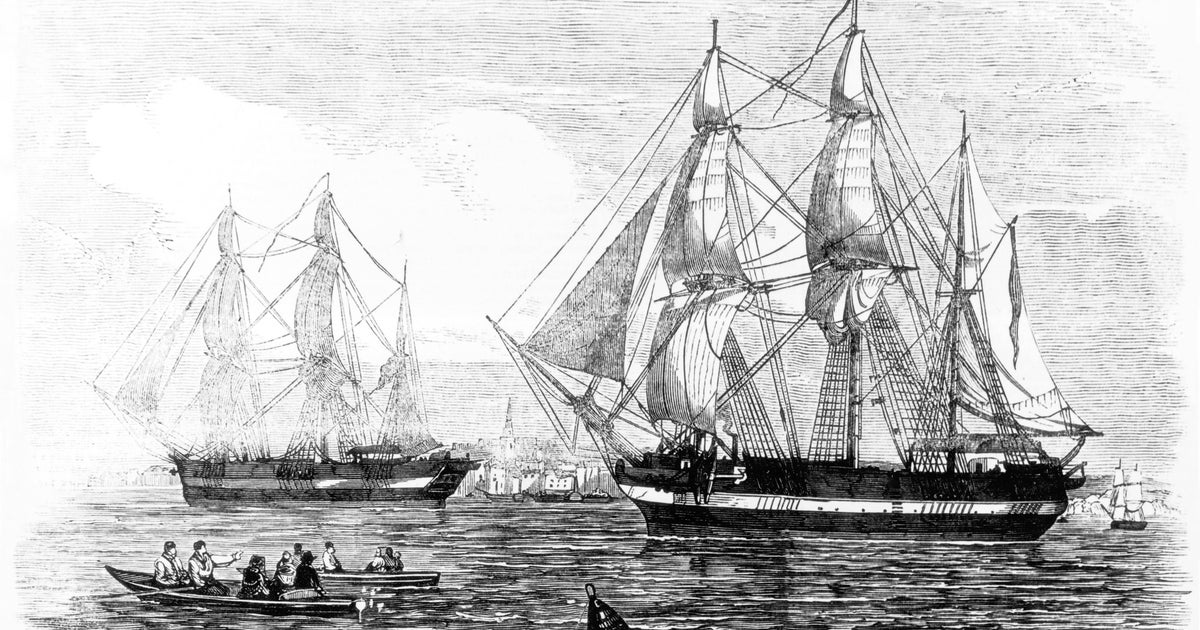
Researchers say they have identified four sailors who were among 129 who died during a fatal polar expedition in 1845, resolving a decades-long debate about the identity of one of the men on the mission.
The HMS Erebus and HMS Terror launched from England in 1845. The mission, led by Captain Sir John Franklin and called the Franklin Expedition, was meant to chart a passage around the top of North America.
The ships spent nearly two years trapped in Arctic ice. Despite desperate attempts to escape in April 1848, every man who participated in the expedition died, marking the worst disaster in the history of British polar exploration, according to London’s Royal Museums Greenwich. Details of their final days remain murky. Both ships are now sunk off the coast of Canada.
Researchers have found remains of the sailors, as well as artifacts from the shipwrecks. To make the latest discovery, anthropologists at the Faculty of Arts at the University of Waterloo and Lakehead University extracted DNA from archaeological samples associated with the expedition. Those samples were compared to DNA donated by those known to be living descendents of the men aboard the expedition, the University of Waterloo said in a news release.
The process allowed them to identify four of the sailors. Three — able seaman William Orren, Boy 1st Class David Young and subordinate officers’ steward John Bridgens — had been aboard the HMS Erebus. Forensic facial reconstruction shows what Young may have looked like at the time of his death. More details about their identification and what the location of their remains might indicate about how they died were published in the Journal of Archaeological Science.
Diana Trepkov / University of Waterloo
The fourth sailor was from the HMS Terror. His remains were found about 80 miles from those who had sailed on the Erebus, the university said. The remains were identified as those of Harry Peglar, the captain of the foretop on the ship.
Peglar has long been shrouded in mystery: In 1859, researchers found human remains that included Peglar’s personal documents, but the clothes the sailor had been wearing were those of a steward, which was not Peglar’s rank. The papers include a certification, poetry, and apparent descriptions of some expedition events, the university said. The inconsistencies sparked decades of debate about who the body belonged to.
The latest research confirmed those remains were Peglar’s, the university said. In addition to finding a close genetic relative of Peglar’s, the researchers were able to test the remains of multiple known stewards and eliminate them as possible identities.
“It was interesting to conclusively identify this sailor because the body was found with almost the only written documents from the expedition ever found,” said Dr. Robert Park, professor of anthropology at the University of Waterloo and one of the leaders of the research project. Peglar’s remains are the only set from the HMS Terror to be identified.
But questions about the remains still linger, the researchers noted in a paper published in the academic journal Polar Record. It’s not clear why Peglar was dressed in a steward’s uniform, especially since the sailors had a large pile of spare clothing. He may have been demoted, but it’s a mystery as to why, the researchers said. It’s also unclear why his remains were found alone, and so far from where other bodies were located.
Pictures from History/Universal Images Group via Getty Images 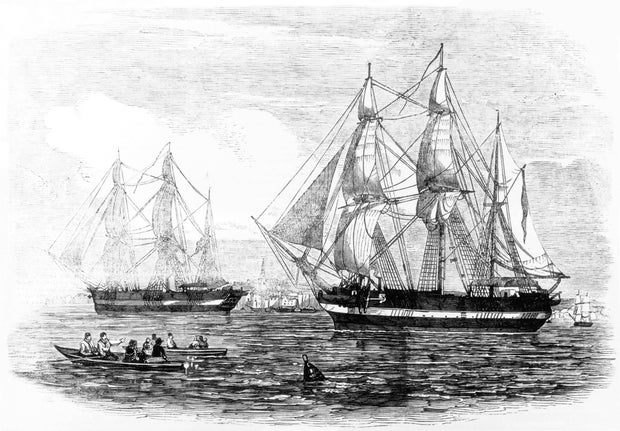
Six of the 129 sailors who died in the expedition have now been identified. In 2021, researchers identified a set of remains as belonging to Erebus engineer John Gregory, and in 2024, they found another set were those of Erebus captain James Fitzjames. Fitzjames’ remains showed evidence of cannibalism, the university said. Similar evidence was not found on the newly-identified remains.
The researchers said that the discoveries have helped them learn more about the final days of the expedition. The University of Waterloo encouraged other known descendents of the expedition crew to share their DNA with researchers so more discoveries can be made.
“For the living descendants, these findings provide previously unavailable details regarding the circumstances and locations of their relatives’ deaths, as well as the identities of some of the shipmates who died with them,” said Dr. Douglas Stenton, an adjunct assistant professor of anthropology at the University of Waterloo and one of the leaders of the research project.