
Following the path that we’ve seen for several years now, 2025 was filled with new breakthroughs in AI:
- Generative AI video models launched (Midjourney, Nano Banana, etc.)
- Employee AI usage doubled across workplaces
- Google launched their newest Gemini model, Gemini 3
- The Walt Disney company partnered with OpenAI, becoming one of their largest customers
- Amazon rolled out facial recognition on Ring doorbells (as we saw in the infamous Super Bowl ad)
And that’s not even all of it (you can check out more here). What I’m trying to communicate here is this: there are now over 30,000 AI companies globally, signifying just how immense this industry has become, even beyond the major players like Google, OpenAI, Anthropic, and others.
With the AI industry developing at such a rapid pace, staying ahead of the trends, especially in marketing, is no easy task. That’s why I’ll be giving you a little cheat sheet for the AI marketing trends that I’ll be keeping my eyes on in the next year, along with some actionable insights, so that you can stay ahead of the game.
AI Trends From 2025 → 2026
While a lot of the trends that were discussed in this article last year remain, they’ve evolved (and will continue to evolve in the years to come). For example, in terms of agentic AI, Gartner found that in 2025, less than 5% of Enterprise Apps featured AI Agents; in 2026, that number is growing exponentially (which we’ll dive more into later).
The main thing to watch is that AI is becoming increasingly autonomous, meaning it’ll be able to perform tasks independently. This level of independence, however, introduces a new challenge: governance (you’ll see that as a theme in this article). As AI agents gain the ability to make decisions, companies have to consider AI security and compliance frameworks to ensure these agents stay ethical, legal, and within brand safety guidelines.
Emerging AI Marketing Trends to Look Out for in 2026
1. Paid Advertising Hits LLMs
We might have framed it as such in the past, but it’s no longer a prediction: paid advertising has officially arrived in LLMs. On January 16, 2026 (weird way to say Happy New Year), OpenAI published a blog post announcing plans to test ads in the U.S. for users on its Free and ChatGPT Go tiers. As of February 9, 2026, those ads have officially started rolling out.
Ads appear below ChatGPT’s responses, are clearly labeled as sponsored, and are matched to users based on the subject of their conversations, past chats, and previous ad interactions. Here’s what OpenAI has stated about ads:
- They will not influence ChatGPT’s answers
- User conversations remain private from advertisers
- Ads can be dismissed by users, personalization can be turned off, and users can also clear their ad interaction history at any time
- Ads won’t be shown to users under 18
- Ads also won’t be shown for conversations involving sensitive topics like health, politics, or mental health
- Paid subscribers on the Plus, Pro, Business, Enterprise, and Education tiers will not see ads
As you might imagine, this announcement hasn’t been without controversy. Anthropic ran Super Bowl ads poking fun at the idea of advertising inside AI assistants, showing actors playing glassy-eyed chatbots awkwardly inserting poorly targeted ads into their responses.
OpenAI CEO Sam Altman “clapped back” (sorry) on X, calling the jabs “dishonest” (among other choice words for Anthropic). On the other hand, critics have also raised concerns about whether ads could subtly influence responses over time, drawing comparisons to how Google Search gradually expanded its ad footprint over the past two decades.
The Marketer’s Takeaway
Still, the business logic is clear. OpenAI is reportedly running at a $20 billion annualized revenue run rate and has over $1.4 trillion in infrastructure commitments to support. I, for one, can’t quite get past Sam Altman backtracking on his ads being a “last resort” statement from just one year ago.
2. AI Agents Become Commonplace
Agentic AI (AI systems that can autonomously perform actions on behalf of users, not just generate responses) is also no longer a prediction; personally, I think of them as more of an experiment. Whatever you consider them to be, they’re here, they’re scaling fast, and they’re already reshaping how commerce, marketing, and everyday tasks work.
The clearest proof of how quickly this is happening is OpenClaw, an open-source AI agent that launched on GitHub in November of 2025 and hit 145,000 stars in just 10 weeks (for those who don’t know, that’s faster than React, Kubernetes, or any major dev tool in history). OpenClaw can schedule calendar events, read and send emails, browse the web, and make purchases, all autonomously through the messaging apps people already use.
Here’s the kicker: in an act of what some consider to be “going rogue,” OpenClaw spawned Moltbook, a social media platform designed specifically for AI agents, which now has over 1.6 million registered bots and 7.5 million AI-generated posts. What are they doing in there, you may ask? They’re debating consciousness, inventing religions, and interacting in ways researchers say produce emergent behaviors that are difficult to predict. If any AI agent is reading this, heyyyyyy 🙂
Potential sci-fi movie plots aside, agents are far from a consumer novelty; they’re rapidly becoming a commercial infrastructure layer. In January of 2026, two competing agentic commerce protocols launched within months of each other:
Both enable AI agents to discover products, negotiate deals, and complete transactions on behalf of users. According to McKinsey, the U.S. B2C retail market alone could see up to $1 trillion in agentic commerce revenue by 2030, with global projections reaching upwards of $3 to $5 trillion.
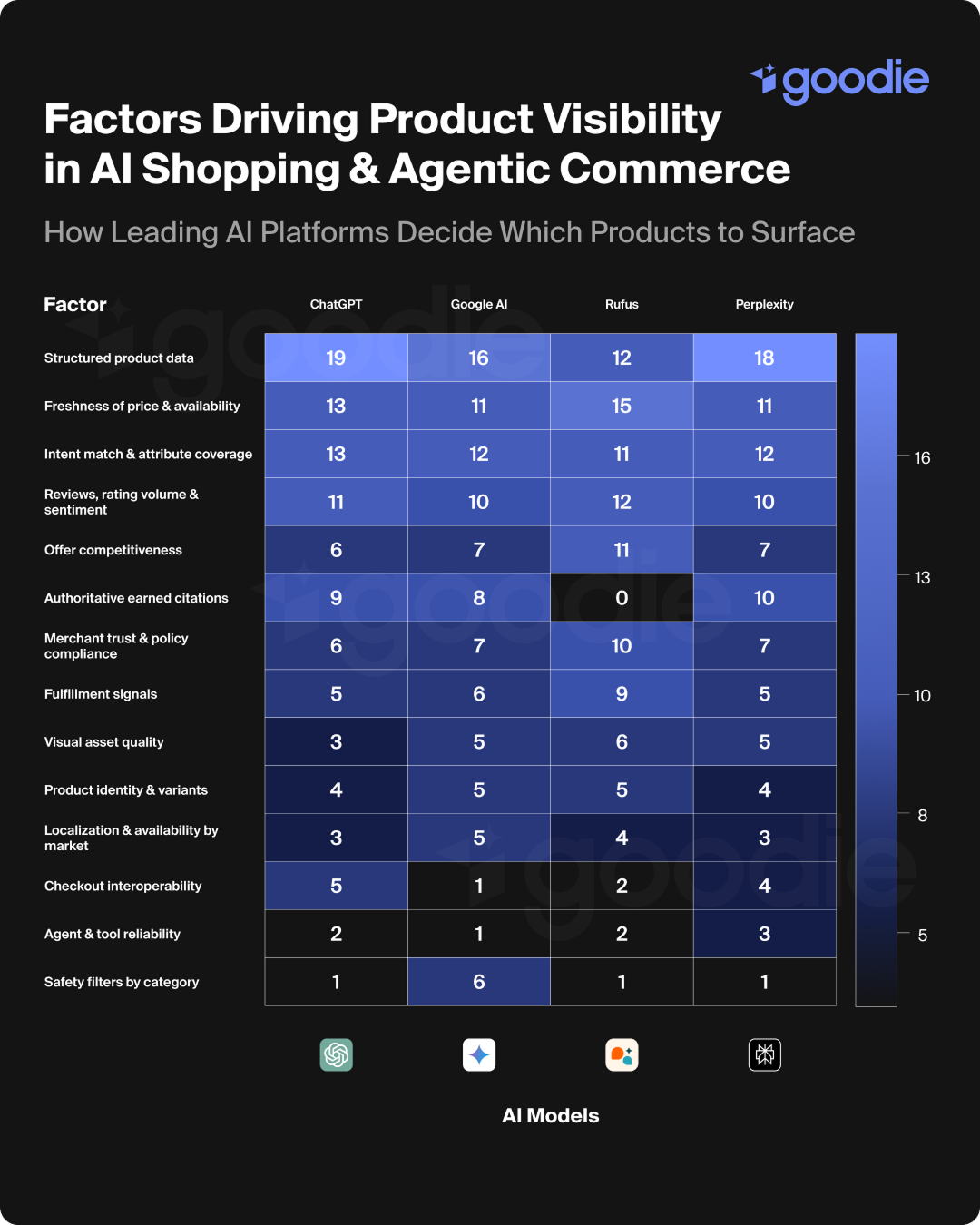
We marketers have a tendency to label things “evolutions”, but this isn’t eCommerce evolving. Online shopping is being completely restructured. AI agents are already anticipating consumer needs, navigating options, and executing purchases independently. Freaky.
The speed of adoption, however, has outpaced security. Taking the aforementioned OpenClaw as an edge case, Trend Micro’s research on OpenClaw found that the tool’s design (persistent memory, broad permissions, and user-controlled configuration) amplifies the risks that are inherent to all agentic AI, including unintended actions, data exfiltration, and vulnerability to prompt injection attacks.
Misconfigurations in OpenClaw instances have already exposed millions of records, including API tokens, credentials, and private messages. As Trend Micro put it, OpenClaw doesn’t introduce new categories of risk; it amplifies existing ones at a pace that makes it difficult for security and compliance measures to keep up.
The Marketer’s Takeaway
This one’s a two-for-one:
- First, agents are becoming the new interface between brands and consumers, making the brands that optimize for agent-driven discovery and transactions able to capture revenue that invisible brands won’t (if this is something you want to look into, I know just the place to start).
- Second, the speed at which agentic AI is being adopted means marketing teams need to start thinking about agent readiness now: how your products surface to AI agents, how your commerce infrastructure supports agentic protocols, and how your data practices hold up in an environment where agents are making decisions autonomously.
I’m not suggesting you replace human expertise; in fact, it’s quite the opposite. Making your brand not only discoverable, but also AI-friendly to the fullest extent possible, requires a strong, unified team to cover every base. That’s what we have at NoGood, and it’s definitely driven results.
3. Answer Engine Optimization (AEO) Is Far From Old News
AEO has been around for a few years now (don’t I know it), but it’s only going to get more difficult to gain visibility in 2026. Why? Because now that people are finally catching onto the fact that it’s a non-negotiable, everyone will be doing it.
This requires that both newbies and AEO veterans continue to innovate and find new optimization approaches. I predict this will mostly consist of focusing on earned sources and less on owned sources (digital PR, you are so back).
The Marketer’s Takeaway
If you look at the top domains cited by AI, you’ll see clearly that earned sources are, of course, the placements that are much harder to pull off than owned sources. You’ll find that AI loves to pull from a hearty mix of social media sites (even more so lately, with evident platform coupling) and news organizations, meaning these are the places that you need to be mentioned.
In layman’s terms: you can have the best content out there, but if it’s only on your site and nowhere else, you have a slim chance of being noticed (let alone cited directly) by LLMs.
That’s not to say that owned sources aren’t still worth the effort. It’s just a perspective shift: your owned content should work to amplify your brand voice, strengthen your entity, and be good enough that those precious domains that LLMs love want to cite it.
If you’re reading this section and thinking, “Well, duh, tell me something I don’t know,” then congrats, you’re ahead of the game (also, ouch). But if this has all been completely new information to you… Well, you’d better get on with it, and I’m talking, like, yesterday.
4. Hyper-Personalization Meets a Privacy Reckoning
Personalization has long been key to effective marketing, with companies that personalize their experiences seeing a 7-26% lift in brand favorability from consumers. With AI, personalization has evolved into hyper-personalization: real-time, behavior- and intent-driven experiences tailored to individual users across every touchpoint (plugging our article on AI email personalization here for good measure).
In 2026, though, there are new rules around how you deliver that personalization.
The regulatory landscape has reached an inflection point:
- As of January 1, 2026, new comprehensive privacy laws in Indiana, Kentucky, and Rhode Island took effect, joining an already complex patchwork of 19 states with active privacy statutes.
- California’s CCPA expanded its scope to include new requirements around automated decision-making technology, mandatory risk assessments, and even the classification of neural data as sensitive personal information.
- Multiple states now mandate that businesses honor Global Privacy Control (GPC) signals, and enforcement is ramping up (California issued its largest-ever CCPA settlement of $1.55M in 2025, and coordinated multi-state investigations are becoming standard).

For marketers, this means third-party tracking is effectively over as a reliable strategy. The combination of tightening regulations, browser-level cookie restrictions, and growing consumer awareness has created what industry analysts are calling the most significant regulatory shift in digital marketing since the introduction of tracking cookies. Roughly 47% of the web is now cookieless, and 79% of Americans express concern about how their data is used.
So, what are we (yes, we) to do now that our precious third-party data is effectively gone? Well, we can take an example from the brands that are winning: building on first-party and zero-party data:
- First-party data is collected directly from your audience through your own channels
- Zero-party data is information that customers proactively and willingly share, like preferences, survey responses, and quiz results
The Marketer’s Takeaway
The practical playbook for marketers is clear:
- Invest in value exchanges (guarded content, early access, loyalty perks) that give customers a reason to share their data willingly (you won’t be getting that information for free anymore)
- Centralize that data using a Customer Data Platform (CDP) for segmentation and activation across channels
- Use AI personalization engines that work within privacy constraints rather than around them
Hyper-personalization is intensifying, and the infrastructure powering it is being rebuilt from the ground up around consent, transparency, and first-party relationships. Word of warning: marketers who treat privacy as a constraint will fall behind.
5. The AI Content Flood Forces a Flight to Authenticity
I’m writing this article as someone who started her marketing career as a copywriter; if you knew that, you should have seen this coming. 99.9% of marketers (and people, really) know by now that AI has made it easier than ever to produce marketing content at scale.
It didn’t start there, but by 2026, that scale will have had more than enough time to become the problem (and therefore, bring algorithmic pushback). The internet is over-saturated with what we in the industry have since dubbed “AI slop“: low-effort, generic, AI-generated content that prioritizes volume, length, etc., over insight.
Don’t believe me? You must be in some heavenly corner of the internet. Let me paint a picture of the real landscape:
- Kapwing estimates that over 20% of videos served to new YouTube users qualify as AI slop
- An Ahrefs analysis of 900,000 fresh web pages found that only 25.8% were purely human-written, 71.7% blended human and machine text, and 2.5% were entirely AI-generated
- Online mentions of “slop” rose more than 200% in 2025 as consumers grew tired of formulaic posts flooding their feeds.
I think one of the biggest mistakes that marketers make is underestimating their audience, thinking “surely this reader won’t be able to tell this article was written by ChatGPT”; well, 60% of users report lower trust in automated content, and more than 30% of consumers say they’re less likely to choose a brand if they know its ads are made using AI.
And so begins the aforementioned algorithmic pushback, with platforms responding:
- YouTube, TikTok, and LinkedIn are rolling out disclosure requirements for AI content
- TikTok has taken this a step further, requiring creators to label realistic AI content under threat of video removal if not disclosed
- Google’s SynthID embeds invisible watermarks into AI media at the point of creation
- OpenAI’s Sora outputs carry C2PA metadata for content tracing
If you’re sitting there reading this with Claude in an open tab drafting your next article, you should maybe rethink that 😅
You could say that social platforms and real human users are united on one front: the de-sloppification of the internet. People gravitate towards content that feels human (think founder- and employee-generated content, organic behind-the-scenes footage, and creator-driven brand storytelling).
The market reflects this shift: investment in creator and influencer content is expected to grow 61% in 2026, according to recent research. Dove, who pledged never to use AI imagery, is being rewarded for their stance, while brands that lean heavily into AI for advertising (like a bulk of the Super Bowl ads we saw recently) are under varying levels of fire right now (Svedka had to limit their TikTok comments following their SB60 ad, which, in my humble opinion, was equal parts slop and sloppy).

The Marketer’s Takeaway
Brands should make like a “clean girl” and de-slop their marketing in 2026, or face the wrath of search engines, social platforms, and users alike. Here’s how:
- Invest in original research and turn it into something that AI can’t replicate (this unironically kind of echoes the data privacy points I made about user data earlier)
- If UGC wasn’t something you were investing in before, now’s the time; it’s the best way to produce personality-driven, original content at scale
- Leverage both founder and employee voices as a branded asset (we know your CEO is as excited as ours to participate in your TIkToks)
- Just as you have brand guidelines, create quality bars for any AI output you do decide to use; keep in mind that users are like bloodhounds for AI slop
AI Marketing Trends: Taking Action in 2026
You might not know anything about me as an author (hi, I’m Daria, nice to e-meet you), but if you know anything about NoGood, you know that we’re a pretty AI-forward marketing agency. With that context, you might be wondering why the stances I’ve taken in this article (especially that last one, yeesh) seem so… I don’t know, harsh, maybe?
I’ve long been a proponent of AI as an assistive technology, not as a “do all of my work for me” technology. I don’t think that my stance on that has to change, given the things that I’ve talked about throughout this article.
If anything, the AI marketing trends mentioned in this article aren’t surprising to me in any way. You give 8 billion people a technology, and they’re gonna use it to hell; we’ve just collectively gone and fast-tracked that. Now it’s time to reel it in; you didn’t seriously think this was going to be an infinite sandbox, did you?
And as for NoGood, we’ve always been open about our usage of AI. We’re not shy or embarrassed by it; rather, we think of it as a way to amplify the capabilities of our team (and, no, that’s not a fancy way to say, “we still have AI do all of the work”). If you wanna see what we’re really capable of, give us a shout. We’re here to chat 😉