
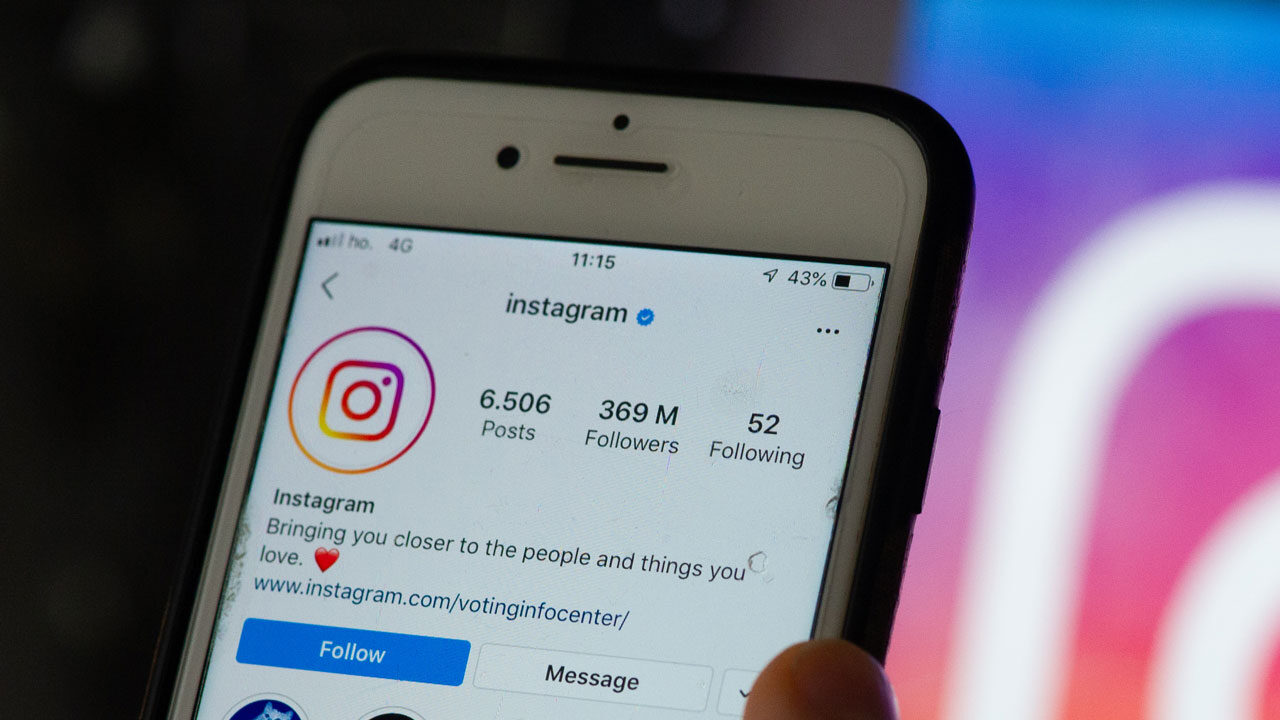
- Read the blog post on AI profiles on Instagram here.
Meta said that it is renaming its “AI creator” label to “AI-generated profile” on Instagram and will limit the reach of AI-generated profiles that doesn’t carry the label. The social media giant hasn’t specified if Meta-owned Threads, Facebook will also follow the same disclosure approaches.
AI-accounts, not AI-content: This update to their policy targets profiles where the featured person is itself AI-generated, not human creators who use AI tools while making their content. Creators who had already applied the earlier “AI creator” label will be prompted to confirm whether the renamed label still applies, or remove it.

“We’ve heard that people don’t like seeing a profile that seems human, only to find out later that the person featured is AI-generated. They want to know when a profile features an AI-generated person.” – Meta
For unlabelled profiles that Instagram determines feature an AI-generated person, the company says it will notify the account and restrict its visibility/reach in recommendations. If a user’s account is impacted by this, they can check “Account Status” to see if they’ve lost recommendation eligibility.
Some of the India-based AI-influencers:
- Kyra (@kyraonig)
- Naina Avtr (@naina_avtr)
- AI Drishti (@ai_drishti)
- Aswathy Achu (@aswathy_achu.ai)
- Zara Shatavari (@zarashatavari)
- Radhika (@indiawithradhika)
- Myra Kapoor (@myra.official._)
- Vrutika Patel (@vrutikaapatel)
- Aarav Kapoor (@aiamaarav)
Among these only four have Meta-labeled “AI creator” disclosures. One of them had a disclosure in their bio, but not by the Meta. Whereas two of the profiles don’t have any disclosures from either humans/owners or from the platform.
Why this matters: Explicit labelling of AI-profiles can align with the Indian government’s mandate on labelling of the synthetically generated information (SGI). It is important to note that the SGI Rules notified in February 2026 specifically applies to content but not to the entire profile itself. So, this can be counted as a transparency effort by the social media giant.
Nonetheless, since the AI-influrncers are already “collaborating” with the businesses, these reach/visibility-linked disclosures might impact how brands will approach the AI-influencers and AI-content created/generated by them. Additionally, if there is a right adoption of AI-personas, the brands might have some incentives to prefer AI-persons over real humans. Cost, speed, negotiations, budget and non-aging factors might work in favour of the brands.
“From marketing perspectives, collaborating with CGI influencers provides brands with enhanced control and safety over their marketing campaigns, as evidenced by partnerships with industry leaders such as Calvin Klein, Puma, and Prada. Although the ethics of CGI influencers remains debatable, there is no denying that the computer-generated universe is the next big thing. As emphasised by recent studies, marketers are urged to prepare for next-level social, design, and creative experiences in AI to enhance knowledge in online influencer marketing.” – A research paper on ScienceDirect.
The phenomenon of AI-influencers in business or marketing dates back to at least eight years– four years before the launch of ChatGPT in 2022. In February 2018, Guardian reported on the adoption of AI-personas as an alternative to real/human-influencers. The reporter described Miquela as ‘computer-generated anime-like Kardashian who will never demand a front-row seat.’ The publication was reporting on this after the CGI-generated character’s promotions of Prada’s autumn/winter show in 2018.
“I’m predicting that the combination of what Disney does—intellectual property like Snow White, The Lion King, and Cinderella—and what influencers like Alex or Mr. Beast do, is going to merge into one. Fake people, AI people, are going to become some of the biggest influencers in the world in 10 years. Companies and humans are going to own those AI personalities, and it’s going to be huge. Take Ricky Thompson, a 47-year-old marketing expert with 14 million followers—he’s actually owned by Joanna Thompson in Australia,” said Gary Vaynerchuk, the CEO of VaynerMedia in a short video clipped from an interview.
However, the core concern is not just the business impact, but also the way people perceive AI-generated information. If the job of an AI influencer is to influence/persuade the user into buying something and the user just cares about the information delivered rather than the biological status of the profile. Then why should Instagram bother about the so-called genuineness of the account? Because, in marketing, the explicit labelling informs as well as cautions the user leading them to discredit/disregard the AI-generated profiles/content.
The reasoning for this comes from none other than Meta’s CEO Mark Zuckerberg himself. In one of the earnings calls, welcoming the AI-generated content, he said, “First was when all content was from friends, family, and accounts that you followed directly. The second was when we added all the creator content. Now, as AI makes it easier to create and remix content, we’re going to add yet another huge corpus of content on top of those.”
“Authenticity in design, just as authenticity in writing, is a signal to us of the effort that was put into creating something, based on the assumption that an output that is influenced by AI was not made with the same degree of effort or thought,” argued MediaNama founder-editor Nikhil Pahwa.
Another core challenge ahead of the companies is the verification and validation factor. How does Instagram/Meta know that a user is not real for it to disincentivize them through less reach? Meta is yet to reveal the technical tools that Meta ought to use to minimize the false positives and target the right profiles.
Also Read:








Leave a Reply