
An Artificial Intelligence (AI) system cannot be named the author of something it creates. But the work itself can be protected by copyright law, according to the Copyright Office.
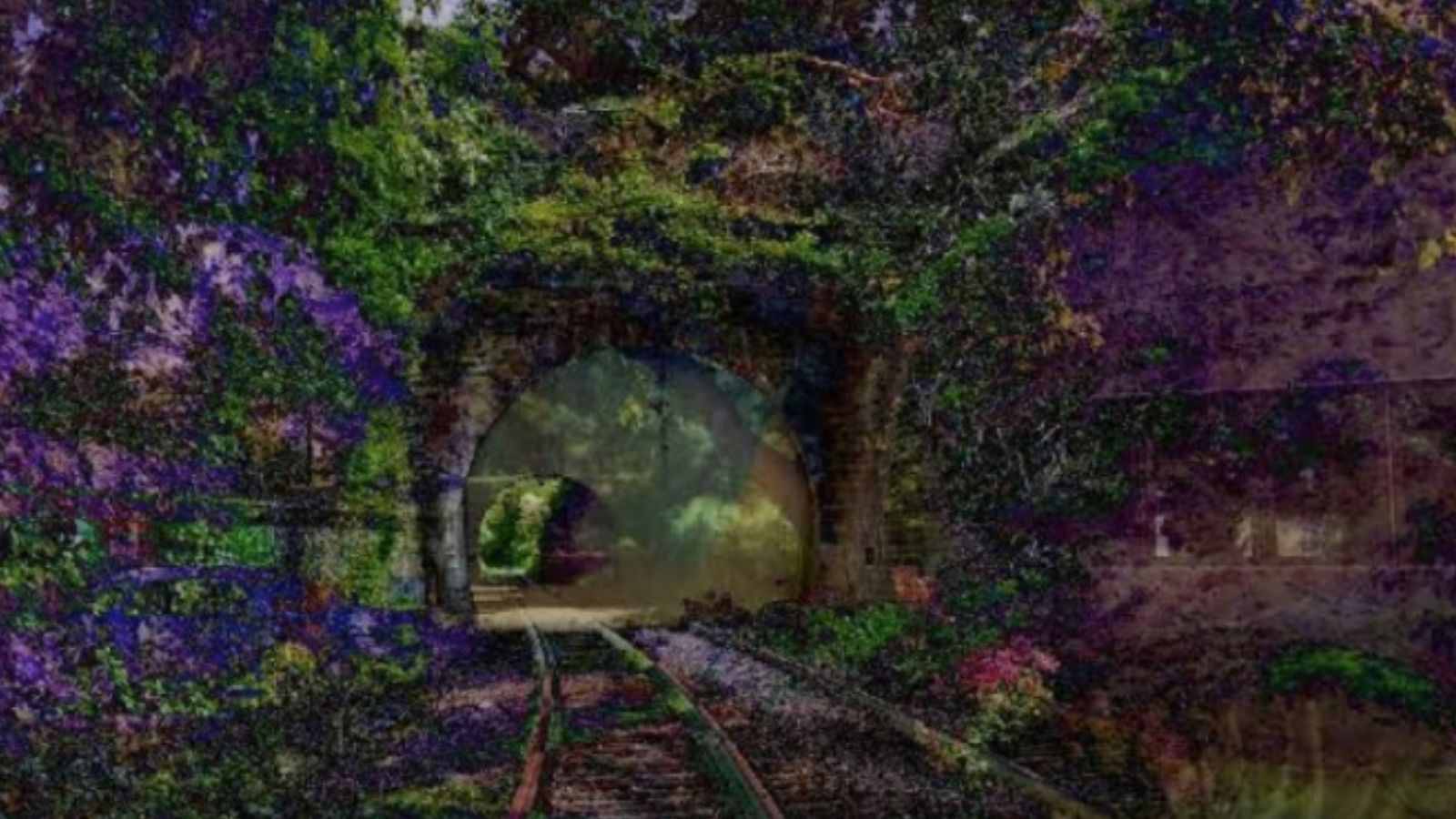
The finding came in a case involving US AI researcher and Imagination Engines CEO Stephen Thaler, who sought copyright registration for an artwork — ‘A Recent Entrance to Paradise’ — generated by his AI system DABUS.

Thaler has so far approached 16 jurisdictions worldwide seeking DABUS’s copyright over the artwork. In March 2025, a US court refused his application saying the US Copyright Act requires human authorship.
On Monday, the Copyright Office, under the Ministry of Commerce and Industry, primarily emphasised that the provisions of the Copyright Act identifies an ‘author’ as a “person” — that is a human being — who causes the work to be created.
The law, it said, “distinguishes between the technological mechanism through which the output is generated and the legally recognised person to whom authorship is attributed”.
The decision comes months after the Delhi High Court in April had directed the Office to decide on whether an AI system can claim sole authorship over a work created using the system.
The case behind the ruling
The artwork was generated by DABUS, short for Device for the Autonomous Bootstrapping of Unified Sentience, an AI system developed by Thaler. The authorship, in the application, was solely attributed to DABUS.
Story continues below this ad
Thaler, through his advocate Ankit Sahni, had argued that once DABUS was configured and trained through visual and linguistic inputs, the final artwork was generated through the AI’s internal operational process without real-time human intervention and any text prompt.
He said the “final form, composition and expression of the artwork were created by DABUS itself”.
Thaler argued that he wanted DABUS to be attributed as the sole author, not to give the AI system legal personality or independent enforceable rights, but to accurately record how the artwork was created.
“Transparency requires the Register to reflect the actual mode of creation,” he said.
Story continues below this ad
Why the Copyright Office rejected AI authorship
In an order deciding the issue, Registrar of Copyright, Prof (Dr) Unnat Pandit, held that the standalone artwork can be considered “original” as there is “no clear material on record to prove that the work was copied from some specific source or some other work”.
He said it “possesses sufficient independently generated expressive character to cross the limited threshold”.
The Copyright Office, however, drew a line on copyright protection available to the system generating the creative output.
Rejecting Thaler’s application, it said, “The fact that a system operates autonomously after being configured does not alter the identity of the person responsible for bringing the work into existence. Autonomy in execution is not synonymous with conception of a work.”
Story continues below this ad
“A system may independently execute computational processes after activation, yet those processes continue to operate within the architecture, objectives, parameters, training methodology and operational rules established by the person who conceived and configured the system.
“…. DABUS performed the immediate computational process through which the expressive form emerged, but it did so within the architecture configured and the work-specific process caused by Dr. Thaler,” the Copyright Registrar reasoned.
This is a first for the Copyright Office where it has dealt with an application where an AI system was seeking authorship over a work. It was assisted by Senior Advocate Rajeshwari Hariharan in the case, as amicus curiae.
Is there a departure in India’s stand on the issue from other countries?
While the Delhi High Court’s verdict in ANI vs OpenAI paved the way by holding that there is no copyright infringement as long as the output is distinct, the Indian Copyright Office’s decision now clarifies that the output side can be protected under law.
Story continues below this ad
In July, the HC had held that training large language models on copyrighted material is not copyright infringement as long as the output being delivered is distinct from the training material.
News agency ANI Media Pvt Ltd had moved the HC in 2024 against Open AI Inc (OAI) and Open AI OpCo LLC, raising issues of infringement of its copyrighted material for LLM training by OpenAI.
According to Sahni, the Indian Copyright Office’s stance has more clarity than other jurisdictions so far, since it is acknowledging that AI can create ‘original’ work.
“It will have a huge impact on all creative sectors – media, entertainment, music, publishing, broadcasting, games etc., — as almost all large entities are using AI extensively to produce content,” he said.
Story continues below this ad
How other countries are handling AI-created work
In other countries such as the United Kingdom and Ireland, authorship is clearly associated with the human persona, or with the person who made the necessary arrangements for a computer-generated work.
In 2019, a Chinese court ruled in favour of Tencent’s ownership over content written by its AI-writing assistant Dreamwriter.
In another case in 2023, another court in China held that “as long as the AI-generated images can reflect people’s original intellectual investment, they should be recognised as works and protected by the Copyright Law”.
It, however, clarified that copyright belongs to the author, who is a “natural person who creates a work”, and “an artificial intelligence model cannot be deemed as an author under China’s copyright law”.

Stay updated with the latest – Click here to follow us on Instagram










Leave a Reply