
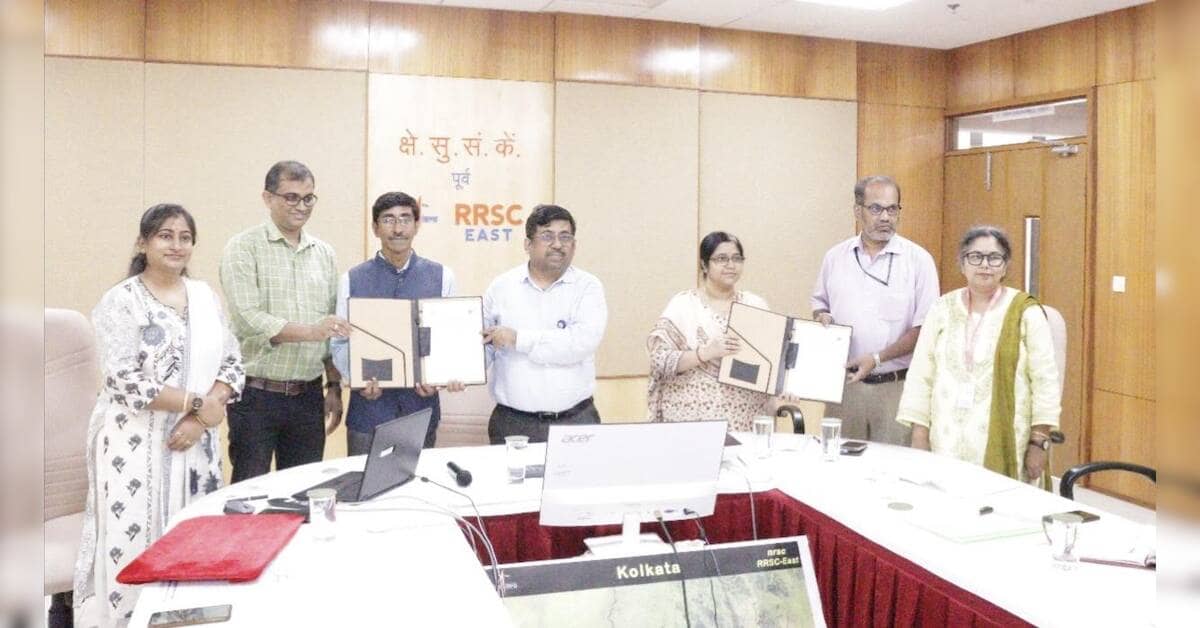
The National Institute of Technology (NIT) Rourkela has joined hands with the National Remote Sensing Centre (NRSC) of the Indian Space Research Organisation (ISRO) and Tea Board India (TBI) to develop an artificial intelligence (AI) and geospatial technology-driven system for monitoring tea plantations, estimating yields and forecasting pest and disease outbreaks.
The three institutions signed a tripartite memorandum of understanding (MoU) for collaborative research under the three-year Advanced Research and Development project titled “CHAYANKAN: Comprehensive AI-based Geospatial Data Analytics for Tea Plantation Monitoring”. It will bring together satellite imagery, unmanned aerial vehicle (UAV)-based observations, field-level data and AI to improve the scientific management of tea plantations.
The collaboration is expected to result in a technology-based framework that can provide more comprehensive and timely information on the condition and productivity of tea-growing areas. Researchers will develop machine-learning models capable of identifying tea plantations, assessing their health and estimating potential yields by combining remotely sensed data with ground observations. The system will also help identify conditions associated with pest and disease risks, allowing potential problems to be forecast before they cause widespread damage.
“The project will integrate multi-source remote sensing data from satellite and UAV platforms with ground-based observations, employing state-of-the-art machine learning techniques and modelling approaches. The initiative is expected to strengthen data-driven monitoring and management of tea plantations and support effective governance and decision-making in the sector,” said Saurav Chatterjee, Dean (SRICCE), NIT Rourkela.
As part of the project, multi-source geospatial data will be integrated into a common analytical framework. Satellite data can provide large-area and periodic observations of plantations, while UAV platforms can offer much higher-resolution information for selected areas. Ground-based observations will provide the field-level information required to train and validate the AI models. The combination is expected to make plantation assessment more precise than relying on any single source of information.
The project could have wider implications for tea-sector governance, particularly in a country where plantations are spread across large and geographically diverse areas. Instead of depending predominantly on periodic field surveys, technology-enabled monitoring could help authorities obtain more frequent information on plantation extent, crop conditions and productivity. Such information could support planning, resource allocation and interventions by government agencies and other stakeholders.
Presenting a technical overview of CHAYANKAN, Arati Paul, principal investigator from RRSC-East, said AI models trained on historical and current remote-sensing and field data could be used to identify spatial variations in plantation health and productivity and generate estimates at different scales. This could provide a more data-driven basis for assessing production trends and identifying areas requiring intervention, she said.
The pest and disease forecasting component is significant as it will help shift plantation management towards early warning and preventive action. Changes in vegetation characteristics, weather-related variables and other geospatial indicators can be analysed to identify patterns associated with pest or disease stress. Once validated against field observations, such models could help provide advance indications of potential outbreaks, enabling plantation managers and authorities to take timely measures, officials said.
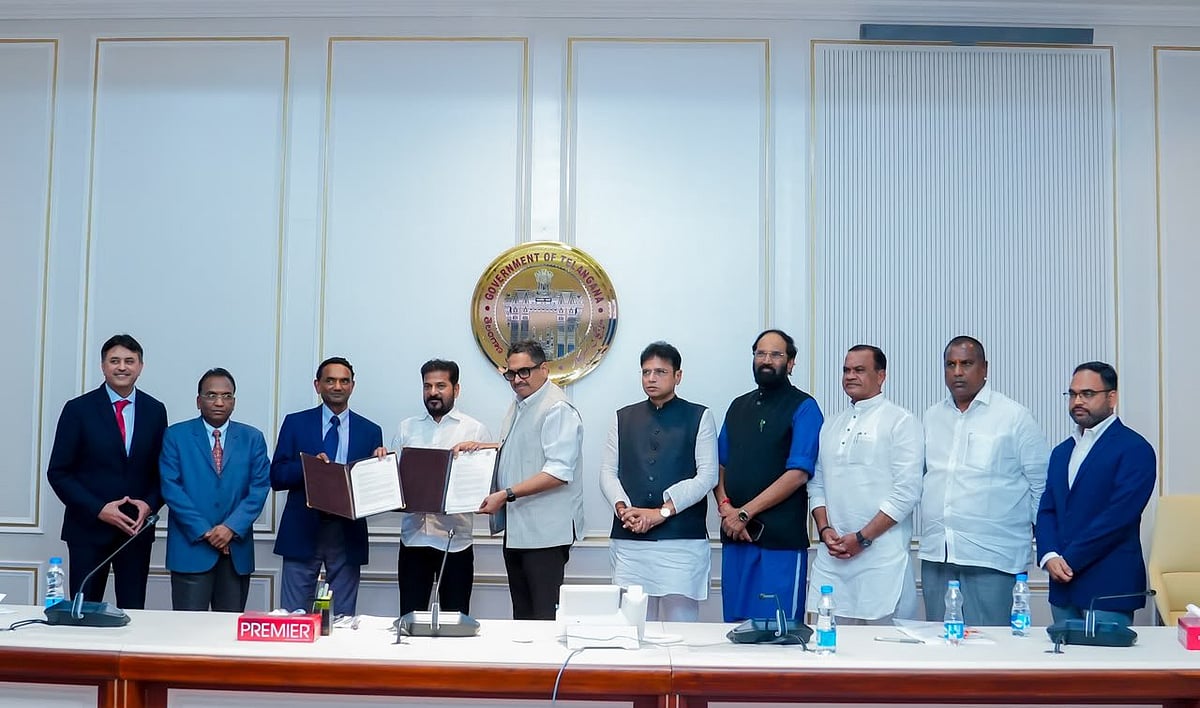
The MoU was signed by Sushil Kumar Srivastav, associate director and chief general manager (Regional Centres), NRSC; Amrita Chakraborty, secretary, Tea Board India; and Chatterjee, who signed virtually on behalf of the institute.
Prakash Chauhan, director, NRSC; K Umamaheshwar Rao, director, NIT Rourkela; and S Soundararajan, director (Tea Development), Tea Board India, also attended.









Leave a Reply