
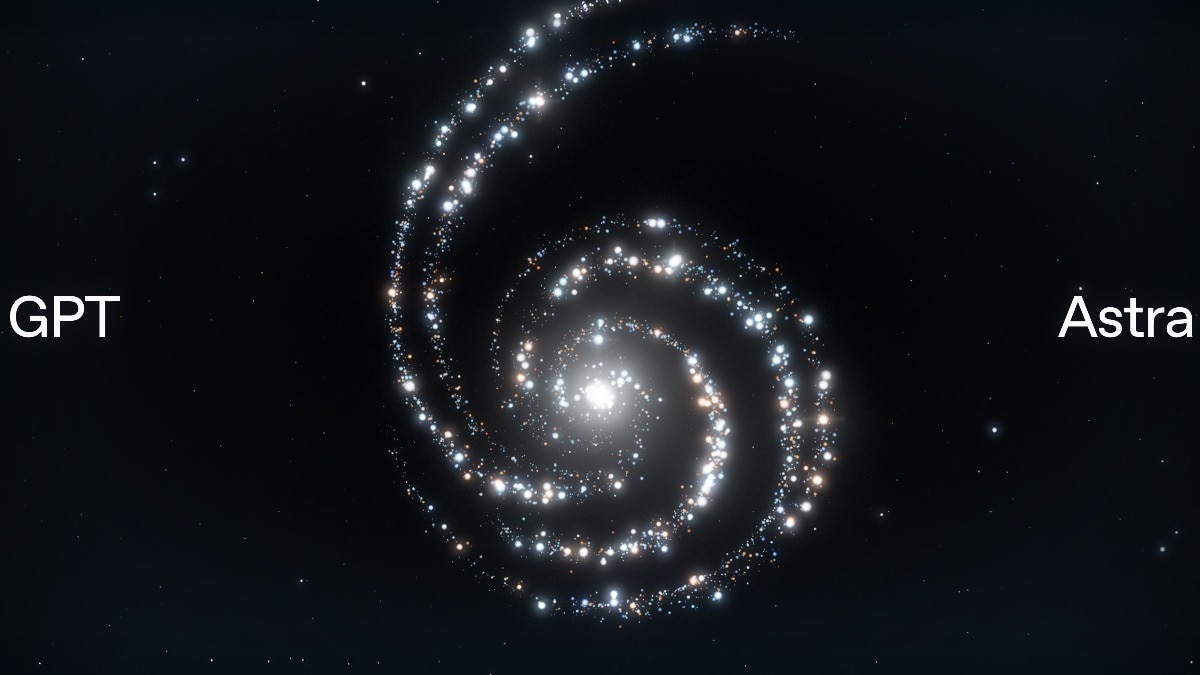
Since I heard the name a while ago, I have always wondered about its origins. Astra is such an Indian name. Maybe there was an Indian engineer in the OpenAI team who raised their hand during a brainstorming session. And proposed that the next AI major model from the company should be called Astra, a Sanskrit word that denotes a weapon-like object which is unearthly. Or probably, the word comes from Graeco-Roman Astral, which means celestial body, though many readers who have grown up listening to trance might associate it with Astral Projection and their song Mahadeva.
Irrespective, it is fascinating to see how both OpenAI and Anthropic are going out of their way to give their AI names that make them mystical, almost as if they do not belong to humans, that they are entities we can only imagine and not understand. Astra is one. On the Anthropic side, the company is giving its new AI models names like Fable and Mythos. Mark Zuckerberg, never willing to shy away from joining a race, is calling his models Muse, as in Homer’s Muse when he said O Muse and then sang Odyssey and Iliad.
It is as if nearly 2500 years later, we are still living in the Aristotelian world, which we actually are. Fun fact: The binary logic, which computers and AI use, was proposed by Aristotle, although the algorithms and its modern 0 and 1 form were shaped by over 2000 years as the idea travelled through countless minds including those of Al-Khwarizmi and George Boole.
So, the GPT-6 Astra arrived this week. Along with the Claude Fable 5.1 and the Mythos 5.1. The models from Anthropic are incremental updates on the original Mythos and Fable, at least in the way they work. The world treated them as such, with respect but also with a familiarity.
Astra, however, is something new. It comes with a new underlying architecture, and makes key technological changes that give it some unique abilities. It is also, if benchmarks are to be believed, the world’s best AI model by far. The Astra is so good that OpenAI president, while introducing the new model, announced: “welcome to the AGI era.” Then he sort of added — whatever!
OpenAI believes that it has, in a large measure, achieved human-like intelligence with Astra. The video that the company posted on X made a big claim. It simply said, Astra can do everything that can be done on a computer, by a human or an AI. The exact words: “Anything you can do on a computer, Astra can do for you. Fast.”
Since then a number of people have tried Astra, and it seems to be an extremely good AI model. It also seems to have shocked a fair number of people with its abilities. It is as if the question of intelligence has been solved, at least scholastic intelligence. Now, it is more about its applications, which is always a messier part.
We don’t know what humanity is going to do with Astra and its ilk but we do know that it will take a while to figure out how to use them best. This is still the middle of 2026 and hence early days in our AI journey. Even without any other technology breakthrough, just the refinement and optimisations will lead to smarter AI models in the next two years. The real work, I believe, will happen after that. And that may take time, although how much is anybody’s guess.
As I see Astra, I am more than certain the world around us will change in ways we can’t yet accurately predict. But I do know that we will go through Amara’s Law, named after futurist Roy Amara who said in 1978: “We tend to overestimate the effect of a technology in the short run and underestimate the effect in the long run.”











Leave a Reply