
Building AI infrastructure is only the beginning; India must ensure universities and students benefit through research, skills and innovation
The “cloud” may appear weightless and borderless, but artificial intelligence depends on physical infrastructure — powerful computers, chips, energy, cooling systems and networks. For India’s education sector, the important question is not simply how much AI infrastructure the country builds, but how effectively that computing capacity reaches universities, researchers and students.
India’s AI ambitions are expanding rapidly. Yet the educational value of this expansion will depend on whether universities and research institutions can access the computing resources they need. AI is increasingly becoming part of disciplines ranging from engineering and data science to economics, medicine, agriculture and climate research. For students and researchers, access to advanced computing is becoming as important as access to laboratories and specialised equipment.
This creates an important policy challenge. Large investments in AI infrastructure can strengthen university research, encourage start-ups and support domestic innovation. But infrastructure alone does not guarantee educational benefits. Without meaningful links with universities, data centres could remain largely focused on commercial workloads, while Indian students and researchers continue to face limited access to high-performance computing.
Public policy should therefore ensure an educational dividend from India’s AI investments. A defined share of computing capacity could be made available competitively to universities, researchers, students and public-interest projects. Such access could support AI research, student projects, fellowships, interdisciplinary programmes and collaborations between academia and industry.
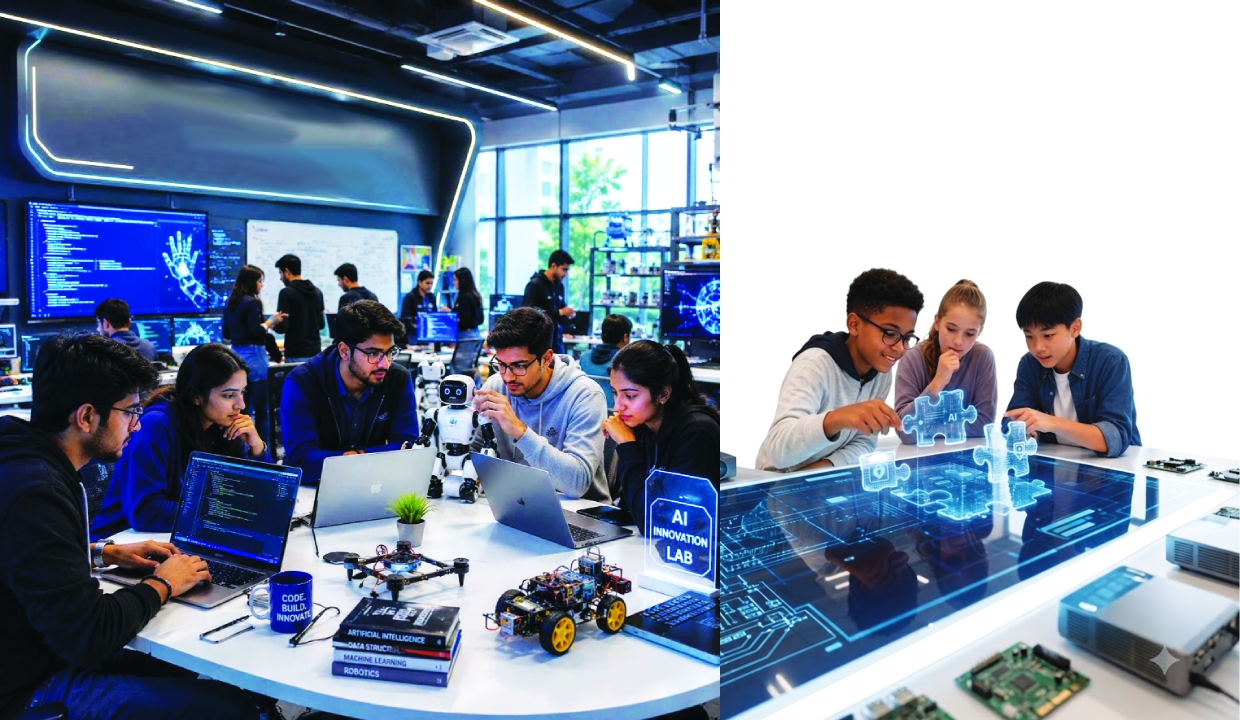
Universities should also become active partners in India’s AI expansion. Industry partnerships can help establish shared computing facilities, joint research programmes and specialised AI laboratories. This would allow students to work with real-world systems while enabling companies to benefit from academic research and talent. There is also a wider question of affordability. If access to advanced computing remains concentrated among a small number of institutions, AI could deepen existing inequalities in higher education. Students at well-funded universities would gain opportunities to experiment with sophisticated AI models, while others could remain dependent on limited or outdated resources.
India must therefore think of computing capacity not merely as digital infrastructure, but as educational infrastructure. The success of the country’s AI strategy should ultimately be measured by what it creates in classrooms and laboratories – better-trained students, stronger universities, meaningful research and new Indian innovations. India’s AI ambition will be credible only when its universities and students can participate in it.
The writer is an Associate Professor of Economics, XLRI Delhi-NCR; Views presented are personal.













Leave a Reply