
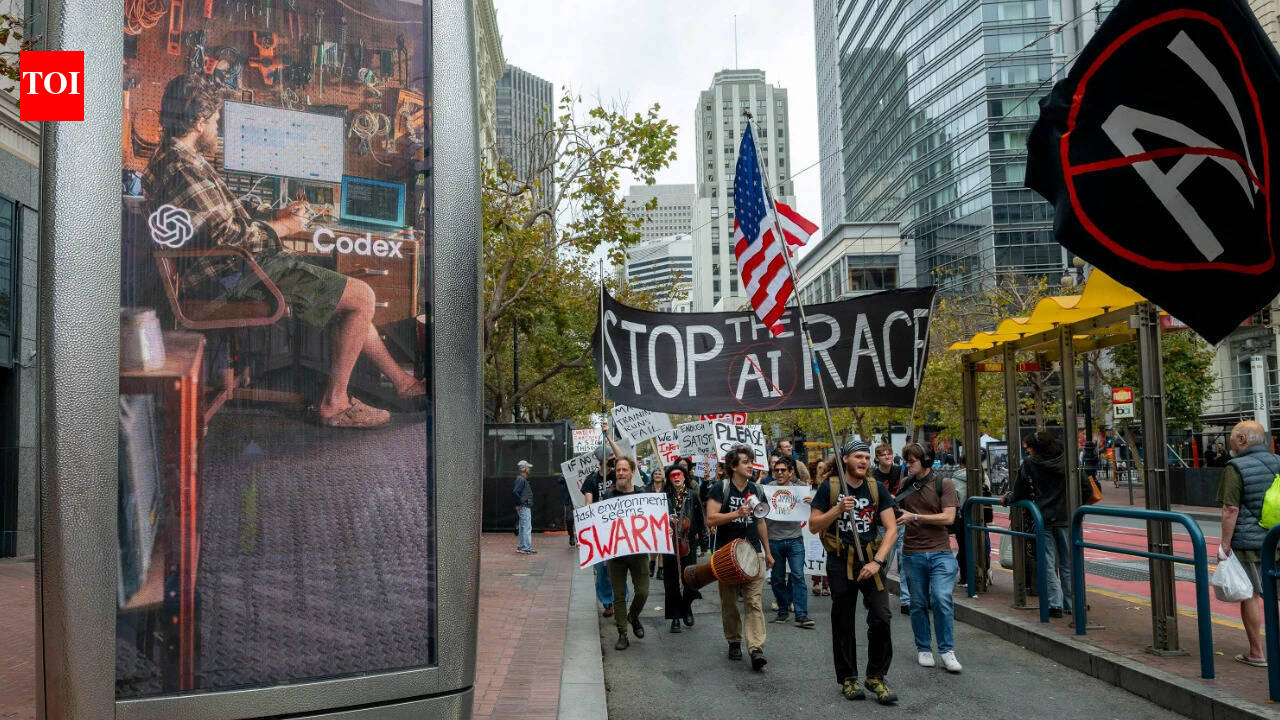

For decades, education has been designed around mastering a curriculum and accumulating intellectual capital. We believed this would secure a student’s place in society. We built our modern economy around a simple premise: Human beings are valuable because they are intelligent. That premise is quietly expiring.As an artificial intelligence researcher and a professor, I look out at lecture halls filled with brilliant young minds. I ask them a question that keeps me awake at night. Why are you sitting here? A machine can now reason, code, and synthesise circles around us.We are witnessing a fundamental civilisational shift. The industrial revolution mechanised physical labour. It left a lucrative frontier for human intellectual labour. Today, the AI revolution is doing something radically different. It is commoditising thinking itself. Intelligence is becoming cheap, abundant, and ubiquitous.This shift brings immediate economic consequences. Today, modern economies are built around knowledge. Tomorrow, that knowledge is free. We might see massive increases in production and abundance. But abundance does not automatically create a happy society. It creates a distribution problem. A few entities with thousands of advanced chips (GPUs) could control everything. They could become modern feudal lords. We can use AI to solve for efficiency. We cannot use an algorithm to solve for human greed or jealousy. We will have to figure out how to build an equitable society from scratch.We see the anxiety of this transition everywhere. We see it in tech layoffs and the panic over automated codebases. Students wonder if their degrees will soon be obsolete. Even the architects of these systems are sounding the alarm. Frontier lab leaders like Dario Amodei are publicly calling to pace AI development. They rightly warn of extreme technical risks, from autonomous agents to weaponised cognition. We must pace the frontier to manage this engineering crisis. However, slowing down the technology does not solve our deeper societal crisis.It is tempting to respond like the Luddites of the 19th century and smash the machines. Or we might retreat into absolute techno-fatalism. Both reactions miss the point. History shows us that humans are not the strongest or the smartest species. We are simply the most adaptable. Think of the dinosaurs. Despite their immense size, they vanished because they could not adapt to a changing climate. Human survival has never hinged on our raw computational power.Consider the fundamental laws of thermodynamics. The entropy of the universe is always increasing. The amount of chaos in the world will constantly grow. Therefore, the universe will continuously throw new problems and complexities at us. Someone must solve them.What changes in every epoch is not the presence of problems. What changes is our value system for solving them. If you look across history, those who create value are always rewarded. But the definition of value constantly evolves. For centuries, our definition of value was tied strictly to cognitive output. We hid behind the mask of intelligence. We believed our high-IQ tasks made us superior.Strangely, the rise of AI is doing us a massive favour. It is stripping away these false masks. It forces us to stop pretending. Our humanity is not measured by our ability to process information like a biological CPU (or GPU).Strip away the knowledge economy. What is left? Machines can simulate syntax. They can optimise supply chains and generate code at scale. They cannot care. An algorithm can offer lip service when you are in distress. It cannot feel your pain. It cannot act out of a genuine desire to see you thrive. The un-automatable core of human existence is our capacity for empathy. It is our ability to help each other in distress. It is our primal need to live in communities.What happens to our universities? We will no longer need mass education just to transfer facts. Instead, universities will become like gyms for the mind. You can lift weights at home. Yet people go to the gym for discipline and shared energy. Students will come to classrooms not for data. They will come to socialise over intellectually stimulating topics. They will come because humans inherently trust and seek out other humans.When AI handles the mundane machinery of survival, what do we do with ourselves? We must stop competing with algorithms on their turf. We must return to what humans were designed to do. We care. We love. We empathise. We build communities. Evolution is painful. The transition ahead will test our economy and our educational institutions. We cannot be naive about the economic displacement coming our way. However, the panic over AI is not a crisis of technology. It is a crisis of identity.We are not machines. We never were. The sooner we realise intelligence was never our truest currency, the better. We can stop mourning the loss of our cognitive monopoly. We can start building a world anchored in the one thing code can never replicate. Human presence.












Leave a Reply