
He expects the US Federal Reserve to deliver just one more rate hike this year, arguing that markets are largely looking past monetary policy while core disinflationary trends are likely to strengthen by year-end.
Lee said investors should pay closer attention to the financing behind the AI boom rather than short-term movements in technology stocks. He added that the AI investment cycle is becoming increasingly dependent on private credit, an area where risks are harder to assess.
Lee said the sharp swings in AI-related stocks reflect uncertainty about how the technology will eventually be monetised. “That kind of unanchored movement in the AI trade, to me, is a warning sign that there’s a lot of fundamental weaknesses there because people just don’t know how the AI trade is going to take place,” he said.
Commenting on US monetary policy, Lee argued that financial markets are paying less attention to the Federal Reserve than expected, describing much of the recent policy stance as cosmetic. He believes Fed Chair Kevin Warsh is attempting to build consensus within the Federal Open Market Committee (FOMC) after delivering the latest rate increase.
Lee expects the Fed to raise rates once more in December after the September hike, while ruling out an October move ahead of the US midterm elections.
“Possibly two, at best three. That just reverses the easing that took place after the last hike,” he said, before clarifying that he expects only one additional increase from current levels.
According to Lee, easing core inflation and disinflationary forces should begin offsetting upward pressure from higher diesel, fuel and gasoline prices by the end of the year.
This is an edited transcript of the interview.
Q: Wall Street up, crude down, AI surging, tightening financial conditions. How are you assessing the market environment now?
A: Isn’t it incredibly crazy that last week we were talking about how AI was going to bring about the end of the world, and people were selling off like crazy because they felt that AI was going to be regulated and prevented from becoming the great investment opportunity that it actually is? And now this week the story has changed, and I think that shows you how uncertain investors are about what AI can bring and what it needs.
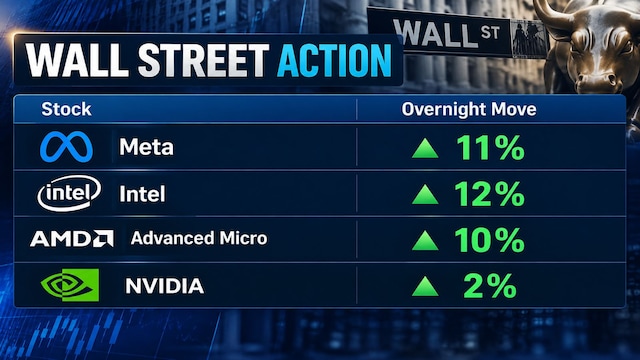
You see today that the new model, the latest toy to hit the AI scene, is from Facebook, or Meta, where people now feel that all this agentic AI is going to require more CPUs, so there’s going to be a huge shortage of CPUs. And suddenly, you see the shares of Intel, AMD, and all the CPU producers shoot up.
That kind of unanchored movement in the AI trade, to me, is a warning sign that there’s a lot of fundamental weakness because people just don’t know how the AI trade is going to evolve.
And then your Fed story adds to that because, as AI is expanding, it’s expanding largely through credit, especially private credit, which is relatively opaque and non-transparent. And we don’t know where the vulnerabilities are that are arising because of that private credit-funded AI expansion.
So, I think one of the things that we need to watch out for is the credit market vulnerabilities that come from private credit expansion funding many of the second-level infrastructure developments that are going on.
Q: Are you sounding a bit cautious on AI now, William, compared to where you were before?
A: Yes, I am. I think that this, as I said, unanchored wavering in the markets, going from one extreme to the other without a clear sense of direction, is something that I’m very concerned about.
Jensen Huang has been very good at trying to reassure people that the AI model, which is about productivity enhancement and improving the wages of workers, still has a future. However, that future has become clouded because people just are not seeing the applications come into play.
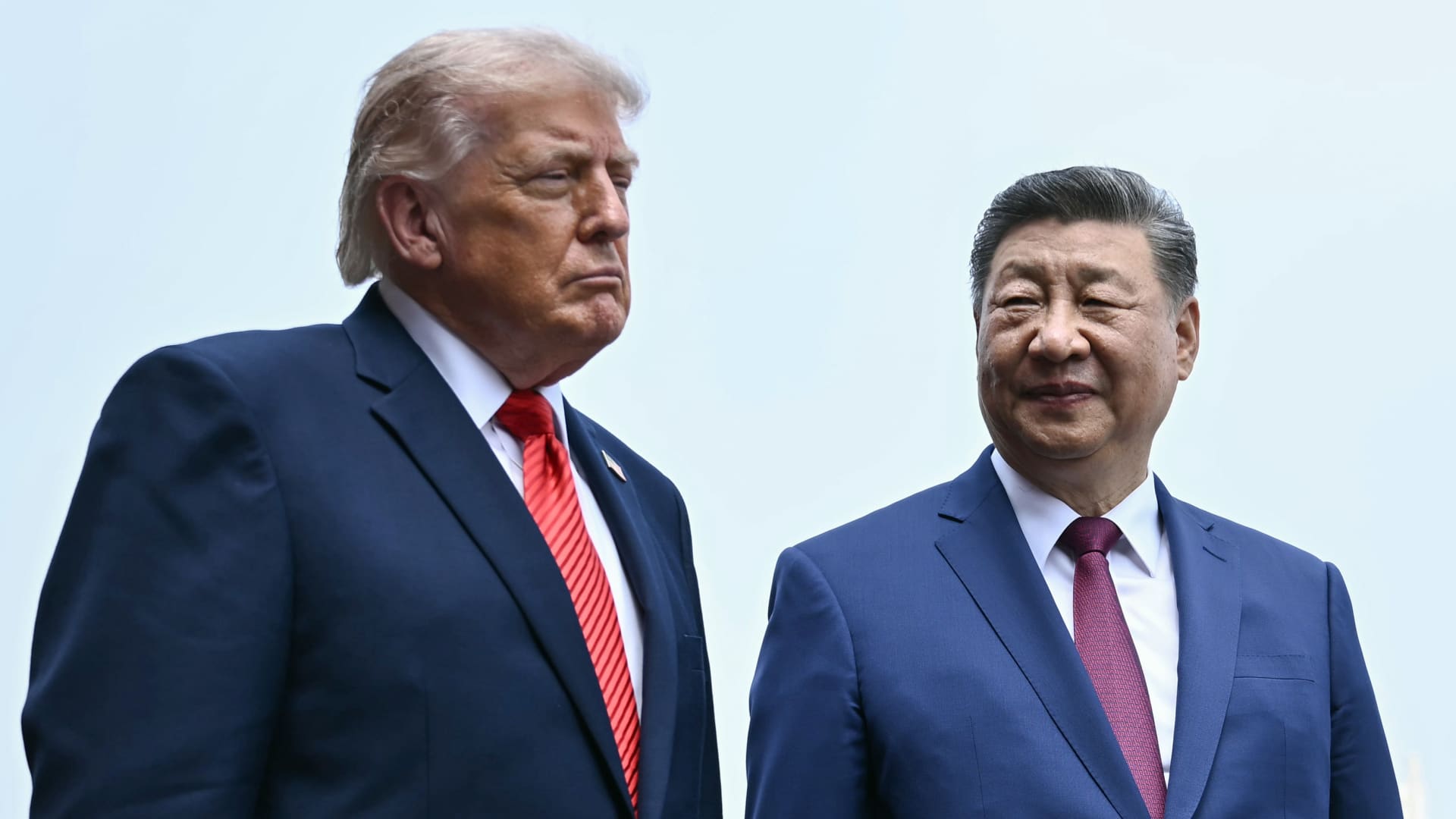
And we haven’t even talked about how China is going to be coming into this picture. China’s models, again, are going to be undercutting the costs for everybody else, and I think the theatrics we’ll see this week will be between US President Donald Trump and Xi Jinping, where the tension over the rare earth mineral trade and AI chip control is going to come to a head yet again.
And I don’t think there’s going to be much resolution there because China and the US are fundamental competitors. There is very little prospect of the two of them meeting on some middle ground and coming to agreements. I think we’ll just have some theatrics, and the two sides will go back to their corners and start bashing each other again.
Q: Before the Trump-Xi meeting, later tonight you may have a meeting between the Iranian president and President Trump. It may happen. And then, after that, President Trump is supposed to speak at the UN.
A: I get what you’re hinting at, but let me ask you, where does the Iranian president stand with the Iranian Guard? Because they’re the ones who control the fighting. They’re the ones who have made peace agreements virtually impossible.
So, unless the Iranian president can convince Trump that he actually has the Iranian Guard under control, this is again going to be a series of photo opportunities without producing much in the way of results.
Q: To be fair, I think the US side also needs to convince the other side that it will stick to what it says because that’s been a big problem, right? So I think it works both ways. There is no dearth of distrust. So, we’ll see. I mean, whether something comes out of it, or maybe an announcement. But as we’ve seen, announcements have made a difference for a while, but what happens on the ground is what matters in that sense.
But just otherwise, with the Fed hike last week, and lots of officials have been coming through saying, perhaps more needs to be done. But do you think markets are already pricing in a lot, and that not all of it may materialise? Maybe two hikes, maybe three, but markets are pricing in more.
A: I think the markets are pretty much ignoring the Fed issue because I think people are realising that a lot of it is cosmetic.
Chair Kevin Warsh came in without a lot of gravitas. He really did not control the FOMC the way Paul Volcker did when he initially came to the Fed.
And I think Warsh is trying to find a way of building consensus, and he’s found it, which is to say, “Okay, you guys are so hawkish. You want to establish your inflation-fighting credentials. You want to show everyone that you’re going to avoid the mistakes of Arthur Burns, who allowed these transitory supply shocks to accumulate into wage-price spirals.”
And, by the way, there’s no sign of a wage-price spiral out there at all. But the fear of repeating that history has caused a lot of the FOMC to be very hawkish.
So, I think Warsh says, “Okay, you want your hike? You got your hike. And, in fact, you’ll get another hike probably at the end of the year just to show that this is more than just a face-saving effort to try to be inflation hawks.”
But I think that’s about it because Secretary Scott Bessent and Chair Warsh are betting very heavily that the core disinflationary forces are going to start to come into effect and overtake some of the upward pressure that comes from the distillate shortages in diesel, fuel, and gasoline prices that are pushing things up right now.
Q: So how many rate hikes? You don’t see too many.
A: Possibly two, at best three. And that just reverses the easing that took place after the last hike.
Q: So, two more over and above the September one. Two or three more.
A: I think two, quite honestly, because I don’t think they’ll do anything in October because it would be a little too stupid to announce a rate hike just before the midterm elections.
So, one in September, which we just had, and one in December. By December, we should start to see a lot of the core disinflationary factors come back into play.
For the full interview, watch the accompanying video

Catch all the latest updates from the stock market here







Leave a Reply