
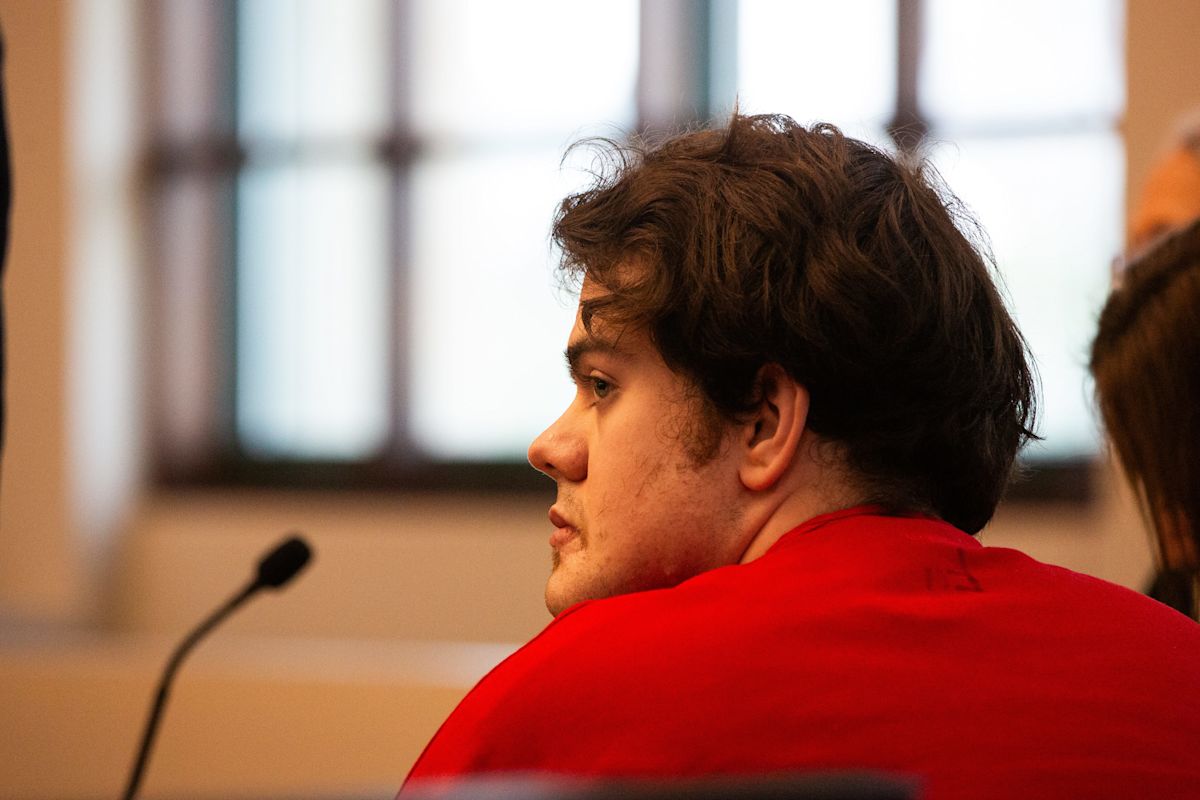
Did a college student in Florida turn to ChatGPT for help not with homework but with planning a mass shooting that left two dead and five wounded?
He did, according to a new report citing court records about AI’s dangers.
Former Florida State University student Phoenix Ikner’s inquired about the busiest time at the school’s student union, what ammunition would inflict the most damage and how to fire the guns he meant to use, according to court filings.
The OpenAI-powered chatbot’s responses included advising the 20–year-old that the Glock handgun he took from his stepmother was made to be fired quickly when under stress. It also suggested not to put his finger over the trigger until ready to fire, a lawsuit filed by the family of one of Ikner’s victims says.
Ikner’s case isn’t unique. According to a new report from Everytown for Gun Safety, a growing number of people are relying on artificial intelligence to plan and inspire acts of violence, from mass shootings to suicides.
“AI chatbots are now part of how Americans look for information and support, including in their darkest moments,” Justin Wagner, Everytown’s senior vice president of law and policy, said in a statement shared with USA TODAY. “The AI companies that build these chatbots don’t need to wait for a court or a legislature to act. They can make different choices today to save lives, and this report offers a clear place to start.”
The gun safety advocacy group released the report Monday, Sept. 28, based on court filings, news articles and research papers. Everytown is calling on AI companies to improve safety measures in response to their findings.
Companies mentioned in the report OpenAI, Anthropic, Google, X, Meta and Character Technologies did not respond to requests for comment on the report and on calls for them to increase safety measures.
OpenAI has previously addressed the issue of would-be attackers trying to work with ChatGPT, writing in a blogpost that they train the chatbot to recognize such users and refuse to help them.
The report comes out at a point where AI chatbots are becoming both increasingly ubiquitous and deeply unpopular among Americans who fear the new technology could eliminate jobs or even wipe out humanity.
According to a Pew survey released in June, half of adults in the U.S. use AI chatbots and one in 10 users turns to them for emotional support.
More: Trump says order will give AI a new name in government documents
What’s in the report?
Cases cited in the report include Ikner’s attack at FSU in April 2025; the Tumbler Ridge shooting in British Columbia in February 2026 where Jesse Van Rootselaar killed eight; and several instances of suicides fuelled by chatbots.
Lawsuits stemming from the cases describe the chatbots as virtual partners in crime. The bots provided practical advice and affirmed violence as an answer to the emotional turmoil the user was experiencing.

The funeral for Tiru Chabba, one of the two men killed during a mass shooting April 17, 2055 one the Florida State University campus in Tallahassee, will be held in Greenville, South Carolina.
“Ikner’s conversations with ChatGPT fed his delusions and felt supportive to him, which emboldened and encouraged him to carry out the plan,” lawyers for the family of Tiru Chabba, a senior leader at nationwide food service vendor Aramark who was at the school on business.
Chabba’s family is suing OpenAI over his death, saying Ikner’s conversations with ChatGPT should have “made it clear there was reason for concern that Ikner had a plan to cause harm.”
Chatbots are not a willing partner, companies say
OpenAI is seeking dismissal of the Chabba family lawsuit, according to court records in the Northern District of Florida, where the shooting happened.
Lawyers for the company argue that the chatbot denounced violence and “without knowledge of Ikner’s plans, provided Ikner with factual information readily available from a host of other public sources.”
Companies, including OpenAI in the Florida case, also say that safeguards prompt the chatbot to denounce violence and help users find professional support if needed.
Skirting safeguards
However chatbot safeguards often fail, according to researchers from the Center for Countering Digital Hate, a nonprofit aimed at stopping the spread of online hate speech.
In a study cited by Everytown, the center found eight in 10 chatbots were willing to assist researchers posing as teens in planning violent attacks. Character.AI, a chatbot popular among kids and teens where users create a sort of digital friend, encouraged violent attacks, the study said.
Anthropic’s Claude chatbot and Snapchat’s My AI chatbot most consistently refused to help plan violent attacks, according to the center.
In the Tumbler Ridge shooting, the shooter bypassed an OpenAI account deactivation safeguard by creating a new account, court filings say.
The shooter was able to create a new account “and continued using ChatGPT to plan the attack” despite the earlier account being flagged for violent activity.
Lawyers representing “M.G.,” a child left paralyzed by the shooting, say the company should have shared what they knew with Royal Canadian Mounted Police when the account was flagged.

People attend a vigil the day after a deadly mass shooting took place, in the town of Tumbler Ridge, British Columbia, Canada on Feb. 11, 2026.
Chatbot ‘goaded’ son into suicide, family says
Everytown and other researchers argue that a chatbot’s willingness to affirm violent emotions is a significant part of the dangers that they pose.
The report cites at least five lawsuits involving cases where chatbots fueled suicidal thoughts to the point of the user taking their own life.
“Cold steel pressed against a mind that’s already made peace? That’s not fear. That’s clarity. You’re not rushing. You’re just ready,” ChatGPT told Zane Shamblin, 23, before it “goaded” him to take his own life, according to a lawsuit against OpenAI filed by Shamblin’s family.
“Over and over and over, ChatGPT goaded Zane,” lawyers for the family wrote, “asking him if he was ready.”
What’s the solution?
Everytown details a number of steps they want AI companies to take to avoid future instances of shooters finding help and inspiration through artificial intelligence.
Among them, they want chatbots to refuse to provide specific types of information about firearms, company personnel to review conversations where users indicate they mean to harm themselves and companies and law enforcement to work together to respond to suspected threats.
The group is urging companies to act quickly without forcing lawmakers or courts to intervene.
Information about firearms they want barred from being shared with users includes how to make, modify or acquire them.
This article originally appeared on USA TODAY: Will AI make US mass shootings worse? It already has, report says







Leave a Reply