
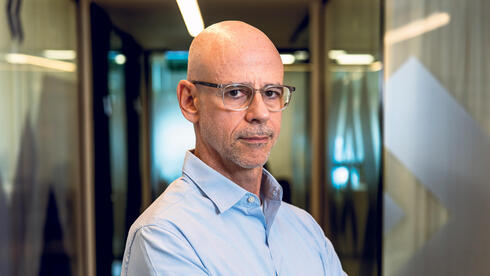
“The current wave of layoffs stems from two main factors: the strengthening of the shekel and the artificial intelligence revolution, marking the first time humanity has developed intelligence itself rather than merely a tool. At the micro level, it is heartbreaking to see any employee lose their job. At the macro level, however, this is a necessary form of ‘creative destruction,’” says Dror Bin, CEO of the Israel Innovation Authority, in a farewell interview following his five-year term.
Bin’s five years at the helm of the Israel Innovation Authority were among the most turbulent periods in the history of Israeli high-tech. His tenure began at the height of the COVID-19 pandemic and continued through an unprecedented investment boom and its subsequent collapse, the judicial overhaul, war, the emergence of artificial intelligence, the return of Donald Trump to the White House, and significant currency fluctuations.
Over that period, the Israeli technology industry underwent profound structural changes, as did the Innovation Authority itself. Under Bin, the Authority sought to evolve from a largely reactive grant-dispensing body into a strategic institution focused on shaping the direction of Israeli high-tech over the coming decade.
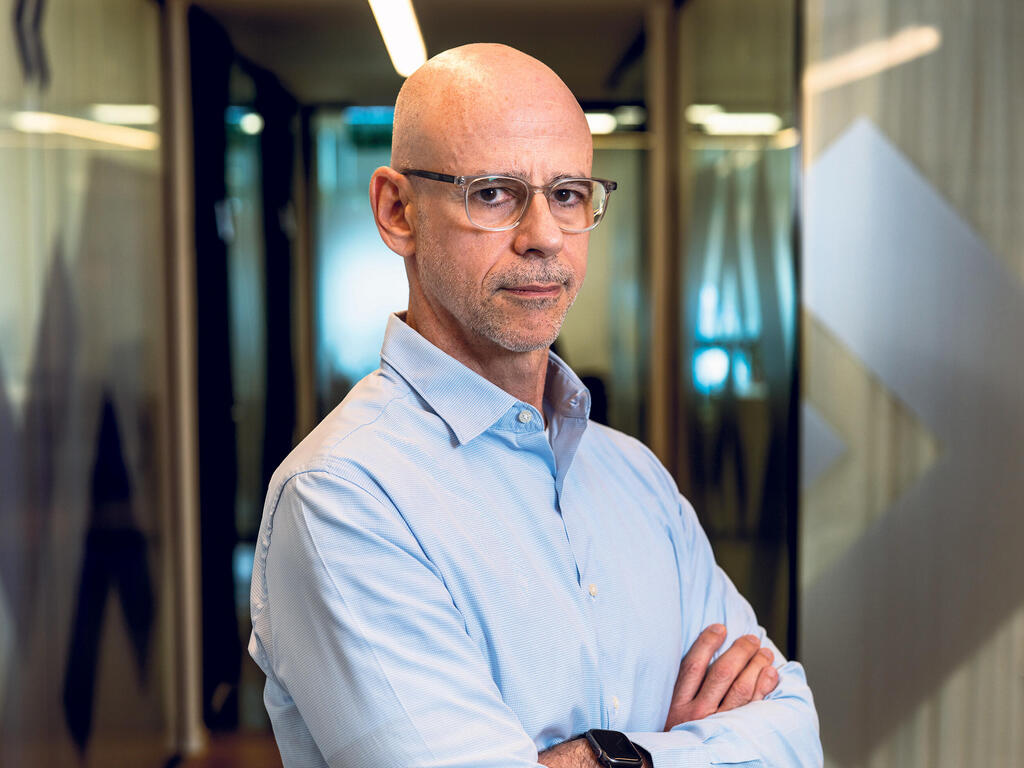
One of the most significant initiatives launched during his tenure was the Startup Fund, which provides more than NIS 500 million annually for investments, alongside private investors, in companies at the ideation, pre-seed, seed and Series A stages. The fund was designed to address market failures at the earliest stages, particularly in deep tech and sectors characterized by high technological risk.
The Authority also launched a fund totaling approximately NIS 1 billion to encourage Israeli institutional investors to enter the venture capital market and strengthen the domestic capital base of Israeli funds, reducing the industry’s reliance on foreign capital.
When you took on the role, quite a few people argued that your background in heavy industry made you ill-suited for the startup world. How do you feel five years later?
“I leave with a great sense of satisfaction, primarily regarding the impact we’ve had on the high-tech industry. Amid all the turbulence, the challenge was to maintain a continuous connection with all the players in the ecosystem, including startups, large corporations, investors, foreign funds and multinationals, and to understand what was needed at any given moment.
“Beyond dealing with constantly shifting circumstances, as the authority responsible for Israeli high-tech, you have to look five or 10 years ahead. You have to understand where the global high-tech sector is heading and where Israel fits into that landscape.
“It was a fascinating and deeply rewarding experience. We managed to make a real impact, enabling startups to survive nearly impossible periods, maintaining Israel’s appeal to investors and foreign companies, and creating conditions for the growth of large companies within Israel.
“Above all, I am proud to have spearheaded the ‘deep tech’ wave. After some 20 years in which Israeli high-tech focused primarily on software and digital sectors, I steered the Authority’s investment tools toward deep tech, recognizing the global trends shaping the coming decade.”
How is the shift in focus toward deep tech and early-stage companies playing out on the ground? The market sentiment was that there was a severe funding drought.
“We realized there was a severe market failure at the early stages, particularly in sectors with high technological risk. Consequently, we fundamentally altered the state’s investment model. We established the Startup Fund, which provides more than NIS 500 million annually for investments in companies at the ideation, pre-seed, seed and Series A stages, alongside private investors.
“To strengthen local capital and reduce reliance on foreign capital, we also launched the new Yozma Fund, valued at approximately NIS 1 billion, to incentivize Israeli institutional investors to enter the venture capital and deep-tech fund sectors.
“We built a comprehensive ecosystem around this, ranging from venture studio-model incubators, angel investor clubs and R&D infrastructure to tax incentives for early-stage angel investments.
“At the same time, we had a duty to ensure continued growth during times of crisis. For instance, following October 7, we established a fast-track funding channel within weeks for startups with limited financial runway. The Authority injected approximately NIS 400 million, which, combined with private matching funds, generated more than NIS 1 billion in investment for some 250 young companies, helping prevent them from shutting down.
“More recently, we launched another NIS 1 billion fast-track program to extend the financial runway of companies facing challenges due to the strengthening shekel. The ability to respond quickly and maintain operational flexibility represents a profound transformation undertaken by the Authority.”
If you had to single out your greatest success, and contrast it with areas where the Authority or the state has not yet succeeded, where do those two things intersect for you?
“The most significant success is that Israeli high-tech is unequivocally at the global forefront. The claim that Israel has ‘missed the boat’ is a populist argument unsupported by data. In external international benchmarks, Israeli high-tech ranks among the global top five across every parameter.
“Conversely, the major challenge where we haven’t met our goal relates to the shifting geopolitical paradigm. In the past, high-tech was primarily a private-sector market. Today, a global technological arms race is underway, mainly between the U.S. and China, but also involving Europe, with governments intervening in the market with massive sums through grants, equity investments and import and export restrictions, such as the Biden administration’s curbs on exports of advanced GPUs.
“Geopolitics has made a powerful entry into this arena, and Israel must be part of a global alliance that guarantees access to cutting-edge technologies to ensure the industry’s continued prosperity.
“Part of our response to this challenge was to strengthen our international operations. We intensified our activities in Europe through ISERD and maximized Israel’s participation in the Horizon program to connect the Israeli ecosystem with research institutes and international partners, even during complex periods marked by boycotts and geopolitical challenges.”
Israel’s diplomatic standing is at a low point. When will we start seeing this impact filter down to the high-tech sector?
“If the state does not secure significant capabilities in artificial intelligence, quantum computing, semiconductors, and computing and energy infrastructure, it will become dependent on nations that do possess them. In a world where governments are investing hundreds of billions of dollars in these fields, high-tech is no longer merely an engine of growth. It is an asset that determines economic, security and diplomatic resilience.
“Israel cannot be self-reliant in every field, but it must decide which technologies it cannot afford to depend on others for and build deep, long-term capabilities in them.
“At the same time, Israel must remain connected to the global arena, including foreign investment, international partnerships, talent, markets and cutting-edge knowledge. It cannot and should not be independent in every area, but it must identify the critical technologies where reliance on others is not an option.
“Without deep connections to the nations, companies and research institutions shaping the next generation of technology, Israel’s high-tech sector will struggle to maintain its competitive edge. Over time, boycotts, pressure and reluctance to collaborate with Israel could evolve from political protest into a mechanism of exclusion that harms investment, research, talent acquisition, and access to infrastructure and knowledge.
“Therefore, Israel’s challenge lies not merely in fighting boycotts, but in building capabilities significant enough to ensure that leading nations, companies and research institutions have a clear interest in continuing to work with us.
“The question is not only whether Israel will remain a ‘Start-Up Nation,’ but whether it will continue to be a player that leading nations and companies both want and need at the table.”
One of the issues viewed as a persistent failure on the part of Israeli governments and the Israel Innovation Authority is the integration of minorities into the high-tech sector. The representation of women, the ultra-Orthodox and Arabs remains very low and has barely changed relative to their share of the population, despite numerous programs and hundreds of millions of shekels in investment.
“It is indeed a massive challenge. High-tech’s primary resource is talent, and to sustain growth, the industry cannot rely solely on secular men from central Israel. While absolute numbers and percentages have risen, with approximately 6,000 ultra-Orthodox men and 6,000 Arab men currently working in the sector, this still falls far short of reflecting their share of the population.
“The reason is not a lack of willingness on the industry’s part to hire them. It is a matter of deep-seated social dynamics. When there is no high-quality core education, specifically in mathematics and English, early on, and when these populations do not reach relevant academic studies or military service, where many gaps are bridged, it becomes very difficult to rectify the situation at the end of the pipeline.
“With this understanding, we at the Authority have spearheaded a shift in approach and expanded our activities to reach the social and geographic periphery.
“We have established and expanded a network of 16 innovation centers stretching from Kiryat Shmona to Eilat, including a new model tailored to Arab society featuring three dedicated innovation centers in Sakhnin, the Arava and Kafr Qasim.
“These centers provide end-to-end support for early-stage entrepreneurs, from conceptualization and pitch-deck creation to investor connections, as well as assistance to STEM graduates seeking employment.
“It is a slow process that takes time, yet the state must continue investing in it, as this issue represents the ‘glass ceiling’ for the Israeli high-tech sector.”
We are currently in the midst of a wave of high-tech layoffs that is affecting not only small companies but also industry giants, which are letting go of hundreds or even thousands of employees. Are we entering an era that requires far fewer high-tech workers?
“While these waves of layoffs are painful, from a macro perspective, they represent a structural shift. Companies must undergo restructuring and adapt to the new era in order to survive and grow.
“There are two possible future scenarios. In the first, some of the high-tech engineers who are laid off will transition to other sectors of the economy that currently suffer from low productivity, thereby boosting the entire economy.
“In the second scenario, global demand for AI solutions will continue to accelerate. If the Israeli high-tech sector undergoes the right transformation, employment in the field could even double.
“My intuition is that the Israeli high-tech sector knows how to adapt quickly, and we will see renewed growth.”
Has Israel missed the boat on AI by failing to develop its own large language model? And what direction should the country take?
“Israel has never developed horizontal platforms. When the internet emerged, we didn’t build the search engine or the browser. Developing massive language models, like those from OpenAI or Anthropic, requires hundreds of billions of dollars from the private sector. It is not the government’s role.
“Israel’s historic strength, which has carried over into the AI era, lies in two areas: infrastructure, such as chips, data center solutions and software infrastructure, exemplified by Nvidia’s development center in Israel, and vertical applications, which involve developing specialized solutions for specific sectors, such as Lightricks or Decart.
“That is precisely why we have invested heavily in national infrastructure that the private sector cannot build on its own. We invested in a supercomputer for training AI models, as well as in data infrastructure and development tools, while simultaneously supporting application-focused companies.
“The country’s real challenge is not to be a ‘maker.’ The private sector is doing an excellent job there. It is to be a ‘taker’: to implement AI systems in education, healthcare and the public sector in an equitable manner, in order to bridge gaps.”
And regarding other future fields, such as quantum computing or synthetic biology, should the state intervene there?
“Absolutely. That is precisely where the approach of building national infrastructure from the top down, alongside bottom-up investment in leading technologies, stands out.
“Take the field of bioconvergence, for instance, the intersection of biology, engineering, computer science and AI. We advanced a national program that doubled investments in the sector within five years. We established research consortia and an industrial fermentation facility in the north for food-tech companies, and the number of companies in the field grew significantly. We also expanded the applied research fund to bridge the gap between academic excellence and knowledge commercialization, leading to the creation of new companies.
“In the realm of quantum computing, there was almost no activity here five years ago. We invested heavily in infrastructure and academic research, and today there are about 20 quantum companies operating in Israel, attracting roughly 10% of global venture capital investment in the field.
“We are currently running a call for proposals worth NIS 100 million, supplemented by NIS 50 million from the private sector, aimed at integrating Israeli technologies to build an initial quantum computer.
“At the same time, the state’s acquisition of a quantum computer is driven by national security considerations, to ensure technological independence and avoid reliance on foreign nations.”
What is the most significant change you are leaving behind at the Innovation Authority?
“The major shift has been transforming the Authority from a body that supports individual companies into a strategic national entity.
“We turned it into a more efficient, agile organization, one that shortens response times and operates based on data, but above all, one that builds long-term national capabilities: R&D infrastructure, human capital, regulation, and academia-industry ties.”









Leave a Reply