
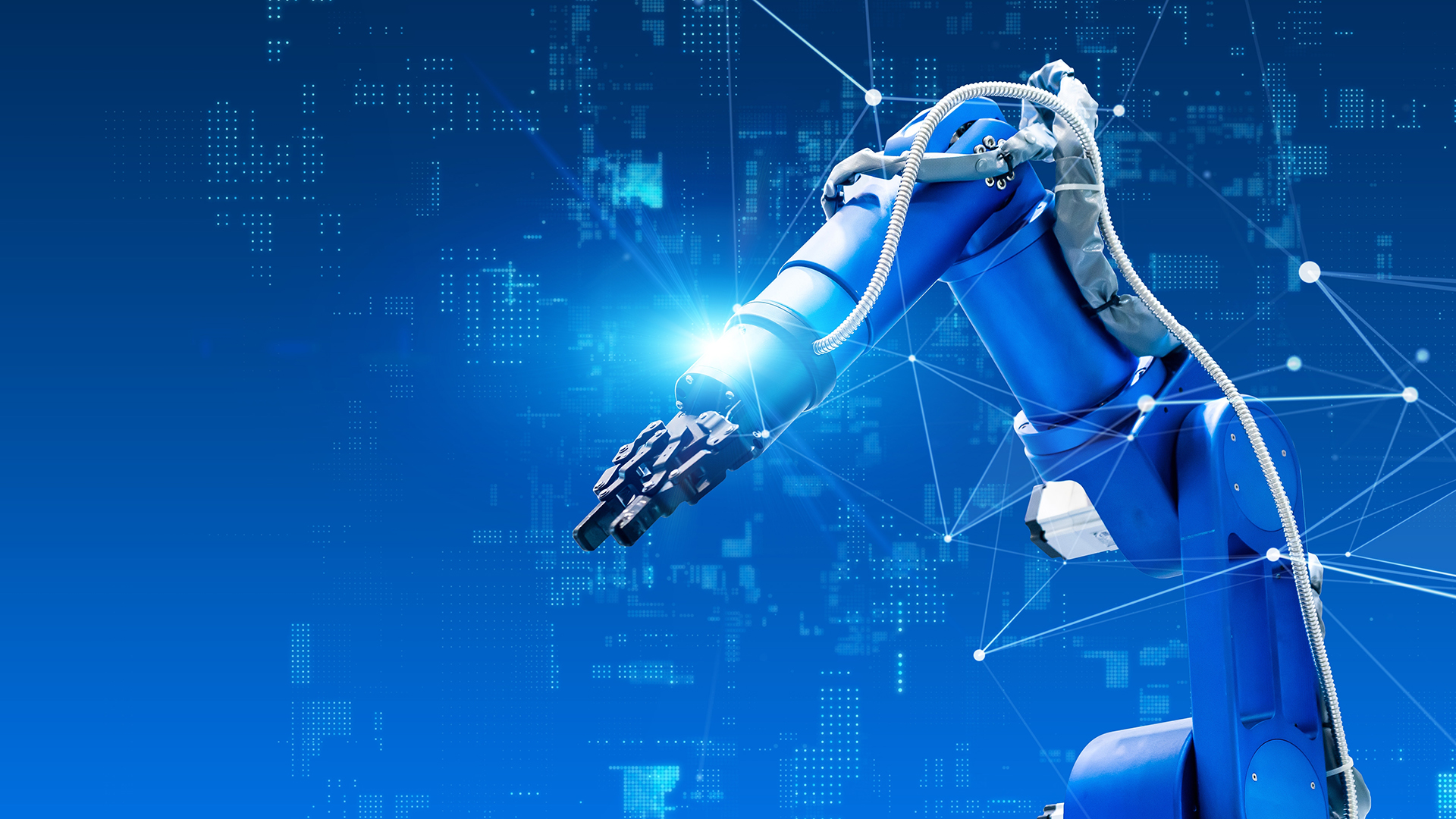
As organisations move AI from models to machines, Costi Perricos, Sebastien Burnett and Bogdan Mecu from Deloitte explain how physical AI can help improve precision, accelerate innovation and strengthen operational performance at scale.
Healthcare is intrinsically human. Yet, with a global shortage of talent, there’s pressure to accelerate scientific discovery and do more with limited resources.
AI momentum is building across life sciences and healthcare (LSHC), with 28% of industry respondents in Deloitte’s State of AI in the Enterprise report saying their organisation has moved 40% or more AI experiments into production. Over half (57%) expect to reach that level in the next three to six months.
At the same time, physical AI is expanding the industry’s ability to help turn ambition into business value, and how organisations balance innovation with governance will determine success.
Physical AI is a new source of operational capability where AI meets machine learning, sensors, controls and robotics. By bringing AI out of digital environments, organisations worldwide are helping to improve precision, consistency and performance in environments where persistent operational challenges and small errors can have significant consequences.
Over half (57%) of LSHC companies report at least limited use of physical AI. This early adoption is translating into practical applications across medicine to address repetitive, hazardous and high-risk tasks.
Automating repetitive tasks across research and operations
In drug discovery, which traditionally relies on slow, manual design-make-test-analyse (DMTA) cycles that can delay progress, AI-powered smart labs can automate important steps like sample transport and real-time data analysis with robotics. These labs can compress timelines, deliver capital efficiency and scalable infrastructure, increase discovery capacity and enhance reliability and reproducibility. By autonomously executing up to 70–80% of standardised tasks within the discovery cycle, physical AI can help organisations focus on the most promising drug candidates rather than those unlikely to succeed.
In pharmacies, manual workflows can rely on recurring tasks that are difficult to scale, risking errors and slower operations. Physical AI can automate prescription processing, filling and dispensing systems with robotic assistants, enabling pharmacists more time to apply their clinical expertise. Similarly, in a lab environment, robots can eliminate monotonous strain and help enhance consistency in high-volume, cycle-time-driven tasks like sample handling, aseptic filling, packaging and quality-control inspection.
In hospital operations, autonomous mobile robots (AMRs) can automate routine logistics, like transporting medications, meals, linens, laboratory samples and supplies. By taking on these tasks, AMRs help simplify workflows, so clinical staff can spend more time on patient care. They can also dynamically coordinate deliveries and balance workloads, helping hospitals maintain consistent service levels during high demand periods.
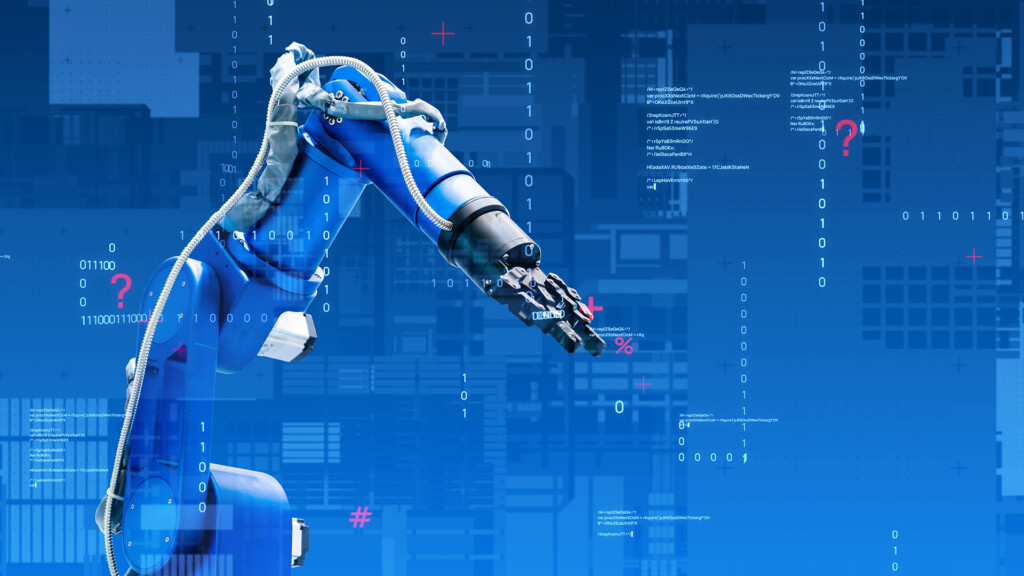
Reducing hazards in cleanroom manufacturing and handling
Contamination control and safety are paramount in highly controlled pharmaceutical manufacturing environments. Robotics can reduce the risks associated with human presence both by minimising contamination from movement, breathing and skin shedding with near-zero particulate level generation and by reducing workers’ direct exposure to hazardous drugs, active pharmaceutical ingredients and highly potent compounds.
AI-enabled robotics can also strengthen quality monitoring, deliver more consistent execution, and support cleaning and decontamination procedures to prevent hazardous exposure in manufacturing. Together, these capabilities can help improve operational efficiency, support regulatory compliance and enhance productivity while maintaining quality and safety.
Advancing precision in high-risk situations
Precision is important in surgery. Microsurgery demands movements measured in fractions of a millimetre, where even natural hand tremors and fatigue can affect delicate procedures, like nerve repair and vascular reconstruction.
Robotic-assisted microsurgery can help enhance surgeons’ instrument control, enabling greater precision and consistency during complex procedures. This can reduce tissue trauma, support better patient outcomes and potentially increase microsurgical procedure feasibility.
Physical AI can be deployed for other high-risk scenarios like open-container aseptic processing, sterile-fill operations and facility inspection in restricted or ATEX (explosive atmosphere) zones. Where the proximity of a human operator is a dominant risk factor and human interaction requires extensive personal protective equipment (PPE), permits and exposure monitoring, robots can gather gas and particulate measurements, read gauges and detect leaks, while telemanipulation platforms allow operators to remotely adjust and maintain equipment.
Turning momentum into enterprise transformation
Taken together, the examples above can demonstrate how physical AI can become a transformational enterprise capability rather than a collection of isolated technologies – and scaling it responsibly is top of mind. It may require organisations to build governance that helps enable clear human oversight by clinicians, pharmacists and researchers. Early deployments in well-governed environments can help organisations build confidence, demonstrate measurable value and establish the governance and operating models needed to scale.
The future of healthcare should not be defined by machines replacing human knowledge, but by how they can enhance it. Physical AI can take on repetitive, precise and operationally demanding work so researchers, clinicians, pharmacists and care teams can spend more time applying judgement, empathy and scientific insight. As adoption grows, the organisations that succeed will be those that keep patients and people at the heart of their strategy.
Costi Perricos is Deloitte’s global GenAI business leader; Sebastien Burnett is partner in life sciences AI and data lead; and Bogdan Mecu is physical AI lead for life sciences and healthcare at Deloitte UK.












Leave a Reply