
Oct. 12, 2026, 9:43 p.m. ET
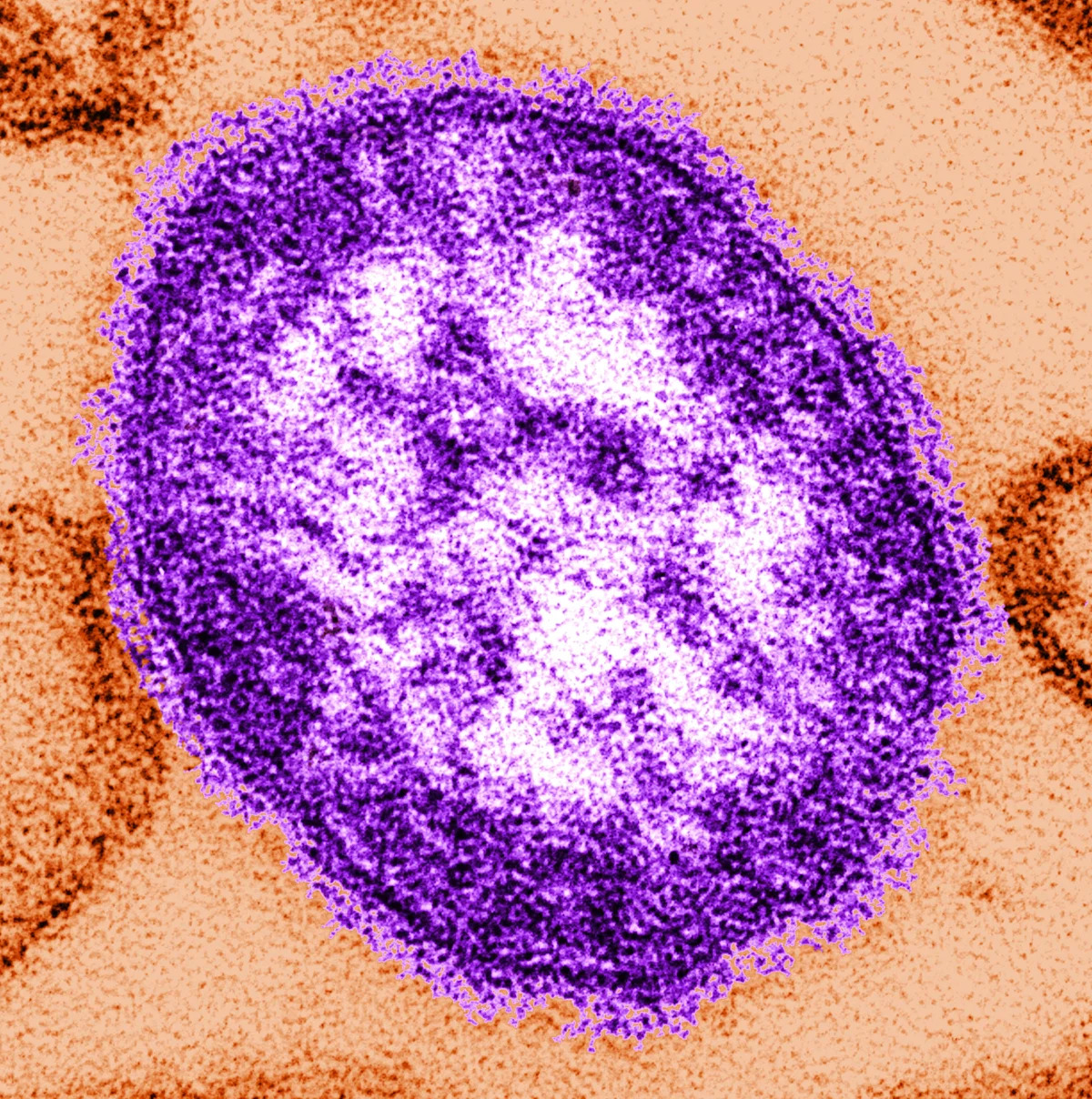
A Pennsylvania coroner announced the state’s sixth measles-associated death this year, adding to the toll of the state’s ongoing outbreak.
The Franklin County Coroner said in a statement that the death of a 39-year-old woman who was recently diagnosed with measles met the state’s criteria for a measles-associated death. The statement did not identify her but said she had several health conditions.
A spokesperson for the coroner told NBC News that the woman was unvaccinated and the “primary cause of death was a probable acute cardiac event due to possible complications of the measles.”

The Pennsylvania Department of Health said in a statement to USA TODAY that it is conducting a review of the reported death and added that it has confirmed five measles-associated deaths since late August.
“Our team has reached out to the coroner’s office and is conducting a thorough review of the reported death,” the department said. “We will update the public after our investigation is finished.”
The Centers for Disease Control and Prevention said in a statement to USA TODAY that it was “saddened” to learn about the death and that the agency “remains committed to supporting the state as it responds to the ongoing measles outbreak.”
Measles case counts rising
Data from Johns Hopkins University shows that the reported number of measles cases in the United States has reached 4,267 this year, including 1,136 cases in Pennsylvania, 1,004 in South Carolina, 995 in Texas, and 724 in Utah.
CDC data show 4,080 cases nationally and two deaths.
The remaining deaths have yet to be reflected in the CDC’s official count due to questions from Health and Human Services Secretary Robert F. Kennedy Jr. and changes in reporting made by President Donald Trump‘s administration.
Previously, the CDC generally relied on state and local health departments’ surveillance reports through the National Notifiable Diseases Surveillance System (NNDSS) when counting measles-related deaths. Under the new approach, the agency says it will count deaths only when the National Center for Health Statistics (NCHS) identifies measles as the underlying cause of death from official death records, a move experts called “puzzling” and an “extraordinary political interference.”
In August, Kennedy, a known vaccine skeptic, asked for two measles-related deaths reported by Pennsylvania’s health department to be removed from the CDC’s national tally of measles, questioning whether the virus was the cause, Reuters reported at the time.
CDC staffers had already accepted the state’s characterization of the deaths as linked to measles before Kennedy’s request.
In a terse back-and-forth that played out over social media and speeches, Kennedy accused Pennsylvania Gov. Josh Shapiro of “fabricating” the deaths, while Shapiro said Kennedy was “downplaying the severity of measles.”
The CDC said it would add the Pennsylvania death if it is reported to the NCHS.
Why is measles resurging?
Health experts say the surge has been fueled by declining vaccination rates that have left more communities vulnerable to outbreaks. Experts have linked declining vaccination rates in part to growing vaccine skepticism.
The United States declared measles eliminated in 2000 after recording just 86 cases that year, according to the CDC. But a series of outbreaks that began in early 2025, centered initially in Gaines County, Texas, has helped drive the virus’ resurgence.
In the statement on the Pennsylvania death, the CDC said that “Secretary Kennedy and CDC Director Dr. Erica Schwartz continue to recommend the MMR vaccine as the most effective way to prevent measles infection.”
During the height of the Texas outbreak, Kennedy encouraged inoculation against measles, pulling back from his previous anti-vaccine messaging.
Vaccination coverage among U.S. kindergartners decreased from 95.2% during the 2019–2020 school year to 92.5% in the 2024–2025 school year, well under the threshold necessary for effective herd immunity, according to the CDC.
Health officials will meet to determine if the United States has lost its elimination status in November, the Associated Press reported.
About 90% of unvaccinated people who are exposed to measles end up contracting it. Additionally, 1 in 5 of those people end up hospitalized, according to the CDC. It is especially dangerous for young children.
The MMR vaccine protects against measles, mumps, and rubella and protects against measles with 97% efficacy. The CDC recommends children receive the first dose at 12 to 15 months for the first dose and the second dose at 4 to 6 years.
Contributing: Reuters








Leave a Reply