
By Chibuike Oguh
NEW YORK, Oct 15 (Reuters) – An index of global equity markets ended flat on Thursday as concerns about AI spending and higher interest rates fueled further selling in technology and chip stocks.
Investors have been unnerved by valuations of companies in the AI ecosystem as more voices question the sustainability of demand for data centers.
On Wall Street, the Philadelphia SE Semiconductor index ended down nearly 1%. The benchmark S&P 500 and the Nasdaq reversed losses in early trade and finished higher, led by healthcare and materials stocks, while the Dow gained 1%.
The Dow Jones Industrial Average rose 1.08%, the S&P 500 rose 0.33%, and the Nasdaq Composite rose 0.08%.
“There’s definitely a lot of investor skittishness right now about the path forward for AI,” said Amanda Agati, chief investment officer at PNC Financial Services Group.
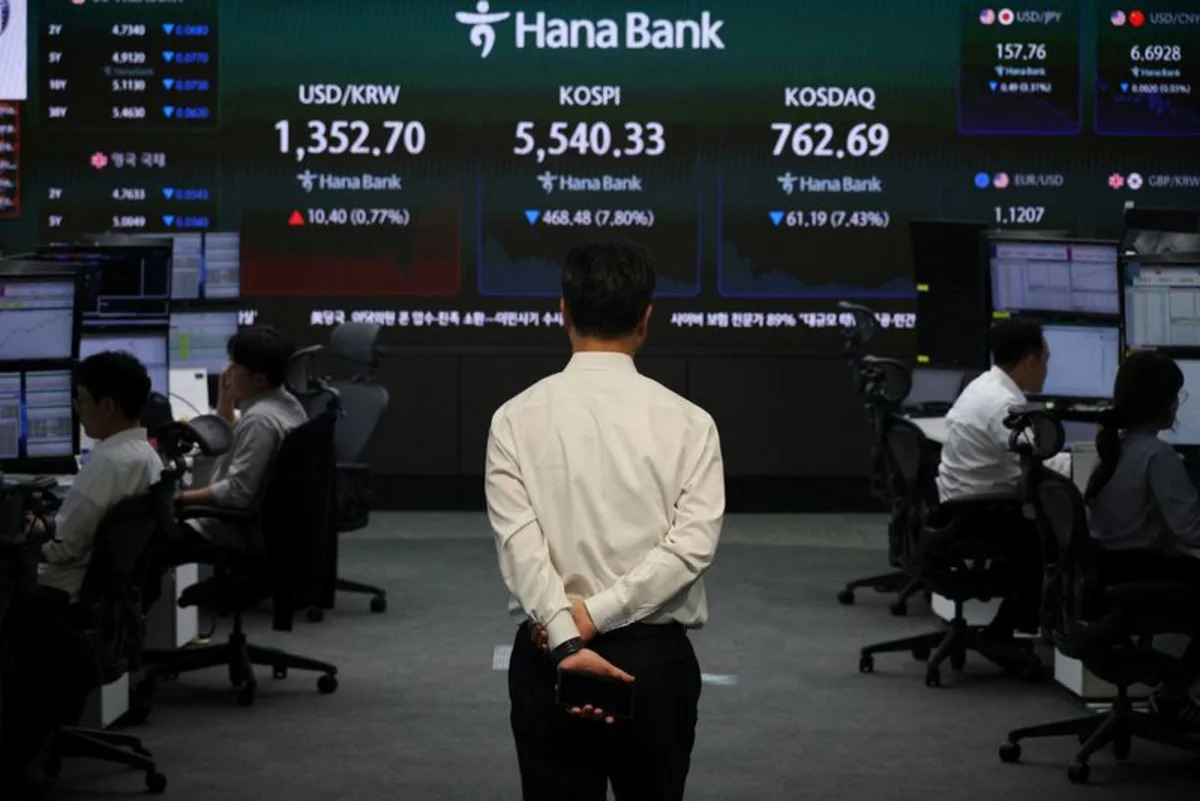
A brutal tech-led selloff had hit stocks overnight in Asia. South Korea’s KOSPI index, whose flock of top chipmakers made it one of the main beneficiaries of AI euphoria, plunged almost 8%, while the Nikkei 225 fell nearly 5%.
“I think the selloff reflects investor caution towards the more vulnerable segment of the AI ecosystem, with tech chiefs advocating a slower pace of frontier model development,” said Rong Ren Goh, portfolio manager at Eastspring Investments.
“Markets increasingly question the sustainability and trajectory of demand for computing capacity. These concerns are compounded by higher funding costs, which raise the investment hurdle rates of capital-intensive AI infrastructure projects.”
MSCI’s broadest index of Asia-Pacific shares outside Japan closed 3.12% lower, marking its biggest one-day drop since late July. MSCI’s gauge of stocks across the globe fell 0.06%.
European stocks erased early-session losses and finished up 0.38%.
BOND YIELDS FALL
Benchmark 10-year US Treasury yields fell back towards 5% in what was their biggest daily drop in more than a year.
US producer prices rose by the most in 4-1/2 years in September as goods and services costs increased, suggesting that inflation pressures are spreading beyond energy.
New US retail sales data showed retail sales increased more than expected last month, boosted by higher gasoline prices, but the data also pointed to spending elsewhere remaining moderate.
The yield on benchmark US 10-year notes fell 12.58 basis points to 5.064%.
DOLLAR DROPS
Wednesday’s US inflation data had once again tweaked expectations for the Fed’s rate path, with traders briefly pricing in roughly even odds of a hike this month, before scaling back those bets.














Leave a Reply