
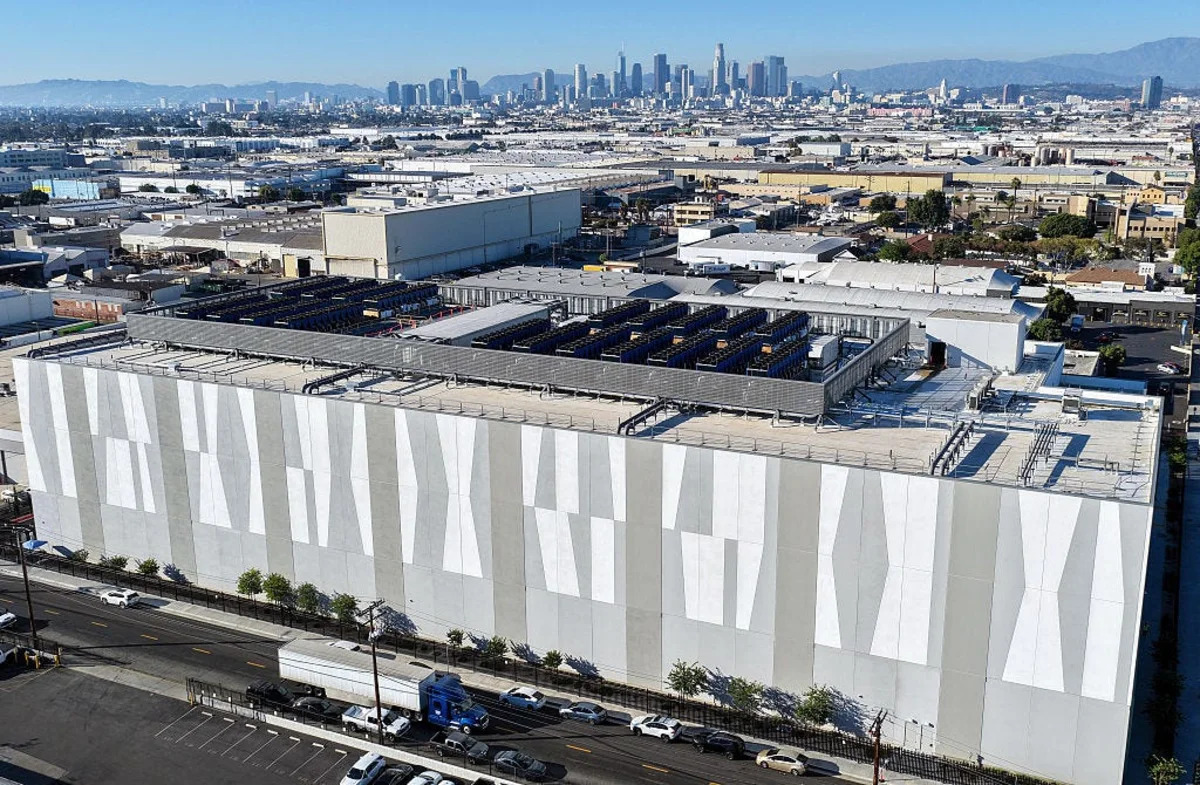
Residents of one Southern California city face a straightforward question on the ballot: Will they affirm their city council’s ban on data centers and amend city code?
Voters will decide on Nov. 3 on a measure specific to Alhambra. City officials in the San Gabriel Valley previously adopted an ordinance that essentially bans data centers, according to city documents.
It joins numerous jurisdictions across California that have taken action to restrict data center development as recently as this month. Earlier in October, for instance, Mendocino County extended its moratorium on approving new data centers in its unincorporated areas through August 2028 so that the county can evaluate its “public health, environmental and fiscal impacts.”
Far south, Calexico’s city council outright banned data centers in its swath of Imperial County in September, where public commentators expressed concerns about data centers’ water and energy use, noise levels, and air pollution; the American Lung Association says Imperial County already suffers from ozone and particle pollution.
The boom in artificial intelligence requires infrastructure to support it, yet a majority of California adults oppose building data centers to support AI in their areas, according to a Public Policy Institute of California survey released in July.
Nationwide, at least 16 states have taken action to halt data centers, according to the National Conference of State Legislatures’ tracker.
Across the state, communities are going on the defensive. They include:
-
Baldwin Park: City council extended its moratorium on new data centers by just over 10 months in April.
-
Coachella Valley: Palm Springs, Coachella, Desert Hot Springs, and Indio have all enacted moratoriums or bans on data centers, according to The Desert Sun, part of the USA TODAY Network.
-
Los Angeles County: Amy J. Bodek, director of the Department of Regional Planning, prohibited “large-scale data centers that power AI” in unincorporated Los Angeles County in a September memo, according to Supervisor Hilda Solis, who said she’ll take further action to implement county recommendations on data centers supporting AI.
-
Montebello: City council adopted a temporary ban on data centers in February.
-
Monterey Park: Voters on June 2 approved a ban on data centers in the city, citing a need to protect air quality, drinking water resources, and to prevent any impacts to electricity and water rates.
-
Oakland: City council passed a 45-day moratorium on approving data centers in October.
-
San Francisco: The Board of Supervisors passed a 45-day moratorium banning data centers in the city in October.
-
South El Monte: The City Council adopted a 45-day moratorium on approving and accepting data center applications in October.
-
Tulare County: County supervisors extended a moratorium on new data centers in unincorporated areas by just over 10 months, according to the Visalia Times-Delta, part of the USA TODAY Network.
California has more than 200 active data centers, according to the California Energy Commission — although it’s not immediately clear what kinds of data centers this figure makes up.
Earlier this year, Gov. Gavin Newsom signed several data-center-related bills into law. They include requirements for data centers to report on energy consumption, water use, and fuel use; rules on data center expansions and water use; and rules on energy costs. The rules come as most Californians worry about the environmental impact of building more data centers for AI, according to PPIC.
Paris Barraza is a reporter covering Los Angeles and Southern California for the USA TODAY Network. Reach her at pbarraza@usatodayco.com.
This article originally appeared on USA TODAY: California communities are fighting back on data centers













Leave a Reply