


Qatar is offering foreign tech founders up to $5.5 million in funding to back growth-stage startups that want to operate in the gas-rich Gulf country, alongside visas, subsidised housing, and business support. Behind the incentives is a broader ambition to make Qatar a destination for global entrepreneurs.
For a tech founder considering where to build their next company, Qatar is making an unusual offer: move your business to the Gulf state, and receive up to $5.5 million in investment funding, help securing residency, subsidised office space, and housing support.
The offer, open to founders globally, including those from Africa, comes through the Startup Qatar Investment Programme, an initiative run by the government-owned Qatar Development Bank (QDB) to attract foreign entrepreneurs looking to establish or expand their businesses in the country.
African founders have been showing interest in Qatar for a while. In February 2024, about 200 African startups participated in the first Web Summit Qatar, the country’s biggest tech event—nearly 20% of the 1,043 startups that exhibited. At the time, the turnout was the largest African startup presence recorded at an inaugural Web Summit, according to Qatar’s Government Communications Office (GCO).
Two years later, Qatar could still be relevant to African tech startups seeking new funding sources and expansion opportunities. According to TechCabal Insights’ State of Tech in Africa 2025 report, African startups raised $3.42 billion across 502 deals in 2025, up 53% from the previous year.
But funding remained concentrated in Nigeria, Kenya, Egypt, and South Africa, while investors became more selective. Qatar’s programme could offer another funding option for African founders looking to grow beyond their home markets.
Qatar is offering a possible route into the Gulf, where founders could access new investors, customers, and business partnerships. However, the opportunity comes with conditions. Startups must establish or expand their operations in the country, and investment is tied to agreed milestones. The Gulf country wants founders to bring their technology, businesses, and expertise into its economy, and is prepared to help finance the move.
The programme has two funding tracks. Early-stage founders can access up to $1.1 million to launch operations in Qatar, while established startups can receive up to $5.5 million to expand into the market. QDB releases the funding in stages as startups meet agreed business milestones.
It underscores Qatar’s effort to build an economy less dependent on natural gas, the resource that has made it one of the world’s wealthiest countries, with a gross domestic product (GDP) per capita of $128,883 in 2025, adjusted for purchasing power parity, according to the World Bank.
Who Qatar wants to attract
The Startup Qatar Investment Programme targets two categories of entrepreneurs: those with viable tech products ready for commercial development and those already operating tech businesses that can expand internationally.
Under the START category, applicants must have developed a proof of concept or minimum viable product (MVP). They also need a clear business model, an identifiable market opportunity, a technology development plan, and a credible revenue strategy.
The GROW category has stricter requirements. Businesses must have operated for at least three years, demonstrate financial stability, have an experienced management team, and show a history of securing funding.
QDB is targeting companies working in AI, fintech and digital financial services, cybersecurity, healthcare, climate technology, agricultural technology, robotics, education, energy and enterprise software, among other sectors. The list is not exhaustive.
For a Nigerian fintech building payment infrastructure, a Kenyan agritech company developing agricultural technology, or an Egyptian software startup seeking customers outside Africa, the programme could offer a route into a new market. But to qualify, startups must show how their businesses can contribute to Qatar’s economy.
To apply, startups must submit a pitch deck, founder details, financial records and projections, and plans for operating in Qatar. Applications then undergo screening, interviews, and financial and business assessments before a funding decision is made.
However, the money is not an outright grant. QDB said it will release funding in instalments as startups meet agreed milestones. Even if a company qualifies for the programme, it is not guaranteed the full $1.1 million or $5.5 million.
The programme also does not publicly disclose whether QDB will take equity in the startups it funds, or what other financial conditions founders must accept.
For founders considering the move, other costs remain. Subsidised housing and office space could reduce setup costs in Doha, Qatar’s capital, but QDB has not specified how much it will cover. Startups will also have to consider hiring costs, relocating teams, and operating in an unfamiliar market
Beyond the investment cheque
Qatar’s proposition extends beyond capital. Successful applicants may receive waivers on company registration and licence renewal fees, subsidised co-working facilities, help recruiting talent and interns, access to research grants, mentorship, and opportunities to demonstrate their products at exhibitions, helping to reduce the financial and administrative burden of establishing operations in a foreign country.
In February 2026, Qatar also introduced a new residency programme to make it easier for foreign entrepreneurs and senior executives to live and work in the country.
Under the programme, eligible founders can obtain a renewable five-year residence permit without needing a local sponsor. To qualify, they must be endorsed by a recognised business incubator in Qatar and show that they have maintained a bank balance of at least QAR 36,500 ($10,019) over the previous three months.
Successful applicants can also bring their families to Qatar and access business support services, including mentorship and incubation programmes.
However, the permit is not a digital nomad visa that allows anyone to move to Qatar and work remotely. It is specifically created for entrepreneurs looking to establish or grow businesses in the country. Founders who travel frequently for business could find it useful, as the five-year residency removes the need to apply repeatedly for short-term visas.
Why Qatar is spending millions to attract founders
Qatar launched the Startup Qatar Investment Programme in February 2024, initially offering up to $500,000 to early-stage startups and $5 million to established companies expanding into the country. The funding limits have since increased to $1.1 million and $5.5 million, respectively.
In November 2024, Qatar said nearly 2,000 foreign startups, including the United States, Canada, Britain, Turkey, and India, applied for the programme. It selected only 11 startups that secured a combined $12 million in funding and benefits. AI startup Nybl, fintech company Wahed, and sports-tech startup Huupe are part of the selected cohort, alongside businesses in education, healthcare, and other sectors.

These programmes are part of Qatar’s wider push to attract startups and investors. In 2024, the Qatar Investment Authority (QIA) launched a separate fund-of-funds to bring international venture capital (VC) firms into the country and support its growing tech sector.
The fund, launched with $1 billion in 2024, received another $2 billion in February 2026, bringing Qatar’s total commitment to $3 billion. The programme now supports 12 regional and international VC fund managers, including firms investing in AI, fintech, and other tech sectors.
Some of the investors Qatar is attracting are already looking towards Africa. London-based UTOPIA Capital Management, one of the VC firms backed by the QIA, targets early-stage startups across Africa, Southeast Asia, and the Middle East.
In February 2025, UTOPIA’s managing partner, Alina Truhina, told the publication Semafor that its Doha-based fund planned to invest in fintech, logistics, healthcare, and agritech, focusing on bringing foreign startups into Qatar. At the time, the firm was also considering an investment in a Qatar-based healthtech company founded by a Tunisian entrepreneur.
Qatar is trying to reduce its dependence on oil and gas by developing other industries, including technology. But building a thriving startup ecosystem requires more than government funding. The country also needs entrepreneurs, skilled workers, private investors, and businesses that can grow beyond its small domestic market.
The International Monetary Fund (IMF) has also urged Qatar to diversify its economy, make financing more accessible to small businesses, and encourage greater private-sector investment.
But Qatar still trails its Gulf neighbours in attracting startup investment. In 2025, startups in the country raised QAR 214 million ($59 million), up 81.36% from the previous year, according to venture capital data platform MAGNiTT. That accounted for 1.55% of all startup funding in the Middle East and North Africa (MENA) region. Qatar ranked fourth in the region, behind Saudi Arabia, the United Arab Emirates (UAE), and Egypt. Saudi Arabia led with $1.72 billion, followed by the UAE with $1.58 billion.
The gap shows how much ground Qatar has to cover. Saudi Arabia and the UAE attracted over $3.3 billion between them in 2025, while Qatar is still building a startup ecosystem where most investment goes to early-stage companies. Qatar recorded 33 venture capital deals that year, with 93% of them going to pre-seed and seed-stage startups.
Qatar’s relatively small VC market could also make it difficult for startups to raise more funding as they grow. Most investment deals in the country remain concentrated at the earliest stages, leaving founders with fewer local options for larger rounds.
The country is also trying to raise its profile as a tech destination by hosting major industry events. In February 2026, Web Summit Qatar, now in its third year, attracted more than 30,000 participants, 1,637 startups, and nearly 1,000 investors from 127 countries, according to Qatar’s Government Communications Office.
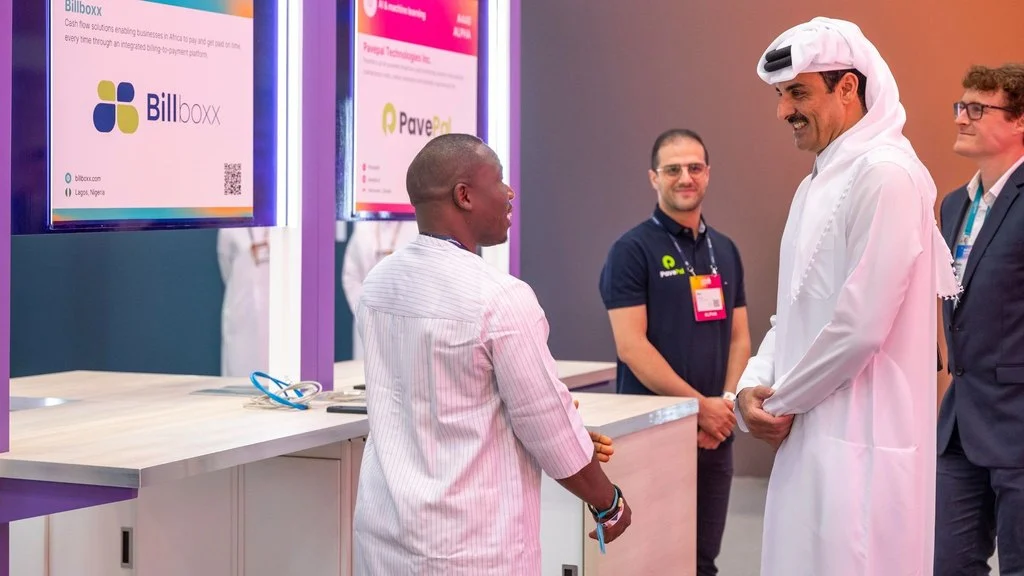
Qatar will also host the third edition of the Future AI Summit Qatar on November 23, convening tech executives, government officials, AI specialists, and digital transformation leaders to discuss AI adoption across industries.
Some African startups are already exploring opportunities in Qatar. In 2024, DeepLeaf, a Moroccan agritech startup, and Weego, a Moroccan-Senegalese mobility company, won first and second place at the Qatar Africa Business Forum, an annual event connecting investors and businesses from Qatar and Africa. In 2025, DeepLeaf said it subsequently held talks with Hassad Food, Qatar’s agricultural investment company, about expanding into the country.
RBetach, a Nigerian HR-tech startup, has gone further, establishing operations in Doha and joining Qatar’s Digital Incubation Centre and Qatar Development Bank’s Talent Community in 2025.
The Qatar Financial Centre (QFC), the country’s business registry and financial services hub, also lists companies from Nigeria, Kenya, Ghana, Rwanda, Senegal, and South Africa in its directory. It remains unclear how many are tech startups.
Doha’s international airport and Qatar Airways network make the country a potential base for entrepreneurs managing business relationships across Africa, Europe, Asia, and the Middle East.
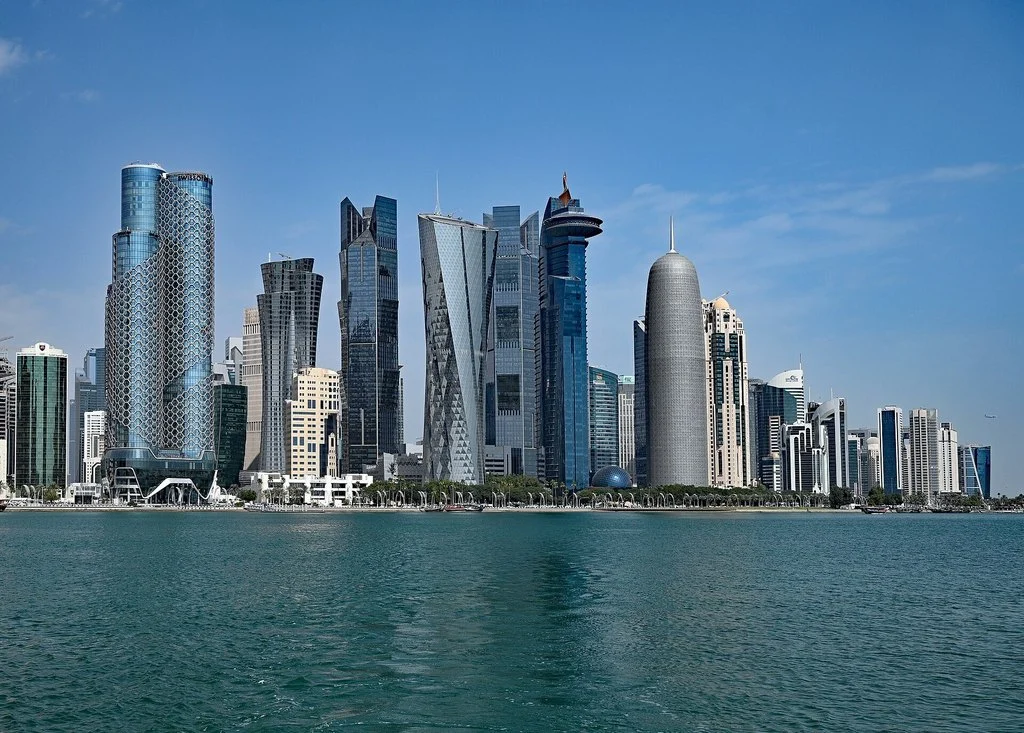
North African startups, especially those in Egypt, could find doing business in Qatar attractive because of proximity to the Gulf and existing business ties to the region. Founders in East Africa could also benefit from direct flights to Doha.
But the move may be a harder sell for startups in West and Southern Africa, where longer travel distances, relocation costs, and the need to maintain existing teams and customers could outweigh the benefits of expanding into Qatar.
Qatar does not tax employment income, and foreign entrepreneurs can fully own their businesses under certain arrangements. Companies registered with the Qatar Financial Centre pay 10% tax on locally sourced taxable profits, a useful incentive for founders to set up regional bases.
Yet, convenience does not make Qatar an inexpensive destination.
Housing, private education, recruitment, and international relocation can significantly affect a founder’s operating budget. Doha’s extreme summer heat may also prove uncomfortable for entrepreneurs accustomed to more temperate climates.
More importantly, Qatar’s domestic market is small. As of March 2026, its population stood at 3.37 million, according to the country’s National Planning Council. Businesses pursuing substantial growth would probably need customers elsewhere in the Gulf and beyond.
Can the incentives create a lasting startup economy?
Qatar has shown that its financial incentives can generate international interest. Whether they can produce enduring technology companies is a more difficult question.
The Global Entrepreneurship Monitor (GEM), a global research firm that tracks entrepreneurial activity across countries, reported that the proportion of adults starting or running new businesses in Qatar declined from 14% in 2023 to just over 2% in 2025, suggesting that entrepreneurial activity remains vulnerable despite the country’s investment in its ecosystem.
For founders considering this move, several questions remain: how much ownership will they surrender for investment, how easily can they secure follow-on capital, and how quickly can their companies acquire paying customers?
Attracting founders and retaining them are different. Subsidised offices and accommodation can ease relocation, but sustained business growth depends on demand, skilled employees, and a supportive commercial environment.
The programme’s success will ultimately be measured by businesses that stay, employ people, and continue to grow years after the initial incentives expire.
Start Selling Online with ShopOpen24
Are you a small business owner or entrepreneur? Discover seller opportunities and connect with customers through ShopOpen24.
Explore ShopOpen24 →ShopOpen24 | Local Products. Global Reach.










Leave a Reply