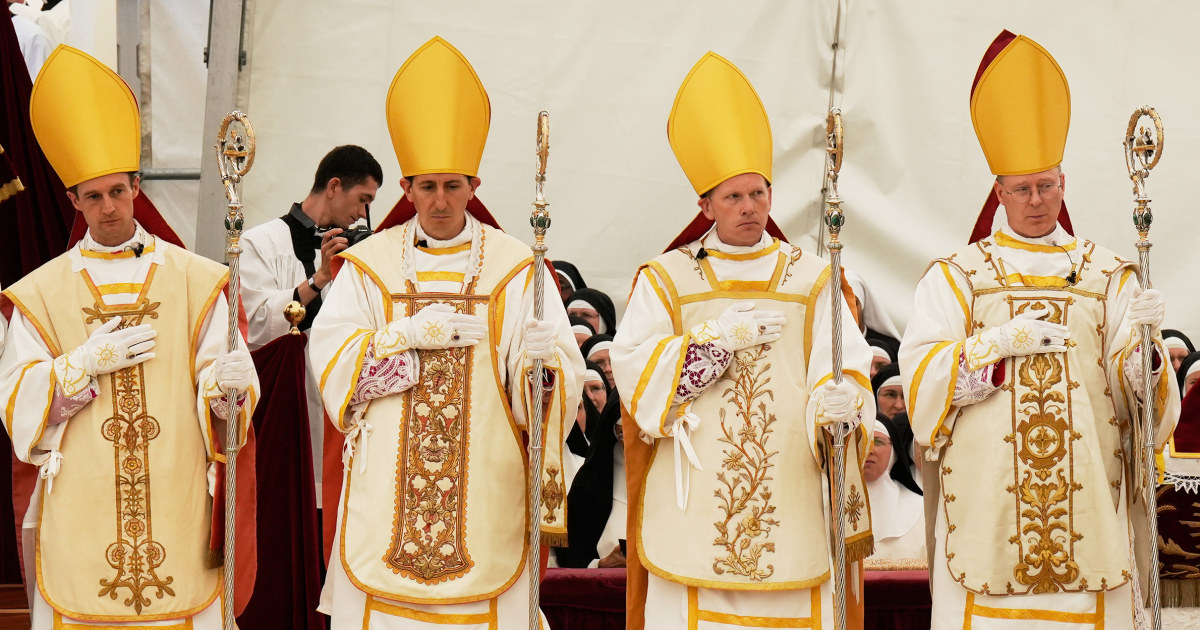
The warning was ignored, and the following day hundreds of robed priests joined thousands of members of a congregation who prefer the traditional Latin Mass over modern liturgies. The ceremony was livestreamed on the society’s YouTube channel with simultaneous translation into several languages.
Founded in defiance
Named after Pope Pius X, who served from 1903 to 1914 and was known for his opposition to theological modernism, the Society of St. Pius X was founded by French Archbishop Marcel Lefebvre in 1970 in opposition to the modernizing reforms of the Second Vatican Council, also known as Vatican II. The society’s followers are also known as Lefebvrists or Lefebvrians, after its founder.
Vatican II meetings, held between 1962 and 1965, revolutionized the church’s relations with other Christians and people of other faiths, including improving ties with Judaism.
It also allowed for Mass to be celebrated in local languages — a move the SSPX is particularly opposed to. Instead, the society has expressed a strong preference for the use of the preconciliar Tridentine Latin Mass, which it says maintains a sense of mystery and formality.
Rejecting Vatican II as a “neo-Modernist and neo-Protestant tendency,” Lefebvre wrote in 1974 that the reforms had “contributed and continue to contribute, to the demolition of the Church.”
The following year, the Vatican suspended him and suppressed the society, although the group continued to grow. It currently operates seminaries, schools, retreat centers and chapels in dozens of countries.
SSPX says it now has six bishops, 751 priests, 264 seminarians training in five seminaries, 145 religious brothers, 88 oblates and 250 religious sisters representing 50 nationalities.
In 1988, after Lefebvre consecrated four bishops without papal consent, he was excommunicated by the Vatican along with those four bishops.
The SSPX did not consecrate any other bishops until this week.
According to Gemma Simmonds, a Catholic nun who serves as the director of the Religious Life Institute at the Margaret Beaufort Institute of Theology in Cambridge, England, the society would have known that consecrating new bishops would provoke a grave response.
The group has effectively excommunicated itself, she said, “choosing to take a stand, which they know is in direct contradiction to the church’s teaching.”
Simmonds said in a phone interview Friday that the SSPX was saying, “We like the old rules and not the new ones, and we do not accept that you have any right to adapt or modify the rules.”
Reconciliation attempts
Several pontiffs have tried to reconcile with the SSPX, including Pope Benedict XVI, who in 2007 liberalized celebration of the old Latin Mass before lifting the excommunications of the four SSPX bishops two years later.
The move ended in embarrassment for the pope when one of the four, British Bishop Richard Williamson, told Swedish television shortly before Benedict’s decree was made public that he didn’t believe Jews were killed in gas chambers during World War II.
Benedict later acknowledged that a simple internet search would have turned up Williamson’s views.