
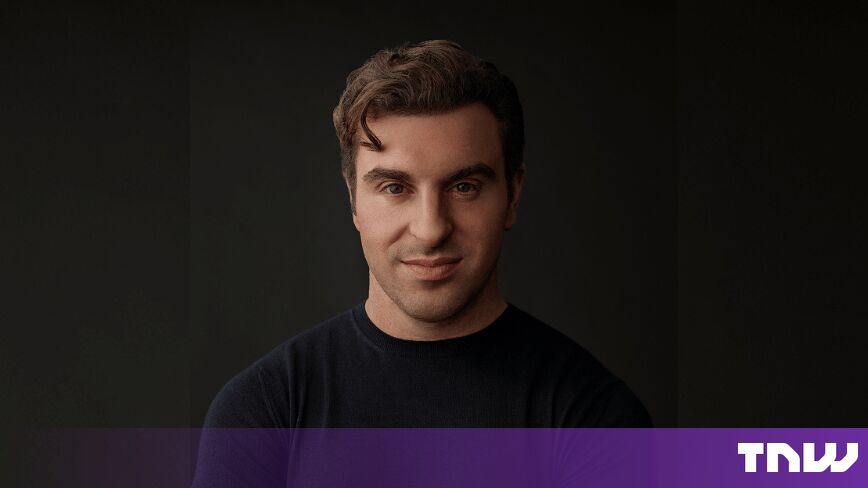
The Airbnb chief executive made the argument on the Yahoo Finance podcast Power Players with Brian Sozzi this week.
His diagnosis has two parts. “I think part of it’s a narrative issue that we’re not talking about AI correctly,” he said.
The second part is the product. “We need to actually be developing more products that just regular people can use.”
The number he chose implicates him
Chesky supplied the statistic himself, which is what makes it worth repeating. In Y Combinator’s most recent batch, 159 of 175 companies were enterprise rather than consumer.
He is on Y Combinator’s board. That does not make the observation wrong, and it does complicate the framing.
He put it as a loss of nerve. Compared with when he started Airbnb 18 years ago, founders now seem “afraid” to build for consumers, he said.
“Almost all AI is enterprise,” he added. “I think consumer is a huge gap.”
What he thinks has actually shipped
His assessment of the field is blunter than most people in it would risk. “There’s been very little progress on consumer AI,” he said. “ChatGPT is about what we’ve seen.”
He expects that to change within two to three years, in what he called a renaissance around consumer AI.
The example he reaches for is medical. AI could give somebody a doctor on demand who could not otherwise afford one, he argued.
That is the pitch, and it is worth noticing that it describes a product nobody has shipped.
The example also skips the hard part. Medical advice is regulated, and the obstacle to a doctor on demand is licensing and liability rather than model quality.
The thing he confirmed and then refused to discuss
Buried in the same conversation is a first. Chesky confirmed that Airbnb has an AI lab, which the company had never publicly acknowledged.
“I can confirm it exists, but I’m going to not say anything more about it right now,” he said.
Set that beside his complaint that the industry is not talking about AI correctly. He is right about the narrative problem, and he just demonstrated one version of it.
Airbnb wants to be the super app
The commercial plan behind the argument arrived in the same interview. Chesky said Airbnb is roughly a year to 18 months from becoming a fundamentally bigger service, adding rental cars and hotel rooms.
He framed the ambition honestly. Super apps exist in China, and he questioned openly whether one is possible in the US.
He also expects search to change first. Chatbots will handle destination discovery and itineraries before they handle reservations.
Airbnb will be “a completely different search paradigm”, he said.
Europe points the other way for the biggest platforms. The Digital Markets Act exists to prise bundles apart, although it applies to designated gatekeepers and Airbnb is not one of them.
That still shapes the ambition. A travel super app that worked would eventually be large enough to attract exactly that scrutiny.
The polling gives him his strongest point
This is where his case stops being a vibe. Pew Research found in June that 40% of US adults expect AI’s effect on society over the next 20 years to be negative.
Only 16% expect it to be positive. That is a two-to-one deficit on a technology the industry is spending hundreds of billions to build.
The response so far has mostly been communications. Several AI companies have run feel-good advertising, and chief executives keep publishing manifestos, including Mark Zuckerberg’s personal superintelligence essay this month.
Public patience with tech is thin more broadly. A recent poll found 61% of Americans favour stronger oversight of social media.
Some people are opting out in smaller ways. The desk has covered screen-fatigued workers reaching for pen and paper.
There is a duller reason enterprise won
Chesky calls it fear. The likelier explanation is arithmetic, and it deserves stating against him.
Enterprise buyers pay, sign multi-year contracts and tolerate rough software. Consumers churn, cost money to acquire, and expect the good version free.
An AI company burning cash on inference goes where the revenue is. That is not cowardice, it is the only survivable choice for most startups.
Airbnb’s own results make the point. AI customer service resolved 45% of inquiries last quarter and cut support costs per booking by 16%.
Those are cost-side wins, not consumer products. The most cited AI success at the company arguing for consumer AI is an internal efficiency number.
The counterexamples exist, including in Europe
The gap is real but it is not empty. Stockholm’s Lovable raised $400m at $13.3bn for a product that lets people build software by describing it in ordinary language.
That is closer to Chesky’s brief than most of what Silicon Valley shipped this year, and it came out of Europe.
Airbnb itself is the other answer. Its AI-native quarter produced $3.6bn of revenue, up 17%, with bookings up 10%.
So the company making the argument is also making money from it. That is a reason to take the argument seriously and to read it carefully.
The line that will get quoted
One claim from the interview will outrun everything else. “One person could be a billion-dollar company,” Chesky said. “I think we might’ve already seen that.”
He offered no example. He did say he codes personally, in Anthropic’s Claude Code, and that watching agents work is how he learns.
He also placed the moment historically. This is the fourth window in computing, he said, and bigger than the other three combined.
What would settle it
Two things, and the first is his own company. Airbnb has 12 to 18 months on the record for becoming something bigger than a rentals platform.
The second is the next Y Combinator batch. If the enterprise share falls meaningfully, the industry heard him. If it holds near 90%, founders are answering to their investors rather than to the polling.
Chesky is arguing that Silicon Valley should build things ordinary people want. The uncomfortable version of his own evidence is that it already knows what they want, and has decided it cannot make money selling it.











Leave a Reply