

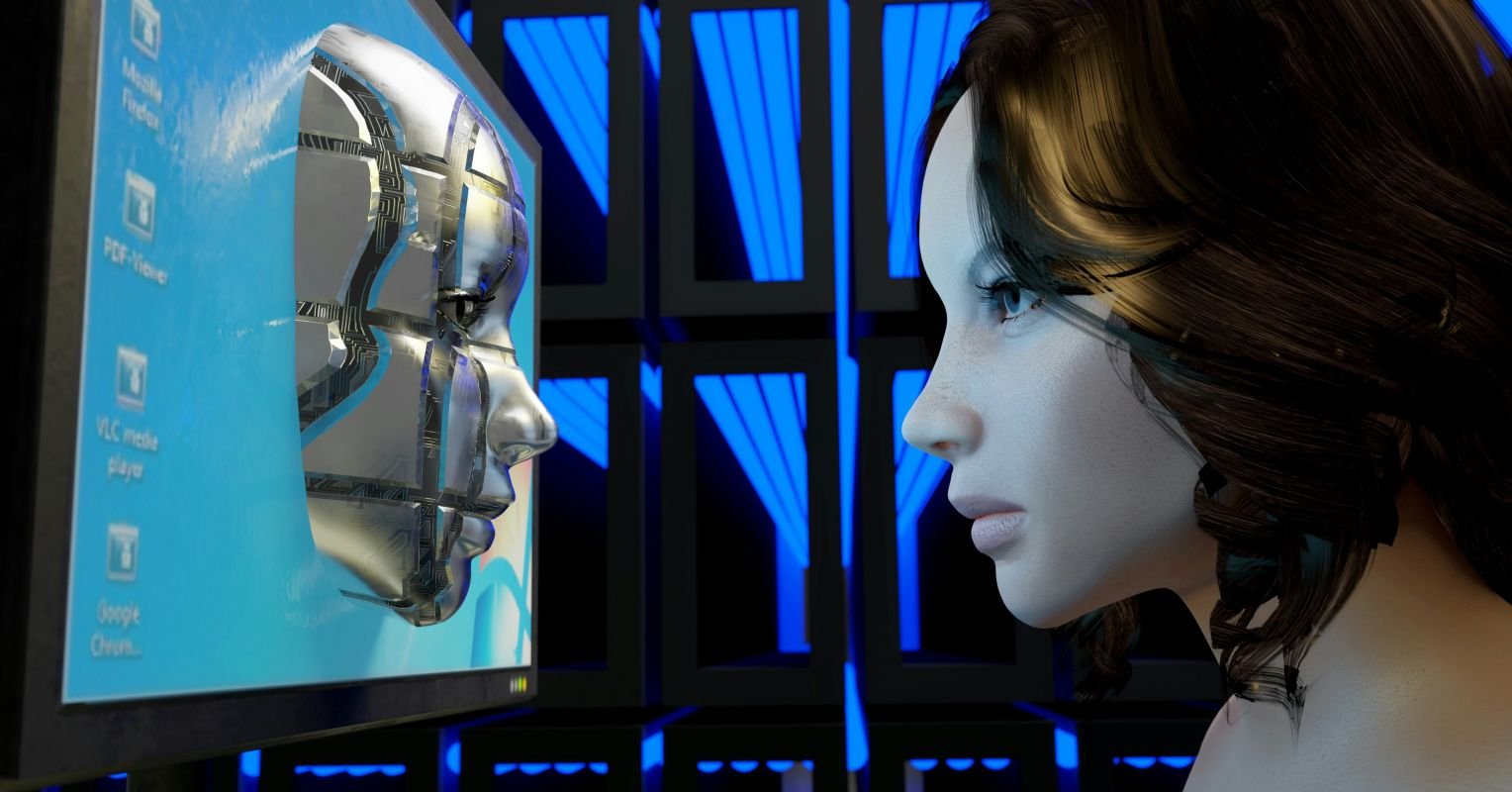
Do you remember when it would take a minute or two for a website to fully load? The picture would reveal itself in incremental pixels until you could finally view it in its entirety. It was the era of banner ads and pop-ups, a rudimentary transference of billboard marketing to the World Wide Web.
Later, algorithms scanned, then shaped, our behavioral and consumption patterns. The length of time a user watched a video or stopped scrolling to “read more” became the metric for advertising effectiveness. Artificial intelligence (AI)-driven technology measures how you behave online, like a little spy watching your every move without your noticing.
Welcome to the attention economy. “Pay attention!” the internet demands. “Or at least get paid for it,” advertising executives suggest. That is what influencer marketing is all about. The more clicks, the more views, the more money flows.
Reclaiming Attention
Joe Marchese and Jonathan Bing have penned a new book, Human Dot AI, that chronicles the rise of advertising from the era of Mad Men advertisers on Madison Avenue to today. Both authors have extensive experience in the industry themselves. Marchese is an entrepreneur and media executive, CEO of Human Ventures Holdings, co-founder of Casa Komos Brands Group, and chairman of Groundswell. He previously founded true[X] and led advertising revenue at Fox Networks Group. Bing is a marketing and communications executive who has held leadership roles at Netflix, 21st Century Fox, and Vice. He is also a journalist who has written for The New York Times, Los Angeles Times, and Wired. The authors wish to help readers reclaim their attention or, in their words, to “restore a sense of agency, choice, and control over the time and attention that algorithms are not designed to give you.”
Do you remember the ads “Have a Coke and a smile” or “I’d like to teach the world to sing in perfect harmony”? They lent viewers a sense of community and connection through catchy slogans and jingles that captured our collective imagination. Watching television, in a sense, was a shared experience. No fast-forwarding through commercials, no pre-recording to watch your favorite show at a later time. The Super Bowl remains an exception as one of the most popular live televised sports events of the year in which the legendary commercials running at roughly $10 million per 30-second slot are often as memorable as the game itself. According to Nielsen, a global leader in measuring audience behavior, however, nearly half of all TV viewers have switched to streaming services such as Netflix and YouTube. In a recent video call, Marchese admitted that consuming social media today “is like watching television,” but not in the same way we used to in the pre-Internet era. Today, asynchronous viewing has made watching programs a much more isolating experience.
With 5.8 billion mobile phone users worldwide, 70 percent of the planet’s population has a robust digital communications-based lifestyle. Marchese and Bing aim to offer a way back to human connection despite our AI-saturated lives. Around the time that Facebook’s News Feed feature was launched (yes, there was a time when you actually had to actively look for people by clicking on various profiles), it stopped being a place to connect and became more a place to advertise, albeit subtly. Advertising became adjacent to social activity itself, deeply embedded in the content without our realizing it. Consumer engagement became the name of the game. No more annoying pop-up ads. Enter the gamification of social media consumption. We are no longer simply consuming information (and patiently waiting for pictures to load); we are now participating in a game designed to capture and retain our attention—all day long. As a result, two problems have emerged: the lack of editorial supervision and the machines’ lack of understanding humans. Content is no longer about bringing people together but, rather, about keeping people engaged and enraged.
Algorithms Cannot Replace Human Connection
“[N]o algorithm can replace what happens when people come together around something real—a shared experience, story, or glass” (Marchese & Bing, 2026). An automated, algorithm-driven life flattens intimacy, commercializes our need for connection, and monetizes our very human desire to love and be loved. How we spend our time and attention truly matters. These resources are finite, but an algorithm doesn’t care why a user is engaged with the content. It is designed to feed us more of the same.
Digital hygiene is key to maintaining a sense of equilibrium in our tech-driven lives. Attention-grabbing is as old as the advertising industry itself. From the town crier to our social media apps, brands yearn for our attention. But in the end, we, as humans, get to decide if we give it or not.









Leave a Reply