

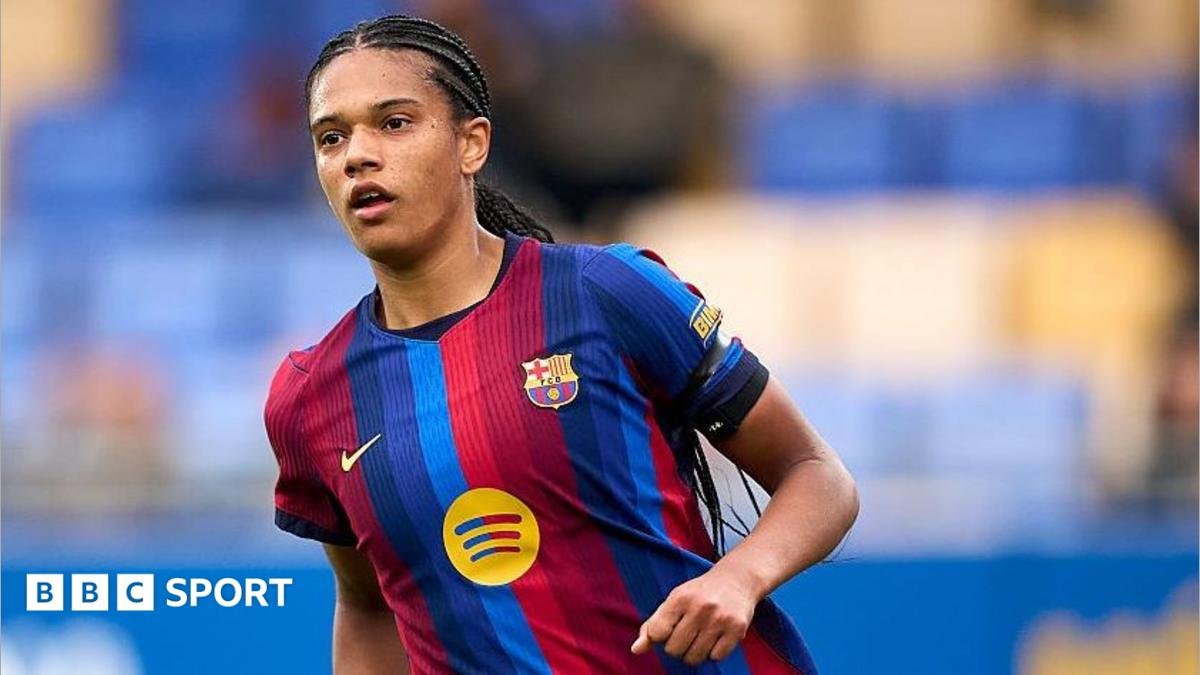
When Spain great Putellas left Barcelona in the summer to join London City Lionesses, it felt like the end of an era.
She was followed to Bromley by defender Mapi Leon, while full-back Ona Batlle joined Arsenal and Salma Paralluelo swapped Barcelona for European rivals Lyon.
All four had played a key part in Barcelona’s dominance and ended their time at the club with a historic quadruple, including a fourth Champions League last season.
So how have Barcelona coped with losing such big players?
“Every season is different. There are always changes but we know that’s football,” Barcelona’s Esmee Brugts told BBC Sport.
“There’s an opportunity to make a new story and that’s up to us. So far, I’ve been quite happy with how it’s going.
“I’m excited for the upcoming games to see how we do. It can be a bit different – but different in a good way also.”
Barcelona’s success is down to multiple factors, but it all centres around a distinctive playing identity that is ingrained in Spanish footballers from a young age.
Stars such as three-time Ballon d’Or winner Aitana Bonmati were developed at the club’s famous La Masia youth academy, situated next to the Estadi Johan Cruyff, which is named after one of Barca’s greatest footballers.
They produce a conveyor belt of talent, all trained to play the same way, and having learned to swap in and out of positions seamlessly.
It is a way of playing that Netherlands international Brugts has picked up with ease since joining in 2023.
“It’s difficult to explain because it’s so many small things. It’s doing the simple things good,” said Brugts. “It’s a team sport. If everybody does their own roles, you’ll perform the best way.
“I watched a documentary about Johan Cruyff and it’s exactly how he wanted to play. It’s how we try to play every week. We try to be as perfect as possible.
“We try to win every trophy there is by playing really beautiful football, in my opinion. The ‘tiki-taka’ I enjoy so much.”








Leave a Reply