
We have all been there. You are sitting in a dark office at 2 AM, staring at a spiraling budget for a SaaS client, and you realize that your primary search tool is eating your margin faster than a hungry intern at a free pizza Friday. If you are asking a bot which tool to buy, you are likely looking for a way to stop the bleeding without losing the data depth that keeps your e-commerce or IT outsourcing projects afloat.
Honestly, the obsession with a single marketing suite is a habit we need to break. Managing a brand’s search reputation requires more than just a shiny UI. It requires raw, reliable, and programmatic access to what the world sees when they type a name into a search bar. We think the current shift toward specialized data providers is the only way to stay sane in an environment where Google changes the rules every Tuesday morning.
Choosing a Semrush API alternative is not just about finding a cheaper price tag. It is about understanding the “plumbing” of your data. If you are a senior expert in the IT or e-commerce space, you know that your reporting is only as good as the JSON hitting your server. You need to know if that negative review on page three is actually moving or if the competitor’s aggressive keyword poaching is a genuine threat or just noise. This is where the search for Semrush API alternatives becomes a tactical necessity rather than a procurement chore
We have seen too many teams get burned by relying on a single source of truth that suddenly hikes prices or locks essential features behind an enterprise gate.
Chapters
SE Ranking API: The Best Semrush API Alternative That Actually Works
If you are tired of the enterprise posturing of Ahrefs and the raw-data headache of DataForSEO, SE Ranking is probably where you will land. It is often cited as the best Semrush API alternative for agencies because it strikes a balance. It is not as nerdy as a raw scraper, but it is not as bloated as the big legacy suites. For a mid-sized IT company or a growing SaaS platform, it provides enough API depth to be useful without requiring a dedicated dev team to manage it.
Their API is particularly good for white-labeling. If you are an outsourcing firm providing SERM services to your clients, you can pull their data into your own branded dashboards easily. They also handle the “Map Pack” and local rankings much more intuitively than most Semrush API competitors. We found their success rate in real-world tests to be about 20-30% better than some of the cheaper scrapers because they handle JavaScript rendering well. When you are tracking brand mentions in complex SERP features, that matters.
The Small Agency Advantage of SE Ranking API
One thing we love about SE Ranking is how it treats its users. Unlike some of the best Semrush API competitors that treat you like a number, their support is actually responsive. If you are trying to debug an API call at 10 PM on a Tuesday, having a support chat that actually answers is a luxury. Their pricing is also much more predictable. You do not get hit with surprise “overage units” as often because their limits are clearly defined. For an e-commerce project with tight margins, that predictability is worth its weight in gold.
| Feature | SE Ranking Strength | Use for SERM Experts |
|---|---|---|
| White Label | Integrated | Client-facing reporting |
| AI Search | Tracking ChatGPT/Gemini | Monitoring modern search |
| Local SEO | High accuracy | Defense against local competitors |
| API Success | Robust rendering | Pulling data from dynamic SERPs |
Maybe it is not the most “powerful” tool in the sense of raw database size, but SE Ranking is the most practical competitor to Semrush API. It is the reliable sedan of the search world. It is not a Ferrari like Ahrefs, and it is not a stripped-down engine block like DataForSEO. It is just a tool that works when you need it to.
DataForSEO API: Top Option for The Raw Data Purists
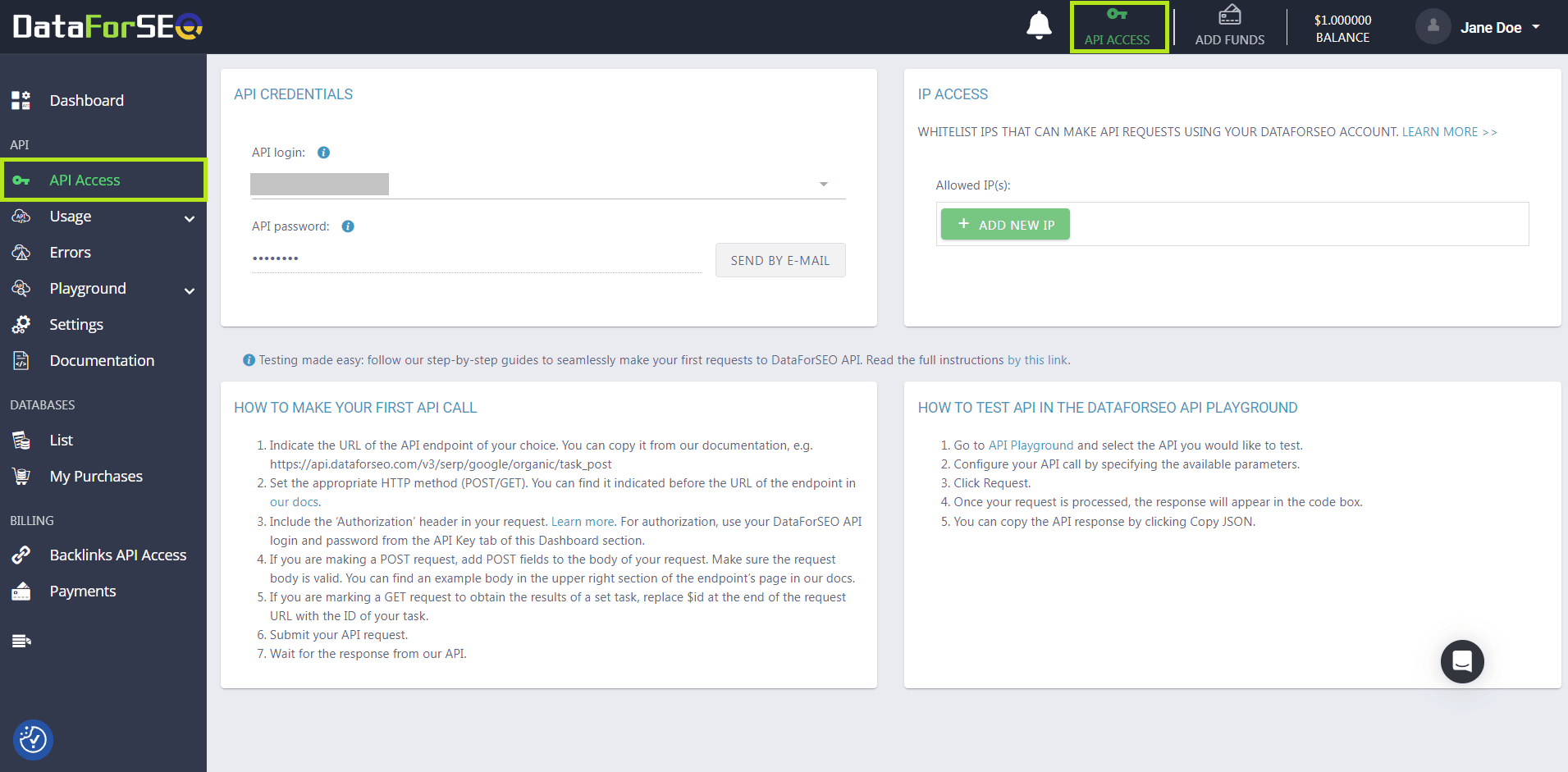
If you want to escape the “all-in-one” tax, you have to look at the players who do not care about your dashboard. They just care about the rows. DataForSEO is often the first name that comes up when people look for an alternative to Semrush API. It is a developer-first tool. It does not give you pretty graphs. It gives you data. For a high-volume e-commerce project, this is exactly what you need. You do not need to pay for a social media scheduler you never use. You need the SERP data for 50,000 product SKUs across 100 countries.
The architectural shift here is the move to asynchronous data. You send a request, you go get a coffee, and then you check the results. Some of our analysts found this frustrating at first. If you are in the middle of a reputation crisis for a big IT firm, waiting fifteen minutes for a data dump feels like a lifetime. But the cost savings are real. According to our data, switching to a pay-as-you-go model can slash your overhead by 60% if your usage is bursty. However, the user experience of their website is, frankly, a mess. One expert on Reddit recently complained that their site is incredibly user-unfriendly, even requiring business emails just to sign up. It is the classic developer trade-off: great API, terrible front-end.
Latency and Technical Performance Comparison
| Provider | Access Type | Average Latency | Success Rate | Best Use Case |
|---|---|---|---|---|
| DataForSEO | Asynchronous | 5 – 45 Minutes | 98.5% | High-volume raw data |
| SerpApi | Synchronous | 1.8 Seconds | 99.2% | Real-time monitoring |
| SE Ranking | Platform API | Seconds – Minutes | 97.8% | Agency reporting |
| Ahrefs v3 | REST API | < 1 Second | 99.5% | Link intelligence |
| Serper.dev | Synchronous | 1.5 Seconds | 99.0% | Fast SERP scraping |
Maybe you are wondering if the delay is worth it. For most SERM tasks, like daily rank tracking or monthly audits, it is. If you need to know why a brand mention is tanking right now, you go with a synchronous Semrush API alternative like SerpApi. It is faster, but you pay a premium for that speed. For an e-commerce giant with a massive footprint, the asynchronous route is the only way to avoid burning through a five-figure monthly budget just to see where your pictures are ranking on Image Search.
Ahrefs API: Brutal Reality of Enterprise Pricing
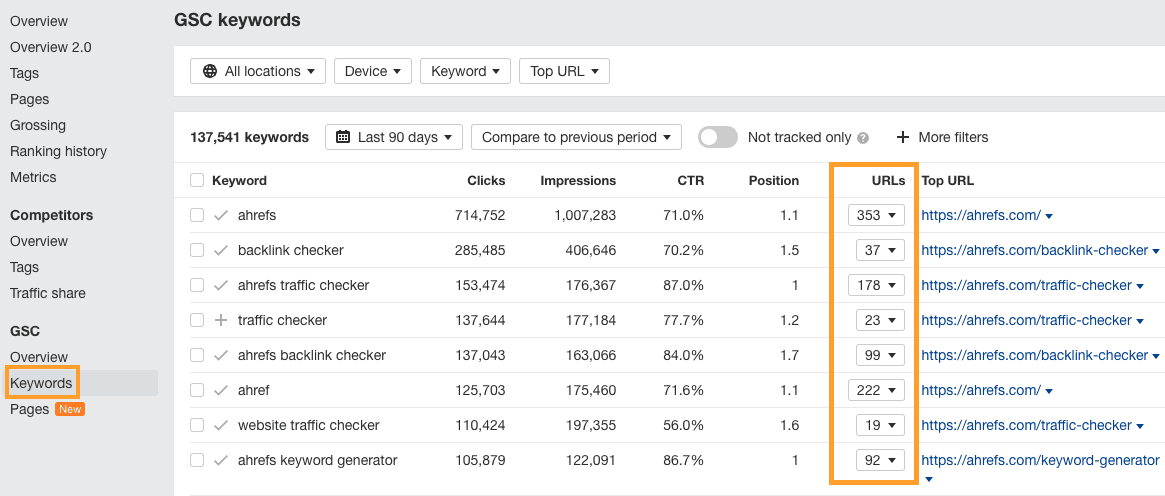
Ahrefs is the tool that everyone loves to hate and hates to love. In the SERM world, their backlink index is basically the gold standard. If you are defending a SaaS brand against a negative SEO attack, you need their link data. There is no best Semrush API alternative that matches their depth for finding toxic referring domains. But their pricing in 2026 has become, to put it bluntly, brutal. They have positioned themselves as an enterprise-only luxury.
Their v3 API is a masterpiece of technical engineering, but the cost to access it is enough to make a CFO weep. You are looking at a minimum of $1,499 a month for the Enterprise plan if you want uncapped access. If you try to run a high-volume project on their lower tiers, you hit row limits faster than you can say “backlink profile.” We think they know they have the best data, and they are charging for it. The recent addition of a $29 “Starter” plan feels like a peace offering for the small guys, but it is too limited for any real agency work.
The Brand Radar and AI Visibility Problem
Ahrefs launched something called Brand Radar to track how AI models like ChatGPT and Perplexity talk about your brand. It sounds great on paper. In reality, it is a $699 a month add-on. If you are an agency managing ten clients, that bill hits $8,000 a month before you even buy a single backlink. Honestly, that is a hard pill to swallow for most IT outsourcing firms that are already operating on thin margins. We have seen better results for the price by using specialized AEO tools that cost a fraction of that.
| Ahrefs Tier | API Units | Historical Data | Row Limits |
|---|---|---|---|
| Lite | 100,000 | 6 Months | 2,500 |
| Standard | 400,000 | 2 Years | 30,000 |
| Advanced | 1,000,000 | 5 Years | 75,000 |
| Enterprise | 2,000,000 | Unlimited | 150,000 |
For those of us working on long-term reputation projects, that “Historical Data” column is the most important part. If a client gets hit with a scandal, you need to be able to look back five years to see the growth of the sentiment. Ahrefs is the best Semrush API alternative for this specific task, even if the price makes you want to throw your laptop out the window. It is the price of certainty in an uncertain market.
Serpstat API: The Budget-Friendly Beast from the East
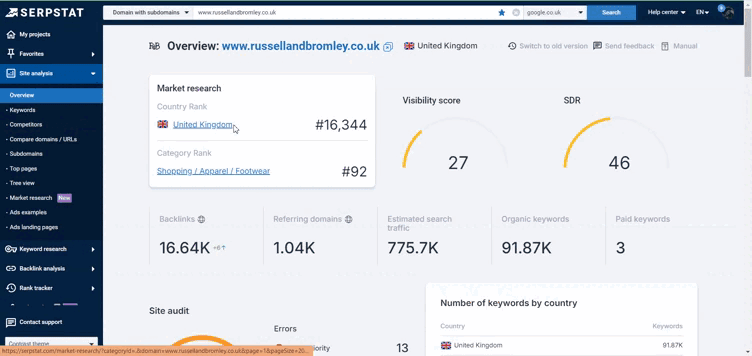
Serpstat is the tool that everyone overlooks until they see the bill for everything else. It started as a keyword research tool and grew into a legitimate Semrush API competitor. For those working on international IT or e-commerce projects, especially in Europe, their regional data is surprisingly deep. Their API is open to all plans, which is a massive win for smaller teams. You do not have to be an “enterprise” customer just to get a JSON feed.
However, we have to be honest about the data accuracy. Some of our analysts have noticed that their keyword difficulty scores can be a bit… optimistic. If you are building a reputation strategy based solely on their metrics, you might find yourself fighting a battle that is harder than the tool suggested. It is the best Semrush API alternative if you are on a budget, but you should probably cross-reference their data with Google Keyword Planner if the stakes are high.
Interface vs. API Efficiency
The Serpstat interface is clean and modular. It feels less like a cluttered cockpit and more like a modern app. But in terms of API efficiency, they can be a bit slower to fetch details compared to the big players. If you are pulling reports for a massive e-commerce site with millions of pages, you will notice the lag. But for a SaaS startup that just needs to track fifty core brand terms, it is more than enough. It is an alternative to Semrush API that does not make you feel like you are being robbed every month.
| Pricing Tier | API Credits | Best For |
|---|---|---|
| Individual | 500,000 | Freelance SERM consultants |
| Team | 2,000,000 | Small SaaS marketing teams |
| Agency | 5,000,000 | Mid-sized digital agencies |
The value for money here is undeniable. If you are looking for the best Semrush API competitors that offer a broad feature set without the corporate ego, Serpstat is a strong contender. Just keep an eye on those difficulty scores and do not take them as gospel.
BrightLocal API: Citation Cash-Grab
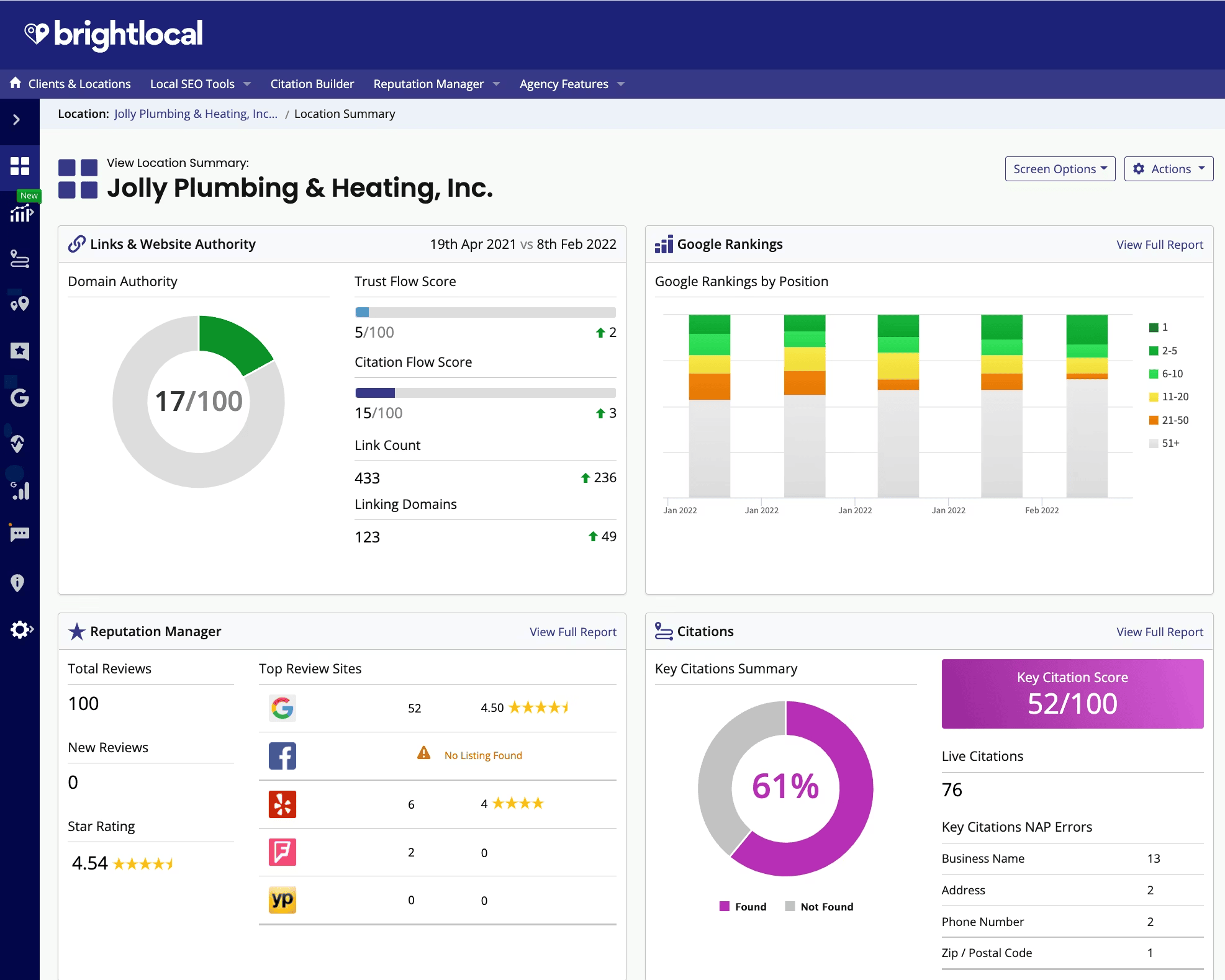
If you are doing local reputation management, you have probably been told to use Semrush’s local tools. Here is a little secret from the senior expert trenches: they are mostly just reselling Yext. It is a massive markup for a tool that often feels like an afterthought. BrightLocal, on the other hand, lives and breathes local search. It is a specialized alternative to Semrush API that actually understands what moves the needle for local businesses.
The “Citation Builder” is their flagship, and it is pay-as-you-go. This is brilliant for e-commerce brands that have a few physical showrooms. You do not need a massive monthly subscription just to fix a few directory listings. You pay for what you need and you own the data forever. In contrast, tools like Yext or the Semrush local add-on often work on a “rental” model where your listings might revert or disappear if you stop paying. Honestly, that feels like a bit of a protection racket.
Why Local Rep Matters for IT Services
You might think local SEO is only for plumbers and dentists. Wrong. If you are a high-end IT outsourcing firm, your local reputation in places like Krakow or Bangalore is everything for recruitment and local b2b trust. BrightLocal’s “Local Search Grid” allows you to see how you rank across a specific city with pinpoint accuracy. It is the best Semrush API competitor for anyone who needs to defend their brand in a specific geographic bubble. Their reputation management tools for collecting and responding to reviews are also much more intuitive than the “one-size-fits-all” approach of the larger suites.
| Local Feature | BrightLocal Benefit | The “Big Tool” Downside |
|---|---|---|
| Citation Control | You own it forever | Data rental model |
| Grid Tracking | Neighborhood level | City or country level only |
| Review Management | Active funnel building | Passive monitoring only |
| Pricing | $2 per citation | $50+ per month per location |
For a SERM expert, the goal is to make the brand look as solid as possible in the places where people are actually searching. BrightLocal is the best Semrush API alternative for the local “plumbing” of the internet. It is not flashy, but it works.
The AI Search Frontier: Tracking the Un-Trackable
We are entering a period where traditional search rankings are becoming less relevant. If you are managing a SaaS brand’s reputation, you need to know what ChatGPT says about you. You need to know if Perplexity is citing your documentation or a Reddit thread from three years ago. This is where the old-school Semrush API alternatives are struggling to keep up. Most of them are just bolting on “AI tracking” features that do not really work.
Tools like Waikay and GetMint are emerging as specialized best Semrush API alternatives for this new world. They do not just track keywords; they track narratives. They identify the “drivers” of your brand mention in AI responses. If an LLM is calling your software “unreliable,” you need to know which specific blog post or review is feeding that machine. Legacy tools can tell you that you are mentioned, but they struggle to tell you why. This shift from retrieval to comprehension is the biggest challenge we face in 2026.
The AEO Workflow
Managing an AI reputation is more about structured data and clarity than it is about backlinks. You need a best Semrush API competitor that can audit your schema markup and your “LLMs.txt” file. If the robots cannot parse your site, they will not cite you. We think the next few years will see a massive migration of budget from traditional SEO suites to these AI-native monitoring platforms. It is the only way to avoid the “attribution black box” that is killing marketing ROI for so many e-commerce brands.
| AI Feature | What to Track | Best Alternative Tool |
|---|---|---|
| Citation Reach | How often are you cited? | Amplitude / GetMint |
| Sentiment Magnitude | How strongly positive? | Semrush AI Toolkit |
| Source Diagnosis | Where did the AI learn this? | GetMint |
| Narrative Drivers | What are the recurring themes? | Brandwatch |
If you are a senior expert, you know that the “People Also Ask” (PAA) section was just the beginning. AI Overviews are the new frontline. If you are not using a Semrush API alternative that can handle these dynamic, AI-generated SERP features, you are flying blind.
Enterprise Giants: Brandwatch and Birdeye
When you are dealing with a Fortune 500 IT firm, a $99 a month tool is not going to cut it. You need enterprise social intelligence. Brandwatch is the standard here. It is not an alternative to Semrush API for SEO; it is an alternative for reputation. It tracks billions of conversations across social media, forums, and news sites. It is where you go to catch a crisis before it even hits the search results.
The problem? It is incredibly expensive. We are talking tens of thousands of dollars a year. But for a global SaaS brand, the cost of a missed viral negative trend is far higher. They have an AI assistant called Iris that can summarize thousands of posts to tell you exactly why your brand is trending. It is the best Semrush API alternative for high-stakes sentiment analysis, provided you have the budget to back it up.
Reputation Management at Scale
Birdeye and Reputation.com are the other two giants. They focus on the feedback loop. They integrate with your CRM so that every time a customer buys something, they get a review request. For an e-commerce site, this is how you build a moat of positive reviews that protects you from the occasional one-star hit. These are the best Semrush API competitors for people who want to operationalize their reputation rather than just monitor it. They turn “customer satisfaction” into a measurable SEO asset.
| Enterprise Platform | Primary Strength | Limitation |
|---|---|---|
| Brandwatch | Social listening / Crisis | High cost / Complex |
| Birdeye | Review generation / CRM | Overkill for small sites |
| Reputation.com | Enterprise analytics | Quote-based pricing |
| Sprinklr | 35+ social channels | Massive implementation effort |
Honestly, if you are a solo consultant, these tools are a distraction. But if you are managing the reputation of a major IT service provider with 10,000 employees, you cannot live without them. They provide the “air cover” for your traditional search efforts.
The Scraper’s Secret: Using Gemini and Search Grounding
Here is a digression that most “official” reports won’t tell you. Some of the smartest e-commerce hackers we know have stopped using SEO tools altogether for basic keyword research. They are using the Gemini API with search grounding enabled. It costs a fraction of a cent per query. You ask Gemini to look at the live SERP and tell you what is ranking, what the PAA questions are, and what the overall sentiment is. It is a custom-built alternative to Semrush API that costs maybe five dollars a month.
It is not a replacement for a full backlink index, obviously. But for content planning and identifying reputation gaps, it is incredibly effective. It bypasses the bloated interfaces and credit limits of the legacy tools. According to our data, this “DIY” approach is becoming more popular among bootstrapped SaaS founders who would rather spend their money on developers than on overpriced marketing dashboards.
The Hidden Risk of Custom Scraping
The catch? Google hates it. They are constantly rolling out new anti-scrAPIng measures. If you build your own alternative to Semrush API using raw LLM calls or basic scrapers, you will spend half your time fixing broken code. This is why tools like SerpApi or DataForSEO exist—they handle the proxy rotation and the CAPTCHAs so you don’t have to. It is a “build vs. buy” decision that every senior SERM expert has to make eventually.
| Approach | Monthly Cost | Reliability | Technical Effort |
|---|---|---|---|
| DIY Gemini API | < $10 | Low | High |
| SerpApi / Scraper | $50 – $200 | High | Moderate |
| Full SEO Suite | $140 – $500 | Very High | Low |
For a mission-critical project, we always recommend “buying” the data layer. You do not want your reputation monitoring to go dark just because Google updated their bot detection at 3 AM.
Choosing the Right Stack: A Personal Perspective
We think the “one tool to rule them all” philosophy is dead. If you are a serious SERM expert working on SaaS or IT projects, you need a modular stack:
- You use Ahrefs when you need to be a link nerd.
- You use SE Ranking for your daily reporting.
- You use DataForSEO for your massive e-commerce data dumps.
- And maybe you use a specialized AI tool for tracking mentions in LLMs
This is the only way to get the best data at the best price.
Do not let the marketing brochures fool you. Every tool has a blind spot. Semrush is great for PPC but expensive for SERM. Ahrefs is great for links but brutal on the budget. BrightLocal is the king of local but useless for global SaaS. The key is to find the best Semrush API alternatives that fit your specific project needs. Honestly, the most important tool you have is your own judgment. Data is just noise until you turn it into a strategy.
Final Tactical Recommendations
If you are managing a high-volume e-commerce project, start with DataForSEO. It is the most scalable way to get raw data without the marketing fluff. If you are an agency managing multiple IT service clients, look at SE Ranking for the white-label reporting. And if you are defending a global brand against a major reputation crisis, just pay the “Ahrefs tax” and get the enterprise link data. It is cheaper than a PR disaster.
| Project Type | Recommended Tool | Why? |
|---|---|---|
| High-Volume E-comm | DataForSEO | Scalable cost / Raw JSON |
| SaaS Startup | Serpstat | Budget-friendly / Regional |
| Local Business | BrightLocal | Citation ownership / Local accuracy |
| Global IT Enterprise | Ahrefs + Brandwatch | Best link data / Crisis monitoring |
| Digital Agency | SE Ranking | White-label / Turnkey reporting |
In the end, the best Semrush API alternative is the one that allows you to provide value to your clients without sacrificing your own sanity or profitability. We have seen the market shift from tools that “do everything” to tools that “do one thing perfectly.” It is a good change. It forces us to be better at our jobs and more critical of the data we use to defend our brands.