NEWYou can now listen to Fox News articles!
President Donald Trump’s address to the nation alleging Chinese interference in American elections last week has renewed interest in Beijing’s broader influence efforts in the United States.
Federal records show that a number of Chinese government entities, state-controlled media organizations and China-based companies have registered under the Foreign Agents Registration Act (FARA) to disclose operations with political implications carried out in the United States on their behalf. Lobbying Disclosure Act filings submitted to Congress by other Chinese entities, meanwhile, cover lobbying activity by companies pursuing what they say are purely commercial interests.
Those filings provide a partial public record of how Chinese interests seek to shape U.S. policy, public opinion and commercial decisions, though they do not establish the full scope of Beijing’s activity or prove Trump’s election claims.
Private entities based in China and Hong Kong, many of which have significant ties to the Chinese Communist Party, spend significant amounts of money attempting to influence America. The DOJ recorded over $20 million in FARA expenditures from these entities in 2025, with millions of dollars more being recorded in lobbying disclosures filed with Congress. Chinese government sources, over the same period, spent close to $80 million on FARA expenses.
Chinese President Xi Jinping speaks during an international business meeting at The Great Hall Of The People on March 28, 2025 in Beijing, China. (Ken Ishii – Pool/Getty Images)
Not every Chinese influence operation happens on the books, however.
Campus groups that the State Department has linked to the Chinese government, such as the Chinese Students and Scholars Association, do not file paperwork with the DOJ, leaving Americans in the dark regarding their operations. Additionally, any groups that fall under China’s United Front Work Department — a global network of CCP loyalists that work to advance Beijing’s interests abroad — don’t file disclosures owing to their clandestine nature.
China hawks have also argued that some powerful domestic nonprofits have significant links to the CCP, giving it yet another mechanism it can use to influence the United States.
“China is committed to promoting mutual understanding and friendship between the Chinese and American peoples and advancing exchanges and cooperation between the two countries in areas including trade, education and culture,” a spokesperson for the Chinese embassy told Fox News Digital. “China’s international exchanges and cooperation are open and transparent, with the aim of enhancing mutual understanding and achieving mutual benefit.”
“Portraying China’s normal international exchanges and cooperation as so-called ‘influence operations’ distorts facts and stigmatizes legitimate engagement,” they added.
While the true extent of China’s influence in the United States is unknown, the evidence that is available to the public paints a picture of a broad, multi-front effort to shape how Americans live and think.
‘Propaganda’
Among China’s most prevalent levers of influence is its state-run media apparatus, which academic sources and the federal government often describe as a “propaganda” operation.
Globally, the State Department estimated in 2023 that China spends “billions of dollars annually on foreign information manipulation efforts.”
Five Chinese media operations are registered as active foreign agents in the United States, DOJ records show. CCTV, Xinhua News and China Daily each have direct affiliations with the CCP, whereas Sing Tao News Corporation is privately owned but consistently takes a pro-Beijing stance in its coverage.
CCTV, which is operated by the Chinese government, runs CGTN America, China’s flagship English-language media operation. DOJ filings reviewed by Fox News Digital show that CGTN received $66.8 million in funding from CCTV between February and November 2025 — a significant chunk of China’s overall foreign influence budget.
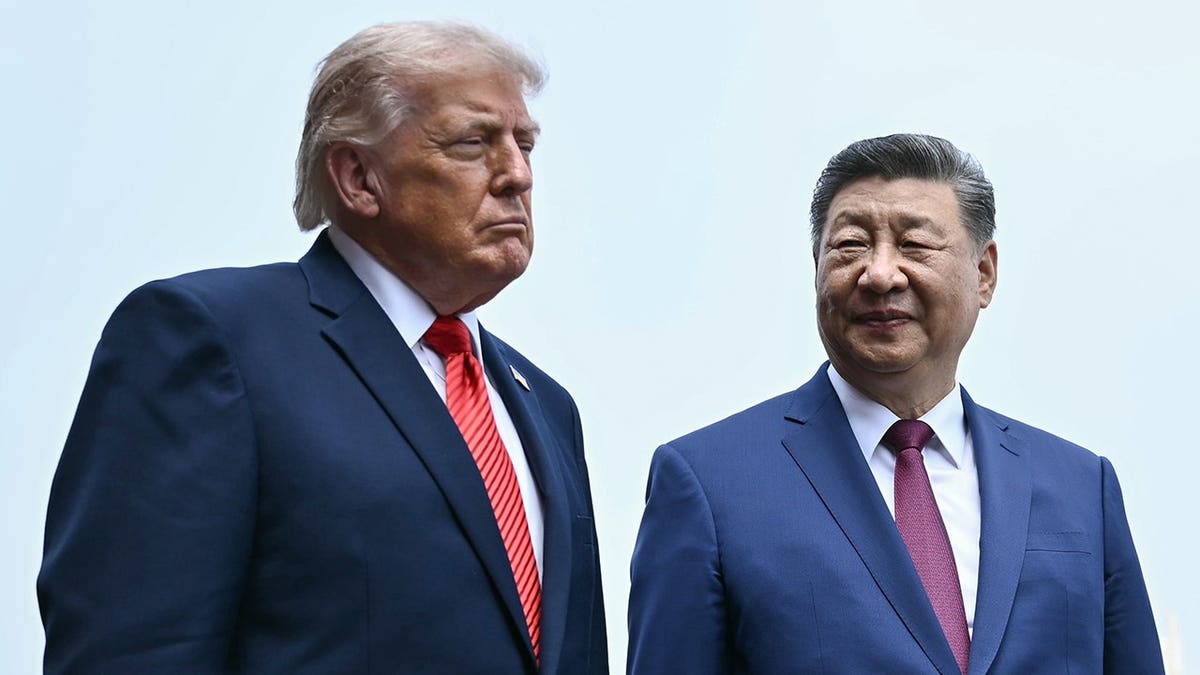
China’s President Xi Jinping (R) and US President Donald Trump visit the Temple of Heaven on May 14, 2026 in Beijing, China. (Brendan Smialowski – Pool/Getty Images)
In 2025, CGTN amplified rhetoric similar to that pushed by Democratic politicians.
The network pushed left-of-center rhetoric on issues such as climate change, racial tensions, immigration and the war in Gaza while criticizing Trump’s tariffs as well as his efforts to make Washington, D.C., safer through law enforcement and National Guard deployments. CGTN has also been eager to praise California Gov. Gavin Newsom, seen by many as one of Trump’s chief political rivals.
A 2022 academic paper published by researchers at King’s College in London argued that, despite appearances, CGTN doesn’t aim to influence voter behavior or have a strict ideological slant but rather seeks to portray America as “poorly governed, plutocratic, racist and a destabilizing international influence” in contrast to a China that is “well governed, benign, stable and a rising superpower.”
All the Chinese media operations designated as foreign agents tend to publish similar content. An appendix in one of Xinhua’s filings reveals that the federal government required it to register under FARA because the DOJ believes that it “intends to influence the American public or policy makers on relevant topics such as U.S. policy or foreign relations.”
“Chinese media outlets conduct news reporting and information dissemination in accordance with the law. Labeling outlets such as Xinhua, CGTN and China Daily as ‘propaganda tools’ or ‘foreign influence instruments’ reflects ideological bias and a Cold War mentality, rather than an objective view of international media exchanges,” the embassy spokesperson told Fox News Digital.
The China lobby
Representing the interests of Chinese companies, even those that the U.S. government warns are working on behalf of the Chinese military, is big business for American lobbyists.
Lobbying records show that dozens of American lobbyists have signed new contracts with dozens of companies partially or fully owned by Chinese entities since 2025. FARA records, meanwhile, reveal that seven Chinese companies — Huawei, BOE Technology America, Yangtze Memory Technologies, XH Smart Tech China, Hikvision, Futurewei Technologies and JinkoSolar — maintain active foreign agent registrations in the United States.
A Chinese company advocating for its own commercial interests usually files lobbying disclosures with Congress under the Lobbying Disclosure Act, whereas an organization carrying out what the federal government determines to be political, governmental or broader public-influence work for a foreign principal typically reports to the DOJ under FARA.
LAWMAKERS RAISE ALARM OVER NEVILLE ROY SINGHAM’S $278M NETWORK SPREADING CCP PROPAGANDA IN THE U.S.
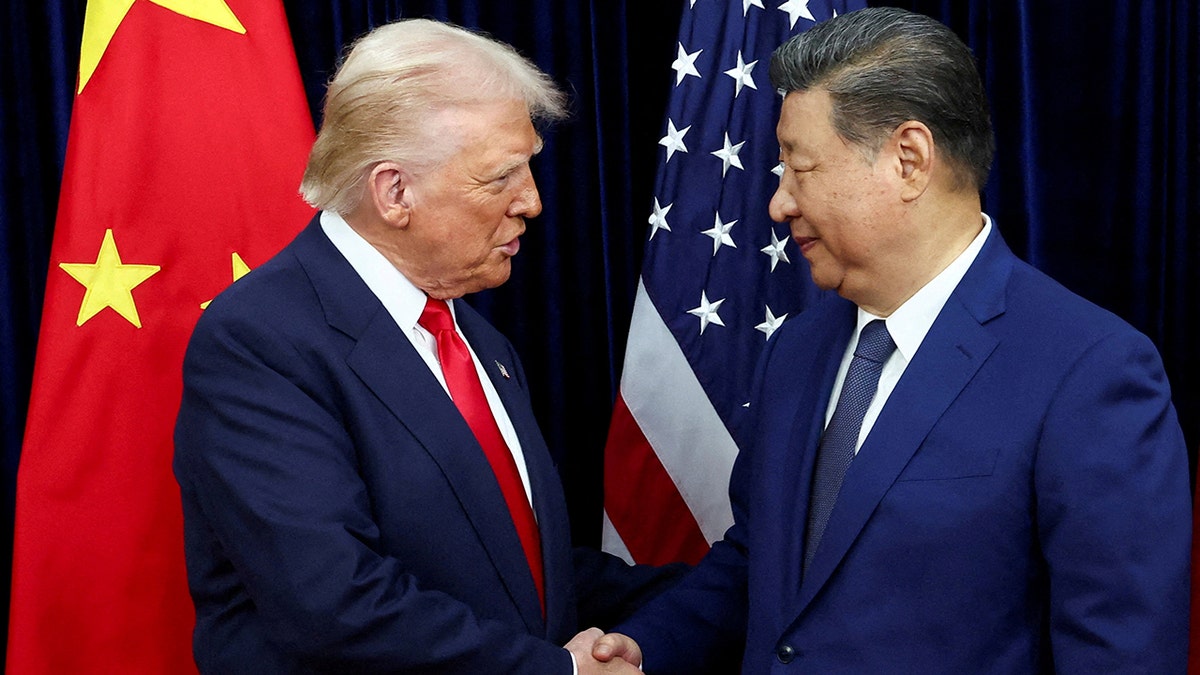
President Donald Trump shakes hands with Chinese President Xi Jinping as they hold a bilateral meeting at Gimhae International Airport, on the sidelines of the Asia-Pacific Economic Cooperation (APEC) summit, in Busan, South Korea, on Oct. 30, 2025. (Reuters/Evelyn Hockstein)
Hikvision, a partially state-owned video surveillance equipment manufacturer based in China, for instance, reports to the DOJ.
The company faces procurement, export and investment sanctions imposed by the United States government following allegations that it aided the CCP in its repression of Uyghur Muslims. It has paid American lobbyists millions to plead its case to the United States government that those restrictions should be dropped.
Since Hikvision is bound by the disclosure requirements of FARA, the public has access to the materials distributed to policymakers on its behalf, as well as information about specific policymakers they contacted, such as a slideshow presentation its lobbyists gave to Pentagon and Department of Commerce officials in October 2024.
Most of the lobbying services purchased by Chinese companies occur under the LDA, which only requires principals to disclose who they’re paying, how much they’re paying and a very basic description of what issues they’re lobbying on. Among the firms retaining American lobbyists are controversial Chinese-owned agriculture companies, major competitors with American industries, state-owned enterprises and firms that the Department of War claims are working on behalf of China’s People’s Liberation Army.
Tencent, a technology conglomerate that the Pentagon recently added to its list of “Chinese military companies,” has spent well over $10 million on lobbying expenses since 2025.
“As the Company is neither a Chinese military company nor a military-civil fusion contributor to the Chinese defense industrial base, it believes that its inclusion in the [Chinese military company] List is a mistake,” Tencent said in a statement after the Pentagon designated it as such. “The Company intends to initiate a Reconsideration Process to correct this mistake. During the process, it will engage in discussions with the U.S. Department of Defense to resolve any misunderstanding, and if necessary, will undertake legal proceedings to remove the Company from the [Chinese military company] List.”
A handful of Chinese companies, including some that have appeared on the Pentagon’s list of Chinese military companies, have even lobbied on issues related to American national security.
Some, such as Sen. Tom Cotton, have accused Chinese entities of abusing the LDA to avoid filing under FARA and complying with its stricter disclosure requirements, which would provide Americans with a fuller accounting of their activities.
Trade, tourism and development?
China, like many other countries, spends considerable funds on convincing Americans to trade with, travel to or invest in it.
The China Council for the Promotion of International Trade, for instance, receives hundreds of thousands of dollars from Beijing every six months to travel across the country to act as “the liaison between business, chamber of commerce, trade associations and organizations in China and in the United States to facilitate bilateral trade, investment and economic cooperation,” according to its FARA disclosures.
While CCPIT’s operations appear anodyne, China hawks argue that they may serve a dual purpose.
The Jamestown Foundation, for instance, asserts that CCPIT “has long been identified by the U.S. intelligence community as a united front entity supporting PRC diplomatic goals,” citing a declassified CIA memo from 1957. Sinopis, a research project associated with a Czech university, similarly argues that China uses CCPIT to forge relationships with foreign officials and business groups to ultimately advance Chinese economic and geopolitical objectives.
“Allegations concerning organizations allegedly linked to the United Front Work Department lack factual basis,” the embassy spokesperson told Fox News Digital. “In addition, the CCPIT has long been committed to promoting trade and investment cooperation between China and countries around the world and facilitating economic exchanges. Linking normal trade promotion activities to so-called geopolitical objectives is groundless.”
CLICK HERE TO DOWNLOAD THE FOX NEWS APP
Also paid by Beijing to operate in the United States are various offices encouraging Americans to visit China and soliciting investments for ventures in it.
Despite the harsh accusations levied against China, Trump has invited Chinese President Xi Jinping to visit the United States to discuss artificial intelligence and bilateral relations in September.