
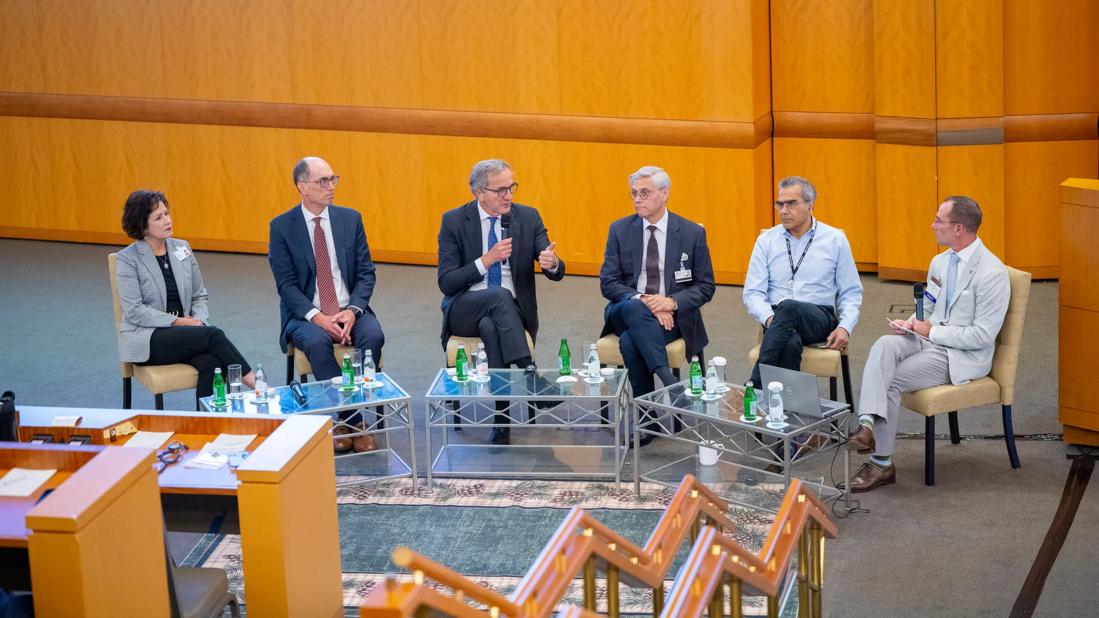
Cleveland Clinic brought together healthcare professionals from across the region and around the country today for its AI Summit for Healthcare Professionals, an event focused on the rapidly expanding role of artificial intelligence in clinical care, patient experience, education and research.
Held in collaboration with the College of Healthcare Information Management Executives (CHIME), the summit featured Cleveland Clinic leaders and nationally recognized experts who shared insights on how AI is transforming healthcare delivery in inpatient and outpatient settings, critical care, surgery, nursing, pharmacy and medical education. There were more than 900 registered attendees in person and virtual for the day-long event at the InterContinental Hotel.
The event’s keynote speaker was Peter Clardy, M.D., director of the Clinical Enterprise Team at Google Health, in conversation with Jame Abraham, M.D., chairman of the Department of Hematology & Medical Oncology at Cleveland Clinic and one of the summit’s organizers.
Throughout the summit, speakers explored how AI-powered tools can support diagnostics, predictive analytics and personalized treatment planning, while also improving patient-centered care through innovations such as virtual health assistants, chatbots and AI-driven monitoring. Presenters also addressed the ethical and regulatory considerations surrounding AI implementation, including the need to reduce bias and ensure responsible use.
“Artificial intelligence has the potential to fundamentally change the way we care for patients, educate future clinicians and advance research,” said Dr. Abraham. “This summit created an important opportunity for healthcare professionals to learn from one another, discuss both the promise and the challenges of AI, and explore how we can use these tools thoughtfully to improve outcomes and the patient experience.”
The summit was designed for clinicians, physicians, advanced practice providers, nurses, administrators, trainees and other healthcare professionals seeking practical insight into the future of AI in medicine.









Leave a Reply