

It’s time for cricket to roll back the ball-tampering rules and give bowlers a chance again.
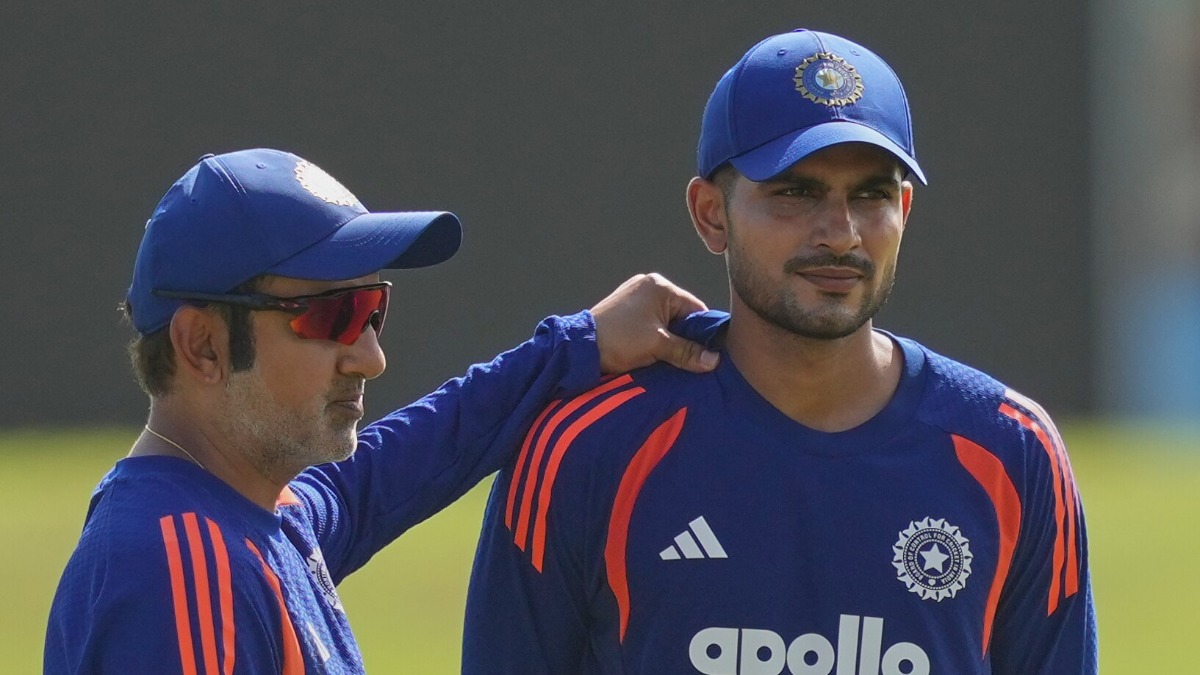
India captain Shubman Gill this week pleaded with the International Cricket Council (ICC) to allow players to use saliva to shine the ball during Test matches.

India captain Shubman Gill. Getty Images
The use of saliva was banned during the COVID pandemic, as the game desperately tried to avoid being shut down like others were forced to.
Cricket is not a contact sport and so players and umpires can generally maintain a safe distance, but sharing around a spit-covered piece of leather was seen as a health hazard at the time – and fairly so.
The use of sweat was bizarrely still permitted, but depending on conditions it simply is not as readily available as saliva.
And as players have learned over the past six years, it’s not as effective on a cricket ball either.
As New Zealand and England slogged out a draw on a flat deck at the Basin Reserve, the bowlers couldn’t get the ball to move off a straight line.
“If you are not shining the ball or if you are not able to maintain the ball, especially on wickets like this, it makes the job of the bowlers very difficult,” Gill said.
“I do believe that players, teams should be allowed to use saliva. It was a rule that was made during COVID. I think we are long past that.
“If the ball is going soft after 25, 30 overs or it’s going out of shape, and you are also not able to maintain the ball and use saliva then it’s very difficult.”
Cricket is exciting when there is an even contest between bat and ball, but the game has increasingly moved in the batter’s favour over the years.
Pitches are flatter, bats are bigger, and the DRS is allowed to stick with a “not out” decision even when (less than half) the ball is going on to hit the stumps.
The cricket ball is a bowler’s only weapon to combat these inequities in the modern game, and fielding teams should be allowed to improve its condition using saliva if they wish to.
No, they should not be given carte blanche to use whatever methods they like.
After all, that’s exactly how Australia got into the pickle that is currently hijacking the sport Down Under.
Keeping a ball shiny = fine. Deliberately making a ball worse = not so fine.

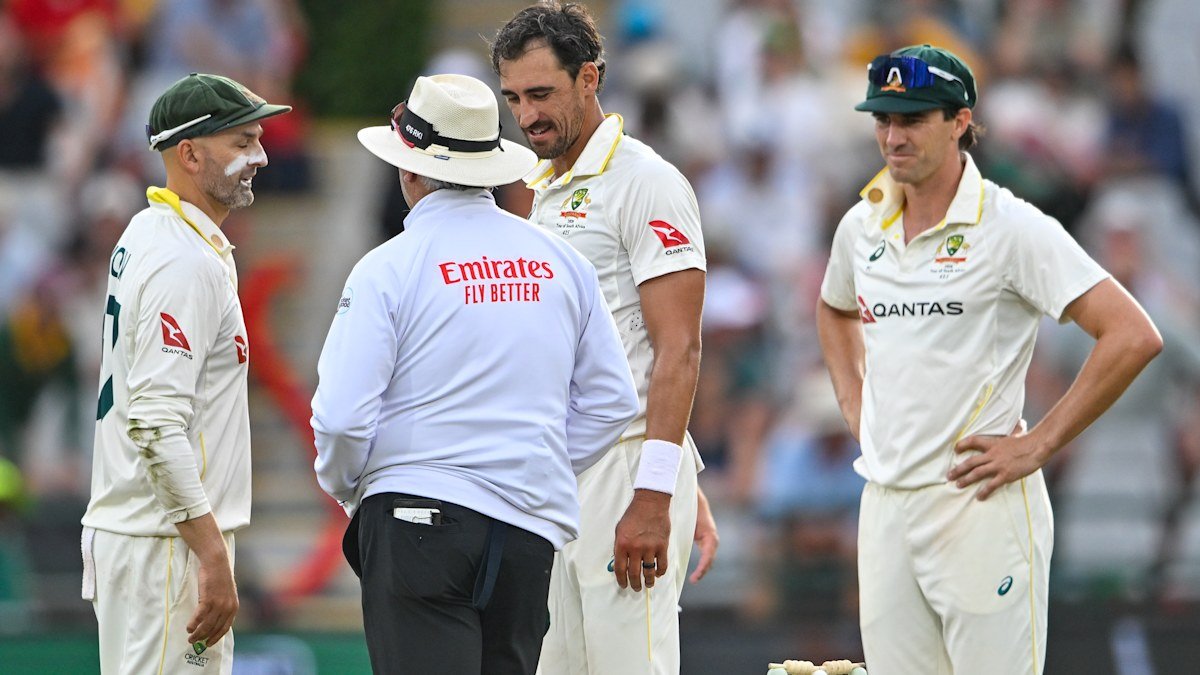
Aussie bowlers Nathan Lyon, Mitchell Starc, and Pat Cummins speak with the umpire. Getty Images
Pretty simple, no?
Every young cricketer gets taught to shine one side of the ball in between deliveries. It’s a simple part of the game that is adopted from grassroots right through to the Test arena.
Until recent years, after the ICC banned the practice.
As Gill pointed out, a red ball might swing for the first 20 or so overs of a match and then may as well be a rock for the next 60.
As soon as a bowling team is permitted to take a new ball after 80 overs of an innings, things start to happen again.
Look what happened in South Africa, when the Proteas were cruising against the Aussie bowlers who could not extract any movement whatsoever in the second match.
Enter the new ball and suddenly Mitchell Starc was turning it around corners, and things got interesting again.
New Zealand captain Tom Latham did not agree with Gill’s saliva plea this week but admits it can be tough work when the pitch and ball don’t give the bowlers a chance.
“We know as cricketers, you’ve got to be able to play with the ball that you’ve got,” Latham said in response to Gill.
“And whether it’s in good condition, whether it’s not so good, you’ve got to find a way.”
Test cricket needs a swinging ball. It’s time to bring back the spit.









Leave a Reply