

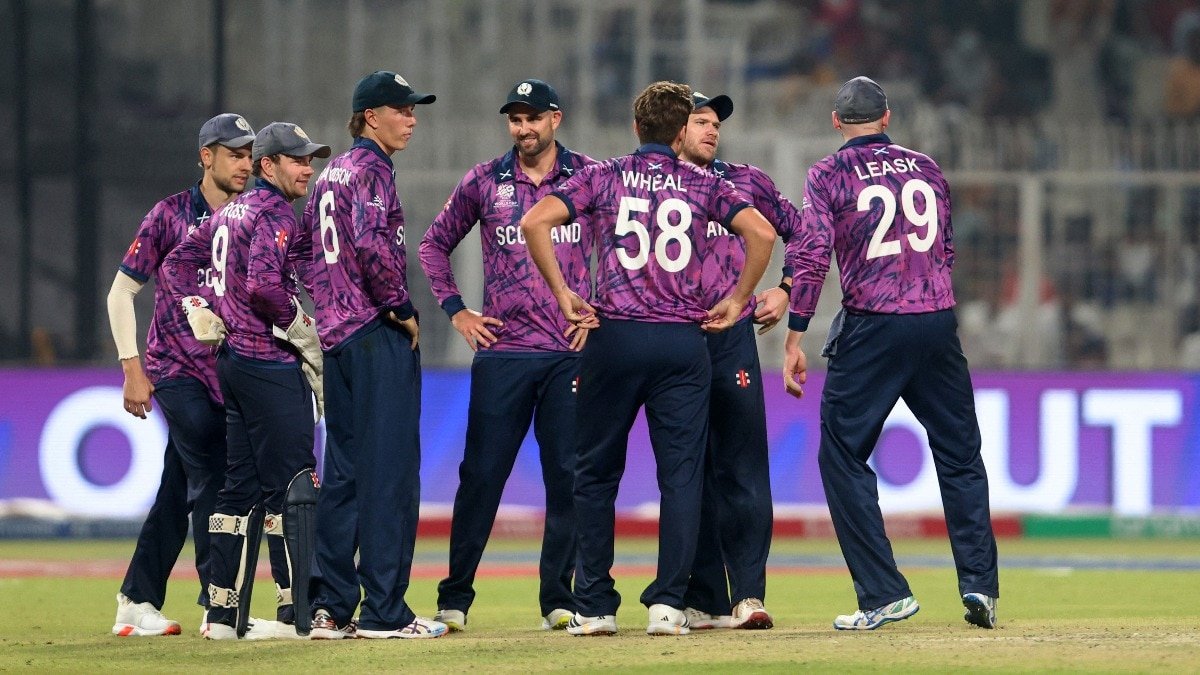
Cricket Scotland has decided to restrict its cricketing engagement with Afghanistan, ruling out bilateral and tri-series fixtures outside ICC events over the Taliban government’s treatment of women and girls. The board will also refuse to host Afghanistan’s pre-tour training camps or participate in practice matches outside ICC competitions.
The decision follows a review of Cricket Scotland’s engagement with the Afghanistan Cricket Board (ACB), prompted by requests for training facilities and discussions around the proposed Afghanistan Premier League (APL). In a statement released on Monday, the board outlined its new policy, making clear that it would only face Afghanistan when required by ICC competition regulations.
“Cricket Scotland will not proactively schedule bilateral series or participate in tri-series involving Afghanistan Men unless there is a material change in the circumstances surrounding Afghanistan women’s cricket and wider human rights considerations,” the statement read.
“Cricket Scotland will continue to participate in any fixtures against Afghanistan Men at ICC events which are determined by ICC competition regulations. Participation in these fixtures should not be interpreted as an endorsement of the current Afghan regime or its policies,” it added.
Cricket Scotland said its decision was guided by its commitment to the growth of women’s and girls’ cricket, the humanitarian situation in Afghanistan and the treatment of women under the Taliban government. The board also considered the positions taken by other major cricket governing bodies and said the policy would be reviewed annually or following any significant ICC decision or material change in circumstances.
WHY SCOTLAND TOOK A STAND
The review began after the ACB approached Cricket Scotland in July seeking access to training facilities ahead of Afghanistan’s men’s series against Ireland. The request was declined due to operational restrictions and the need for the board to consider its position. A second approach in September, concerning the proposed APL, further informed the review.
Scotland have not played Afghanistan in a full international match since the 2021 T20 World Cup, although the sides have met in warm-up fixtures ahead of the 2024 and 2026 editions.
The board’s decision rests on three broad considerations:
- The treatment of women and girls: The deteriorating humanitarian situation in Afghanistan and restrictions imposed by the Taliban government.
- Cricket Scotland’s commitments: Its strategic priority of growing women’s and girls’ cricket and embedding equality across the sport.
- The wider cricketing landscape: The positions adopted by other major cricket boards and consultations with the government.
WHAT THE NEW POLICY MEANS
Cricket Scotland has drawn clear boundaries around its future engagement with Afghanistan:
- ICC competitions remain unaffected: Scotland will fulfil fixtures against Afghanistan when required under ICC competition regulations, including mandated warm-up matches.
- No bilateral or tri-series commitments: The board will not proactively schedule series involving Afghanistan unless there is a material change in the circumstances surrounding women’s cricket and wider human rights concerns.
- No assistance with pre-tour preparations: Afghanistan will not be hosted for training camps, practice matches or warm-up fixtures outside ICC events.
- Players can still feature in the APL: Cricket Scotland will honour its contractual obligations and consider issuing No-Objection Certificates, subject to the league receiving ICC sanction.
The policy will be reviewed annually or following a significant ICC decision or material change in circumstances.
George Munsey was the only Scottish player selected in last week’s APL draft. The opening batter, who regularly features in franchise cricket, could still take part in the competition.
Cricket Scotland confirmed that it would issue Munsey a No-Objection Certificate if the league receives ICC sanction. However, it stressed that any player’s participation would not amount to an endorsement of the Afghan regime or its policies.
A WIDER CRICKET STAND
Cricket Scotland’s decision echoes the positions adopted by Cricket Australia and the England and Wales Cricket Board (ECB) on bilateral cricket with Afghanistan.
Afghanistan was granted Full Member status by the ICC in 2017 despite not meeting the requirement to fund a women’s national team and development structures. Conditions for women and girls have deteriorated significantly since the Taliban returned to power in 2021, with experts describing the restrictions imposed on them as gender apartheid.
Meanwhile, the ICC has outlined a roadmap for the Afghanistan Refugee Women’s XI, primarily based in Australia, to potentially compete in its events by 2030. The team toured England this summer, coinciding with the women’s T20 World Cup.
– Ends





Leave a Reply