

Updated with Microsoft statement.
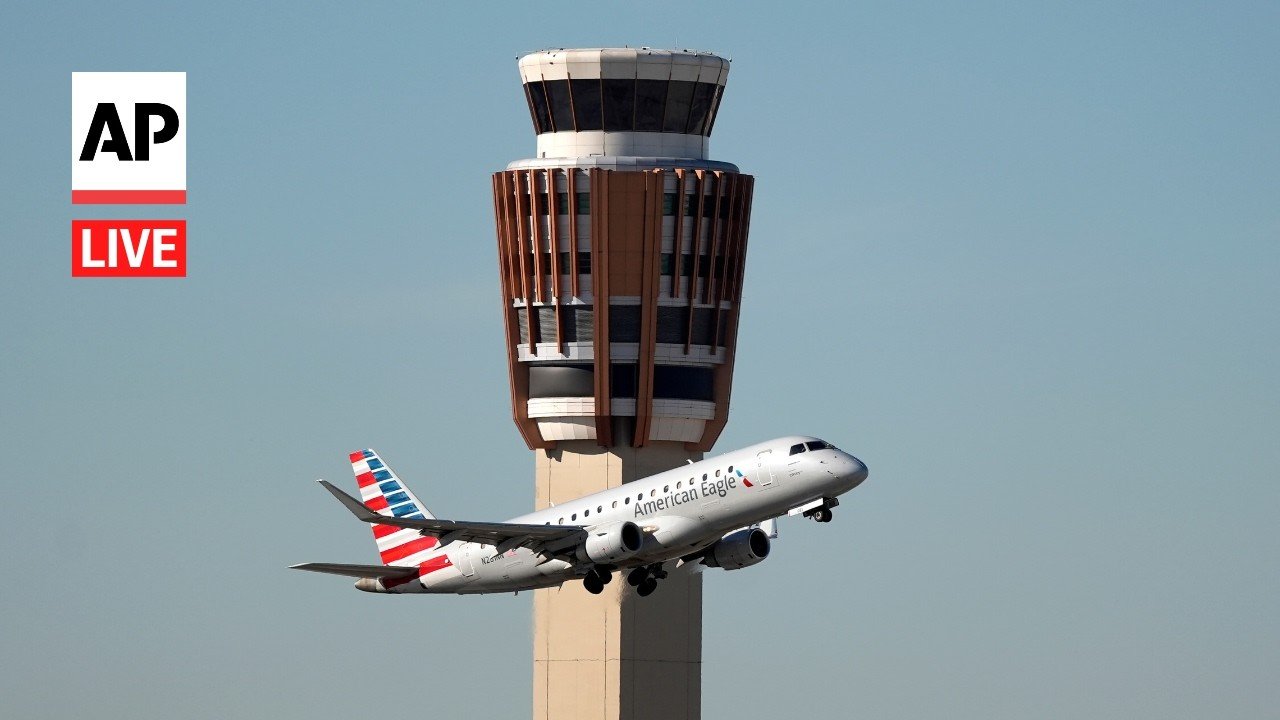
The nationwide ground stop that halted U.S. departures Friday afternoon has no apparent connection to the Microsoft 365 outage that began a day earlier, but a link to the FAA’s new AI traffic-planning tool can’t be ruled out yet, Homeland Security Secretary Markwayne Mullin told reporters at a news conference.
Asked whether the Microsoft outage and the FAA failure were a coincidence, Mullin said, “I don’t see any reason to connect those two at all. Those are separate issues.”
Microsoft also said it has no indication that the FAA ground stop is related to its service disruption, according to a statement from a company spokesperson.
Mullin described the problem as a telecommunications outage affecting the FAA’s air traffic control centers, though he said the cause isn’t yet known. “This isn’t another 9/11. I just can’t repeat that enough,” he said.
The FAA said Tuesday it was expanding its AI system, known as SMART, to the airspace managed by all 22 of its en route air traffic control centers. Transportation Secretary Sean Duffy said Friday’s communications problem affected all of those centers, though Mullin said two areas in the U.S. could still communicate normally.
The agency describes SMART as a cloud-based system that pulls in about 200 data streams, including weather, flight paths and controller staffing, to recommend flight schedules and routes. FAA specialists review its recommendations, and local facilities decide whether to act on them.
Asked about a possible link between the outage and the new system, Mullin said, “We’re looking at that,” adding that DHS was examining it through its Cybersecurity and Infrastructure Security Agency (CISA).
In response to a separate question about whether the problem could be AI-related, Mullin first corrected the reporter, saying, “We call it SI around here,” a reference to President Trump’s preferred term, “super intelligence.” He then added, “You just can’t rule out anything at this point. We’re going through that process, and we’re going to find out what happened.”
SMART is part of a 12-year, $875 million FAA contract with Boston-based Air Space Intelligence that also covers a broader traffic flow management platform. Lawmakers asked the FAA in October to pause use of the tool in the Washington area.
Air Space Intelligence denied any connection in a post on X. “The current ground stop is not based on or a result of the SMART system, any product of ASI or our integration with FAA and ATC,” the company said.
Mullin also declined to rule out a cyberattack, saying, “We’re not ruling out anything at this point.” He said officials had seen no indication of a malicious attack.
The FAA halted departures nationwide shortly before 1 p.m. Pacific. Flights already in the air could land, and inbound international flights were handled case by case.
Mullin said controllers can still communicate “at certain levels,” but the problem has “overwhelmed some of the systems we have.” He said restoring normal operations “isn’t going to just be resolved and turned around within the hour.”
The outages involved air traffic control radars as well as radio frequencies going out at the same time, CNN’s Rene Marsh reported, citing an aviation source familiar with what controllers were dealing with. Controllers had no clarity on the cause, the source said.
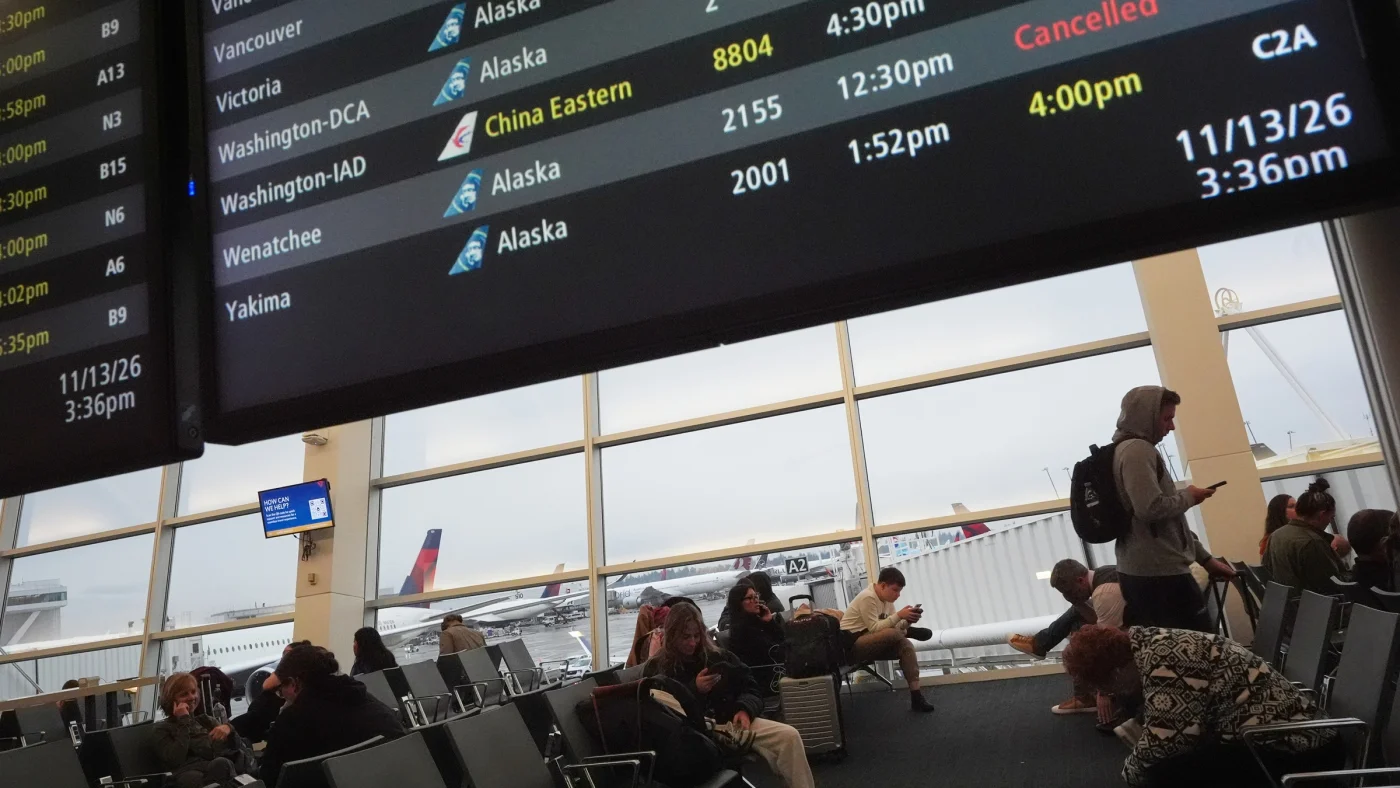
It’s the second nationwide ground stop since the Sept. 11 attacks, after a January 2023 failure of the FAA’s Notice to Air Missions system. FlightAware counted nearly 7,000 flights delayed or canceled as of Friday afternoon.
The Microsoft outage started Thursday morning in Exchange Online, the service that runs Outlook email for businesses, and spread to Teams calendars, Copilot and SharePoint, cutting off email for businesses, schools and governments around the world. By Friday morning, Microsoft said email queues were approaching normal levels.
The company said the outage was a technical issue, not a cyberattack or AI agents. It said the problem was introduced during an earlier network capacity upgrade and surfaced after a more recent network change. Microsoft has promised a full post-incident report.
Hours before the ground stop, the White House and the Department of Transportation asked Congress for an additional $30.1 billion to modernize aviation infrastructure, including $10.1 billion for air traffic control, AeroTime reported.
This is a developing story.












Leave a Reply