
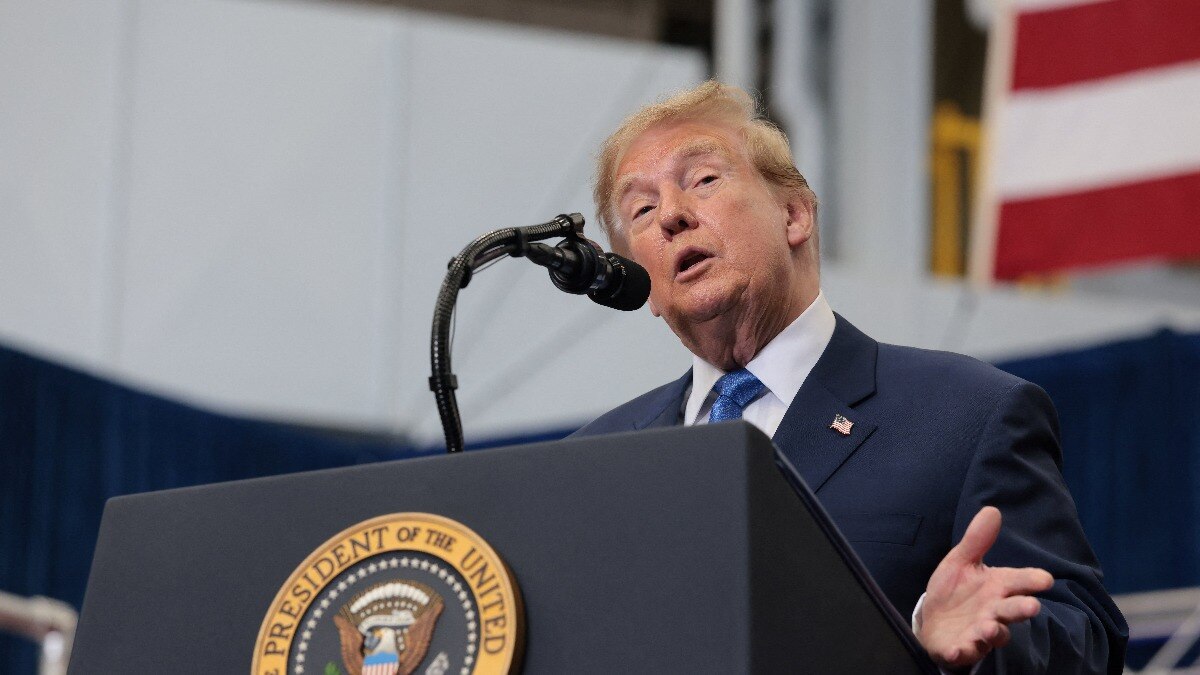
US President Donald Trump said on Sunday that oil from a recently announced deal with Venezuela would be used to replenish the Strategic Petroleum Reserve (SPR), which has fallen to its lowest level in more than four decades.
Trump said the process of “topping out” the reserve would begin shortly, describing the Venezuelan oil as a “Gift from Venezuela to the People of the United States”.
The announcement links Trump’s new Venezuela oil deal directly to efforts to rebuild America’s emergency crude stockpile, which has been drawn down sharply amid wars, supply disruptions and efforts to contain fuel prices.
US crude stocks in the SPR fell to around 289.7 million barrels in August, their lowest level since November 1982, according to Department of Energy data.
WHAT IS TRUMP’S VENEZUELA OIL DEAL?
Trump on Friday announced an agreement that he said would give the US majority control over more than 65 billion barrels of Venezuela’s proven oil reserves through a partnership with private companies.
He said the arrangement would give the US access to a significant share of Venezuela’s oil reserves without costing American taxpayers.
Venezuelan interim President Delcy Rodriguez subsequently said the energy agreement would run for 25 years and cover the development of 17 strategic oilfields, with an initial production target of more than 1.5 million barrels per day.
The wider plan also includes eight greenfield oil blocks.
Rodriguez maintained that Venezuela would retain ownership and sovereignty over its natural resources while using foreign capital, technology and expertise to revive its oil industry.
Venezuela has the world’s largest proven oil reserves but currently produces only about 1.25 million barrels per day, well below its potential after years of underinvestment, mismanagement and sanctions.
CAN VENEZUELAN OIL REFILL THE US RESERVE SOON?
Despite Trump’s announcement, it remains unclear how quickly oil from Venezuela could begin replenishing the SPR.
Trump has disclosed few details about the structure of the agreement, including which oilfields and companies are involved and how the US would exercise majority control over the reserves.
Venezuela’s ageing oil infrastructure will also require significant investment before production can rise substantially. More capacity will be needed to extract and transport its heavy crude, meaning any major increase in supplies could take time.
Venezuelan officials are preparing to grant new exploration and production rights to several companies, including US firms.
Chevron is among the companies expected to finalise talks over bringing its existing Venezuelan joint ventures under the new framework.
Rodriguez has said the agreement could eventually generate around $209 billion in revenue for Venezuela, based on an oil price of $65 per barrel.
HOW DID US OIL RESERVES FALL TO 44-YEAR LOW?
The Strategic Petroleum Reserve, created after the 1973 Arab oil embargo, is the world’s largest emergency crude stockpile and is meant to cushion the US against major supply disruptions. Oil is stored in underground salt caverns along the Texas and Louisiana Gulf Coast.
The reserve can hold around 714 million barrels, but stocks have fallen to about 290 million barrels, or roughly 40 per cent of capacity, after repeated drawdowns in recent years.
The latest major release came after the US-Israel war against Iran sent energy prices higher.
In March, the Trump administration announced the release of 172 million barrels as part of a coordinated effort with the International Energy Agency to ease pressure on fuel prices.
Part of that oil is being loaned to energy companies rather than permanently sold. Companies receiving the crude must return the same volume along with a premium on additional oil.
Energy Secretary Chris Wright has said the arrangement could bring an additional 35 million to 40 million barrels into the reserve this year and next.
Pressure on oil markets has since eased following a 60-day ceasefire between Washington and Tehran and the reopening of the Strait of Hormuz to energy trade.
– Ends
(With inputs from agencies)





Leave a Reply