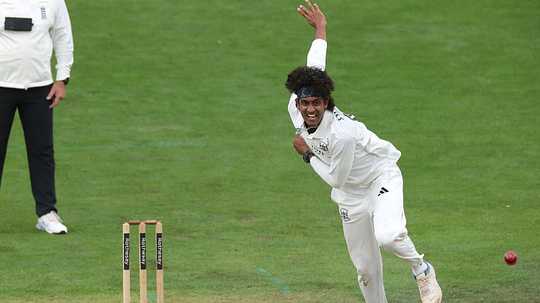
Mohammad Ali turned up at the post-match press conference on the third evening of this Test, tasked with talking about the day’s play and also to explain why Pakistan were in the predicament they are in (in the micro and macro).
Ali is, by the standards of most Pakistani players, unusually well-spoken and thoughtful in his public interactions, with a voice made for radio – or, to be current, podcasts. He’s a big reader – even more unusual – and cites a Hemingway line from “The Old Man and the Sea” as a life philosophy: “A man can be destroyed but not defeated.”
He spoke like that man. Some of the questions were frustrated snipes and Ali did not choose violence, instead responding with patience and gentleness. One journalist told him – not asked – that he looked tired and spent. Not the case at all, Ali smiled back. “I gave my 110%. Maybe I look tired off the field but I’ll never look tired on it.”
It’s been a difficult tour for him, though not a fruitless one, where the struggle has been to utilise helpful conditions (he’d only played one first-class match in England before this series). If he’s mostly bowled well only in patches, he has always done it with spirit and heart. And this little away Test sojourn of Pakistan’s has been a good one for him: 15 wickets across four Tests in the Caribbean and here, at under 30, has offered a gradual correction of his first four Tests, in which he took six wickets at an average of nearly 68.
There was, from the entire interaction, an undeniable pathos. A lot of scorn and ridicule has been heaped upon these Pakistani players through the tour. The worst side ever. Barely fit for the County Championship’s second division. Accusations of faking injuries, taunts about batters being scared, and moaning about bowlers being too slow, and fielders being extra Pakistani.
They’re an easy target. We see them in front of our eyes flailing. We can measure their work by their failures: 171, 135, 110, 194, defeat by an innings and 103, defeat by 194 runs; 10 away losses out of 11, bottom of the World Test Championship.
But there was also an unmistakable bit of symbolism in Ali’s press conference, one which, really, is the central point here. He came to the press conference unaccompanied by the PCB’s media manager, which is unthinkable for almost any board in this day and age. Effectively, he was abandoned to face the press; much like Pakistan’s players have been abandoned by PCB administrations for five years now.
Because if we are really to call this the weakest Pakistan side ever, we must necessarily preface it by saying they are the product of the worst administrative period in Pakistan’s history. Given the very high – or low – bar, that is not said lightly. Fittingly, earlier this week marked five years to the day since Ehsan Mani stepped down as PCB chair, the last time something resembling functional cricket administration was in place in Pakistan.
This is what we don’t see and which we can’t grade through averages and scores. Worse, we actually take it as a given. After all, Pakistan teams have forever been the product of some degree of poor governance. That is just the way things are. They’ve been loved and admired because the magic they have created has been despite all that. But it’s impossible to overstate how dysfunctional and destabilising this period has been, and absolutely critical to recognise its full responsibility in what has transpired on the field.
It isn’t just the headline instability, though that would ordinarily be enough for any country. Instead, it is the about the cumulative toll of this relentless churn, of little folly upon larger folly, of gross negligence upon grosser apathy, of little ineptitudes upon vast incompetencies.
Think about how we might summarise chronologically some of the most impactful consequences of these five years. The inexplicable turn to dead pitches, after a period in which they were actually making very good ones.(Incidentally, Ali debuted on one of those pitches, which was like being asked to build a skyscraper from the plot of real estate quicksand he’d just been awarded). Or the accruing of power unto the chairman, disappearing an executive layer entirely so that there was no wise counsel, or indeed, accountability.
Then the sequel to the power tussle of the mid-2010s after it; the fact it was still a thing after all these years later itself a damning illustration of regression. It ended with the winning chairman, among other howlers, issuing a press release throwing his captain and team under the bus for a World Cup loss and leaking messages from his captain to a TV channel in a bid to deny a rift.
To now, with what may be the death knell in the ongoing governmentalisation of the board. Stuffed with bureaucratic appointments with little working knowledge of how cricket works, with decision-making residing ever more centrally with a chairman whose day job is ever so slightly more important. It’s easy to see this model not as a temporary glitch, but as a precedent for future governments and their use of the board and the game.
Through all these tenures, meanwhile, has been the continuing neglect of domestic cricket, from where these very players come. It’s always worth remembering most of the players in this side are Pakistan’s leading domestic performers, but also how battered and shapeless and unfit for purpose it has become.
Here tournaments are conjured up at great expense only to vanish swiftly, schedules are changed at the last minute, promises of higher domestic pay are made and not kept. One season the Under-19 red-ball and white-ball tournaments were postponed (after one day’s play in the red-ball event) and eventually not organised at all. And so low is the domestic pay in any case that a thriving and lucrative tape-ball circuit is looming as a sounder financial option for many. Who would blame them, given the money they do make often finds its way back to the board?
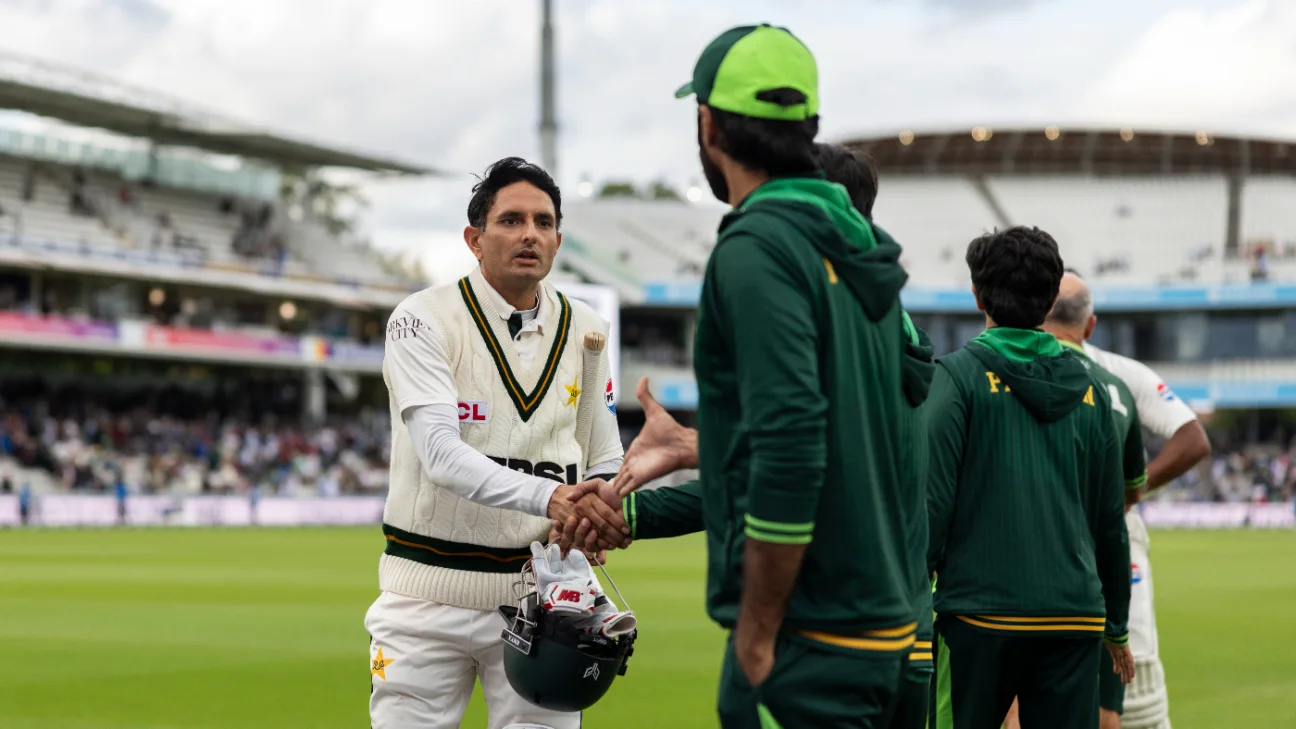
Mohammad Abbas turned up to the press conference at the end of the Test. Another thoughtful and decent man, fresh from nine wickets and an entry onto the Lord’s honours board. Like Ali, he also handled the snipes thrown his way thoughtfully and with decency. In one long question, he was asked why he had been wheeled out and not the captain Babar Azam, about the “team’s professionalism”, and about whether they’ll ever get better.
For his troubles, after the press conference was over, he was quietly admonished by the media manager but within earshot of journalists, presumably for not answering how he had been told to.
The point of all of which is to understand and indeed internalise that it is not the players at fault here. This may be a limited side but the likes of Ali, Ali Usman, young Azan Awais, Abdullah Shafique, Saud Shakeel, Abbas and others are far from the worst players Pakistan has produced. Like so many before them, they have invested their entire lives to playing for Pakistan. These players are not deserving of the ire they have faced, or indeed the potential consequences of whatever this administration may dish out after another heavy series loss.
Instead, they deserve our deepest sympathies, for continuing to turn up, products of a decrepit and toxic system in which they – and Pakistan’s fans – are actually its greatest sufferers.






Leave a Reply