Dr. Anthony S. Fauci, the scientist who led America’s response to the coronavirus pandemic, exercised his right to remain silent more than 100 times last week during an hourslong hearing before the Senate Homeland Security Committee.
Facing aggressive questioning about his handling of the pandemic, Dr. Fauci responded by invoking his Fifth Amendment right against self-incrimination, a refrain more commonly used during traffic stops and police interrogations than in the halls of Congress.
Invoking it carries no implication of guilt, but “in the public eye, it makes you look guilty,” said Mark Osler, a law professor at University of St. Thomas in Minneapolis.
On Thursday, the committee voted along party lines to hold Dr. Fauci in contempt of Congress, a federal misdemeanor that carries up to a year in prison.
Still, he was far from the first person to plead the Fifth while being questioned by members of Congress.
Here are a few notable instances.
The McCarthy era
Senator Joseph McCarthy, whose name became synonymous with political fear-mongering, called hundreds of people before Congress as part of a wave of anti-Communist investigations he led as the chairman of a Senate subcommittee in the early 1950s.
More than a hundred people who testified invoked the Fifth Amendment. McCarthy often called the decisions admissions of guilt — and branded the witnesses as “Fifth Amendment Communists.”
Iran-contra affair
Oliver North, a lieutenant colonel in the Marines, repeatedly invoked the Fifth Amendment during congressional hearings on the Iran-contra affair in the 1980s.
Mr. North was a central figure in the Reagan administration’s secret sales of arms to Iran and the diversion of proceeds to Nicaraguan rebels, known as contras. He gave defiant testimony after being granted limited immunity from prosecution. He admitted to — and defended — his involvement in the scandal, becoming a hero to many on the right who saw him as standing up to hostile questioning. Others accused him of misleading Congress.
Lois Lerner
Lois Lerner, an Internal Revenue Service official who revealed that conservative groups had been targeted for special scrutiny by the agency, invoked the Fifth Amendment during a 2013 hearing held by a Republican-led House committee.
Ms. Lerner was suspended from her job a day after the hearing, and the next year, the House voted along party lines to hold her in contempt. But in 2015, federal prosecutors concluded she should not be charged for not answering the committee’s questions and declined to prosecute her.
Jan. 6 hearings
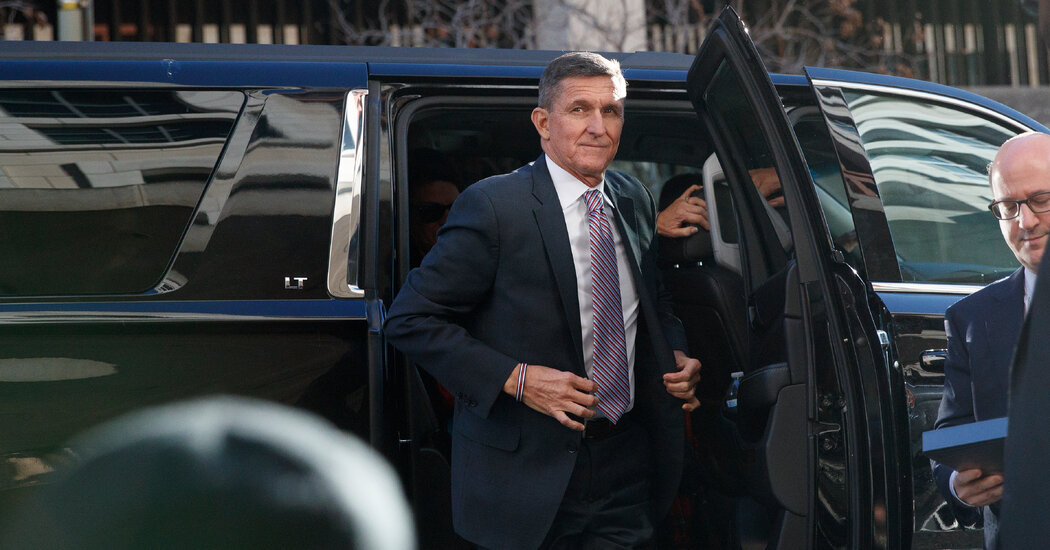
High-profile allies of President Trump, including Michael T. Flynn, the former national security adviser, opted to invoke the Fifth Amendment rather than answer questions from the House committee that investigated the Jan. 6, 2021, attack on the U.S. Capitol.
The committee concluded that Mr. Trump was the “central cause” of the attack, which sought to stop Congress from certifying the results of the 2020 presidential election.
Mr. Trump and his allies have frequently called the Jan. 6 inquiry a partisan witch hunt.