NEWYou can now listen to Fox News articles!
America’s milestone anniversaries have given generations of Americans an opportunity to reflect on the nation’s history, values and progress.
From the Centennial in 1876 to the Bicentennial in 1976, celebrations have had parades, fireworks, historical reenactments, speeches and other patriotic traditions honoring the Declaration of Independence and the nation’s founding in 1776.
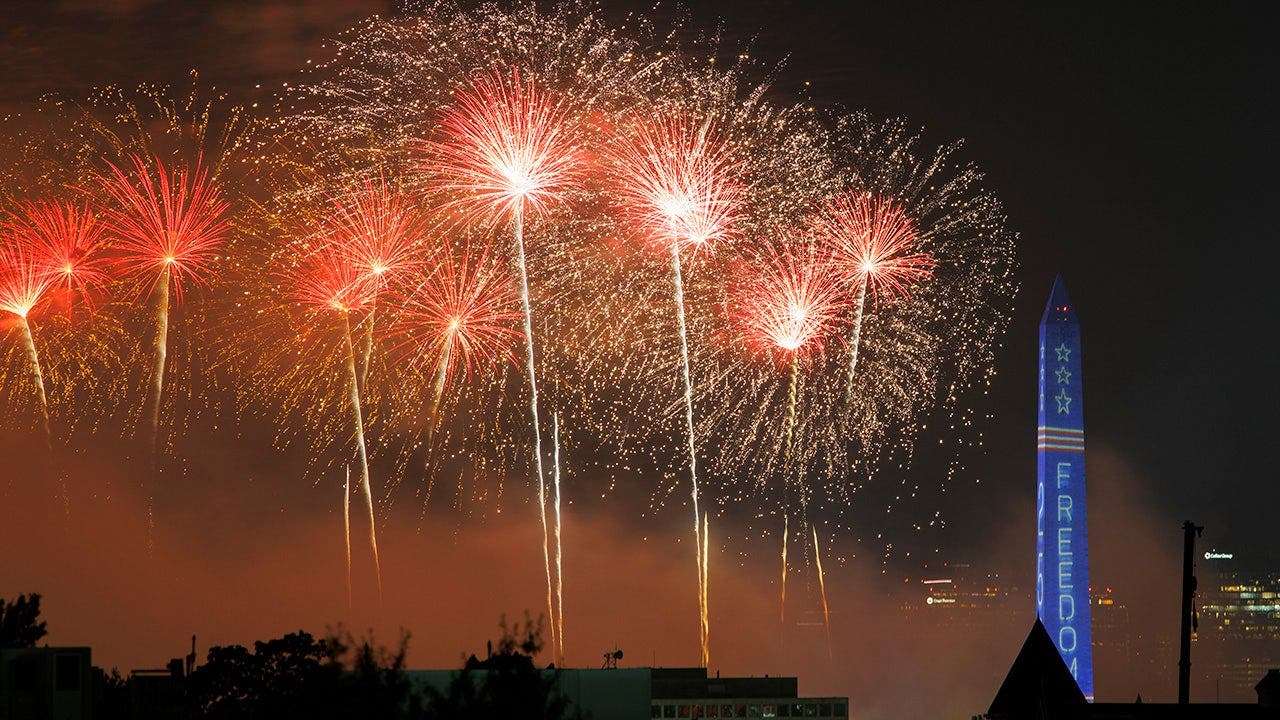
As Americans celebrated the country’s 250th anniversary on July 4, those traditions carried into the semiquincentennial with the Great American State Fair on the National Mall, President Donald Trump’s address marking the occasion, military flyovers, performances by the U.S. Army Band and a Guinness World Record-breaking fireworks display with more than 850,000 fireworks.
Fox News Digital looks back at the nation’s biggest birthday celebrations.
TRUMP SET TO DELIVER ‘HISTORIC’ SPEECH CELEBRATING AMERICA’S 250TH ANNIVERSARY
Fireworks from the Freedom 250 Salute to America Independence Day celebration go off after delays due to a thunderstorm on July 5, 2026, in Washington, D.C. (Kevin Carter/Getty Images)
1826: America’s Jubilee (50th Anniversary)
The nation’s first major milestone came in 1826, marking 50 years since the Declaration of Independence was adopted.
Communities across the country organized celebrations and leaders in Washington, D.C., invited former Presidents Thomas Jefferson and John Adams, two of the last surviving signers of the Declaration of Independence, to attend, but both declined due to poor health, according to the National Archives Foundation. However, history took an extraordinary turn when Jefferson and Adams both died on July 4, just hours apart.
Many Americans saw Jefferson and Adams’ deaths as a remarkable coincidence that added to the symbolism of Independence Day. A memorial service honoring Jefferson and Adams was held in Washington, D.C., while dinners, patriotic events and other commemorations helped establish the tradition of celebrating America’s birthday.
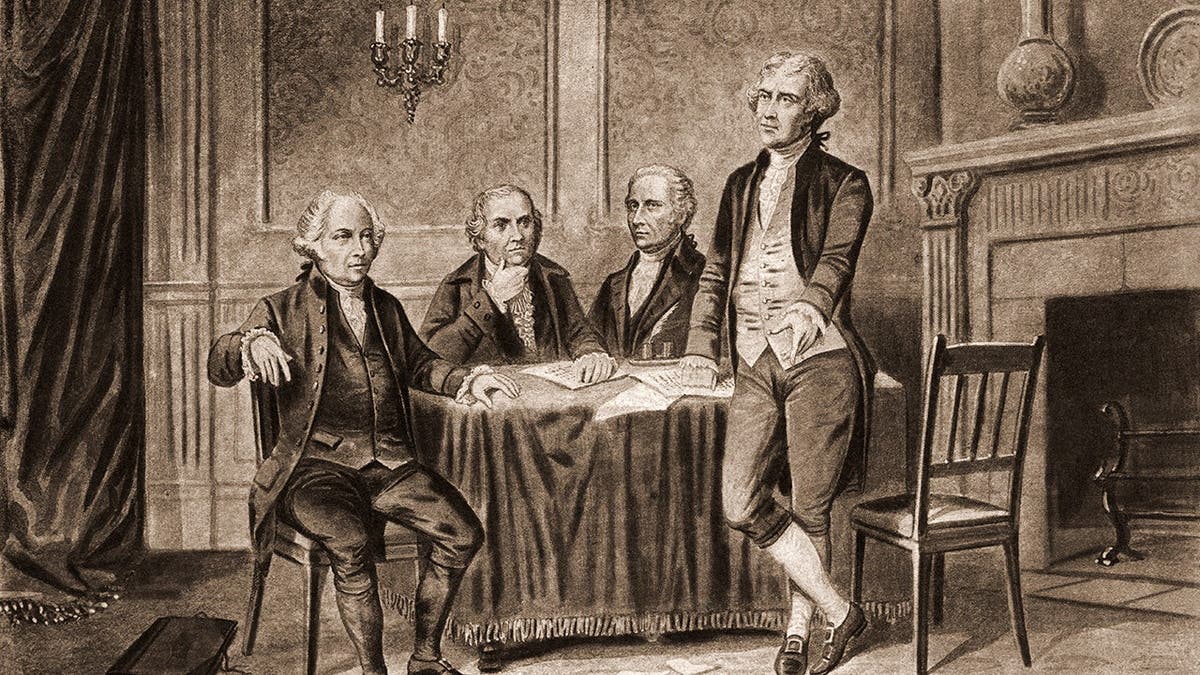
Illustration of four of the United States Founding Fathers, from left, John Adams (1735 – 1826), Robert Morris (1734 – 1806), Alexander Hamilton (1757 – 1804), and Thomas Jefferson (1743 – 1826), 1774. (Stock Montage/Getty Images)
1876: Centennial (100th Anniversary)
The nation celebrated its 100th anniversary in Philadelphia with the 1876 Centennial Exposition, the nation’s first official World’s Fair, which highlighted America’s post-Civil War industrial growth and introduced millions of visitors to groundbreaking new technologies.
The six-month exposition attracted nearly 10 million visitors from around the world to see international arts, cultures and technologies on display, according to the National Archives.
The exposition featured Machinery Hall, where visitors saw new inventions, including Alexander Graham Bell’s first telephone and Thomas Alva Edison’s automatic telegraph. The fair also had a Women’s Pavilion that highlighted the scientific and artistic achievements of women during the suffrage movement.
THE REVOLUTIONARY LANDMARKS WHERE WASHINGTON, ADAMS AND JEFFERSON CHANGED AMERICA
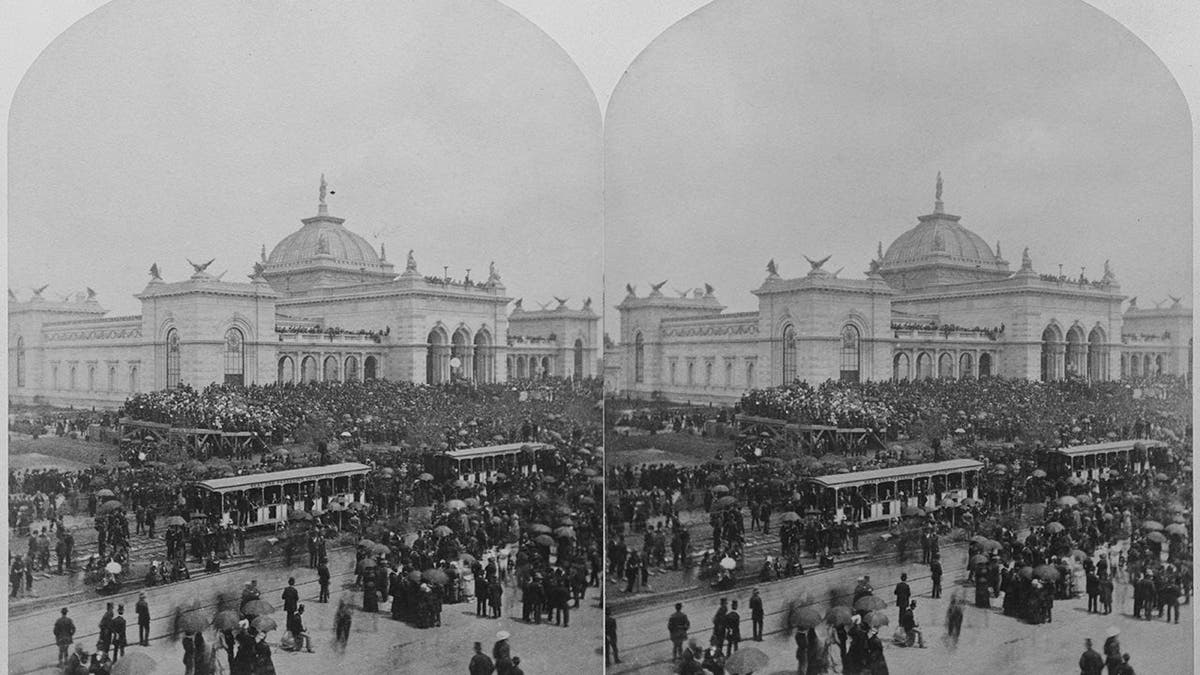
Stereoscopic image showing visitors arriving by tram with the Memorial Hall beyond at the opening of the Centennial International Exhibition, in Philadelphia, 1876. The Centennial Exhibition, which ran from May 20 to Nov. 10, 1876, was the first official World’s Fair to be held in the United States. (Archive Photos/Hulton Archive/Getty Images)
President Ulysses S. Grant approved sending the original Declaration of Independence to Philadelphia for display at the Centennial Exposition, according to the National Archives. Concerns over the document’s deteriorating condition later prompted efforts to preserve the nation’s founding document.
1926: Sesquicentennial (150th Anniversary)
Fifty years later, Philadelphia again hosted a World’s Fair to commemorate the 150th anniversary of the Declaration of Independence.
The 1926 Sesquicentennial International Exposition featured historical recreations and patriotic attractions celebrating the nation’s founding. Organizers built an 80-foot replica of the Liberty Bell illuminated by 26,000 light bulbs that became one of the exposition’s signature attractions, according to The Encyclopedia of Greater Philadelphia.
THE LESSON WE CAN LEARN FROM BICENTENNIAL HISTORY IS TO PARTY LIKE IT’S 1976
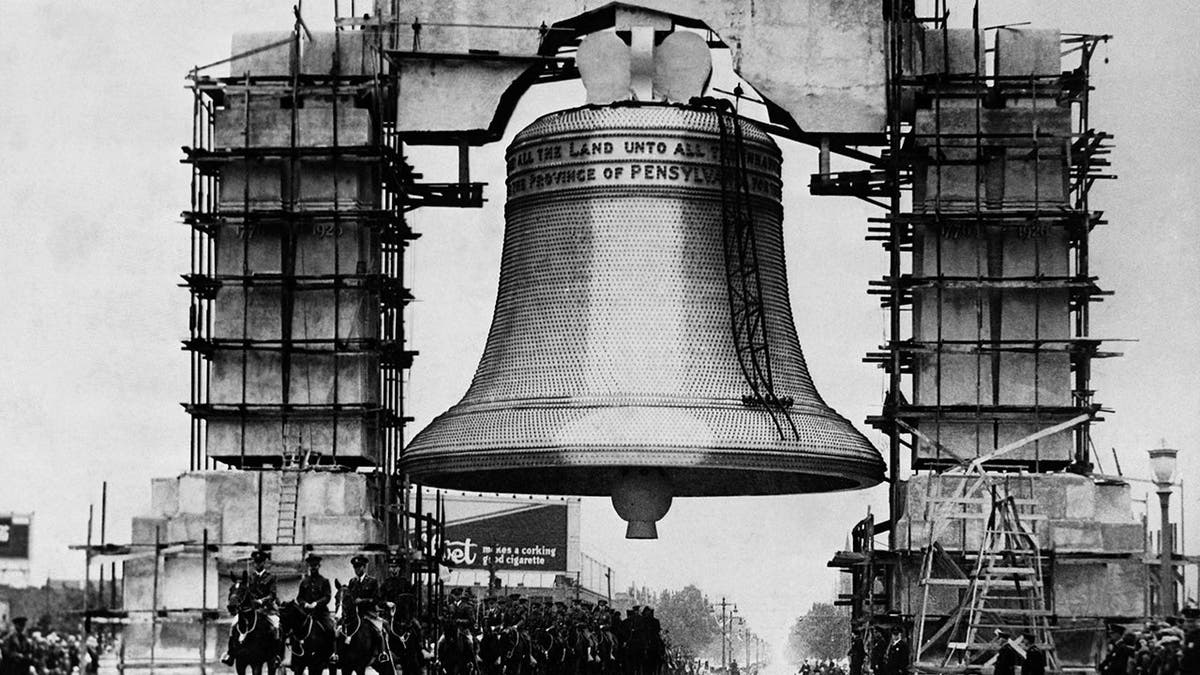
A procession, led by the Troop G Third Cavalry, passes beneath the Liberty Bell, which forms the central feature of a triumphal arch specially constructed for the Sesquicentennial Exposition. The event celebrated the 150th anniversary of the Declaration of Independence. (Hulton-Deutsch/Hulton-Deutsch Collection/Corbis via Getty Images)
Although organizers projected 30 million visitors, fewer than five million paid admissions were recorded, and the exposition closed with enormous debts, according to Smithsonian magazine and The Encyclopedia of Greater Philadelphia.
1976: Bicentennial (200th Anniversary)
America’s 200th birthday arrived during a period of recovery following the Vietnam War and the Watergate scandal.
Philadelphia’s bid to host a Bicentennial World’s Fair was canceled in 1972, leaving the city’s Bicentennial commemoration to move forward as national organizers encouraged celebrations across the country, according to the Encyclopedia of Greater Philadelphia.
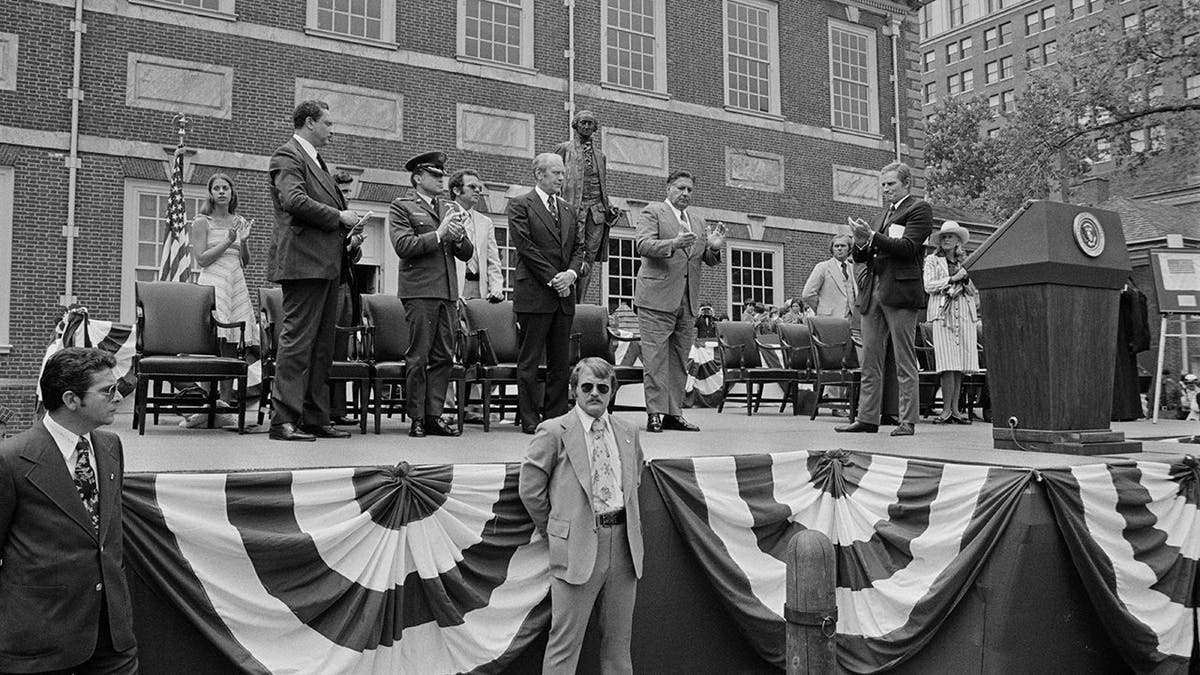
President Gerald Ford and Charlton Heston participating at the U.S. bicentennial celebrations in Philadelphia on July 4, 1976. (Henri Bureau/Sygma/Corbis/VCG via Getty Images)
CLICK HERE TO DOWNLOAD THE FOX NEWS APP
About 66,000 recognized events were held across the country, according to the Gerald R. Ford Presidential Library and Museum. Signature celebrations included Operation Sail, which brought more than 200 tall ships to New York Harbor, and the American Freedom Train, which traveled more than 25,000 miles across the country carrying historic artifacts, documents and works of art.