
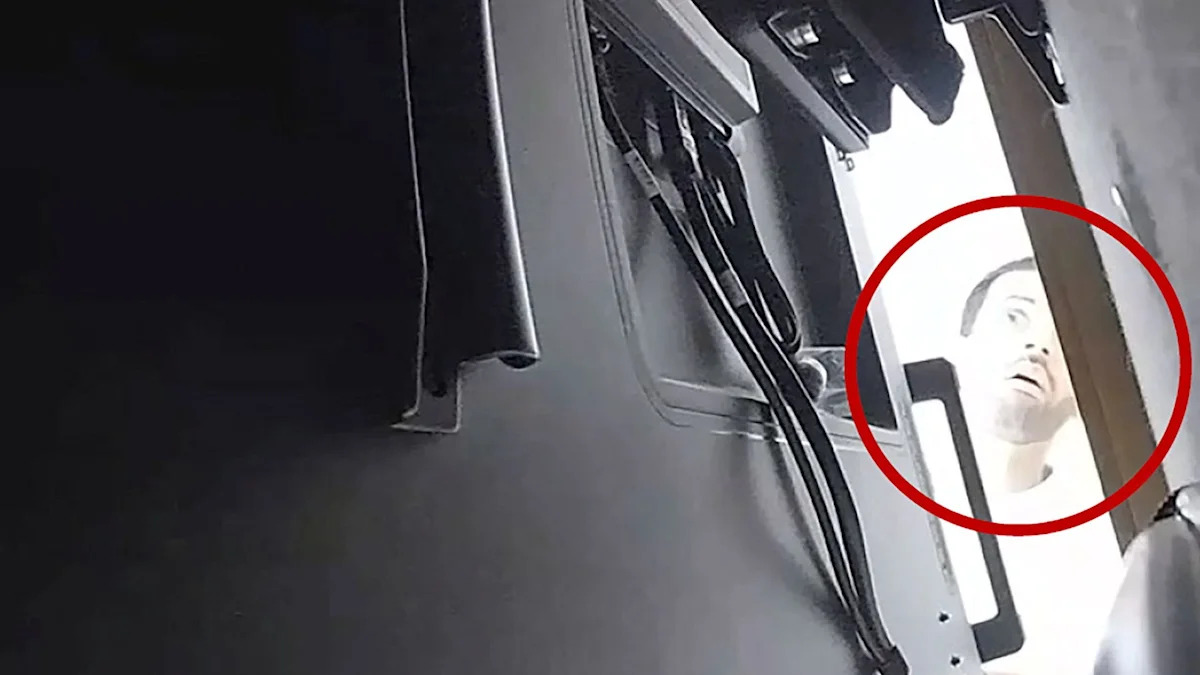
The former OpenAI employee, Abdulrahman Alfozan, 35, who was arrested for allegedly bugging one of the company’s executive conference rooms, has been denied release from federal custody by a San Francisco judge.
The federal government arrested Alfozan, a national of Saudi Arabia, on Oct. 9 and charged him with using or endeavoring to use an electronic, mechanical, or other device to intercept oral communications. He is accused of installing an audio recording device that OpenAI leadership learned was found on Sept. 30, inserted into one of the executive conference room’s TVs.
Alfozan and his legal team appeared in San Francisco’s federal courthouse on Oct. 19, requesting Magistrate Judge Alex G. Tse to allow their client to be released from federal custody for the duration of the case.
As part of the request, his legal team noted that Alfozan would comply with Pretrial Services supervision, surrender his passport to the federal government, remain in home detention at his family’s Millbrae residence, with a GPS ankle monitor tracking his location, and be barred from any international travel or travel outside the Northern District of California without prior court approval. The defense lawyer also submitted a letter from the consulate of the Kingdom of Saudi Arabia, which said they would pay the bond amount.
However, federal prosecutors blocked Alfozan’s lawyer’s request and argued that Alfozan should remain in federal custody, pointing to messages he exchanged with an unnamed member of the Saudi royal family and tickets he booked to Saudi Arabia for himself and his family.

OpenAI employee Abdulrahman Alfozan was taken into FBI custody after authorities found a “surreptitious audio recording device” in a conference room.
Throughout 2025 and 2026, Alfozan communicated with an unnamed member of the Saudi royal family, who court documents say tried to recruit him to join and help develop an “artificial intelligence initiative” being launched in Saudi Arabia.
In 2026, a message showed the unnamed individual telling Alfozan that “Saudi needs you more then [sic] the US,” with him agreeing to the sentiment, but informed the recruiter that he would not leave until his OpenAI stock vested, which the federal government valued at around $2 million, according to court records.
Additionally, Alfozan and his family were scheduled to board a flight to Saudi Arabia on Oct. 12, which he allegedly planned to take during a two-month parental leave from the company.
Alfozan was ultimately arrested on Oct. 9, in connection with the alleged bugging of OpenAI’s office, and forced to miss his Oct. 12 flight.
In Alfozan’s request for release, his lawyers argue the judge should not consider him a “flight risk,” even as the government’s prosecutors pointed to the flight tickets. His lawyer noted he bought the tickets in September, as the family planned to return to Saudi Arabia “for family and immigration reasons.”
“Nationality is not evidence of flight,” court documents read.

Open AI logo and court gavel appear in this illustration taken August 26, 2025. REUTERS/Dado Ruvic/Illustration
Alfozan’s lawyers also noted that he was in the process of becoming a U.S. citizen and had his naturalization interview scheduled in San Francisco for November 6, 2026, according to court documents.
They also noted that Alfozan had plenty of time to flee the country before his arrest, as he knew OpenAI had discovered the recording devices more than a week before the FBI took him into custody.
“If his intention was to flee, he would have done so at that time and booked it before the device at the center of the complaint was allegedly placed,” court documents read.
Federal prosecutors noted in their countermotion that the Saudi Government allegedly purchased one-way tickets for Alfozan’s wife and son shortly after his arrest was announced.
Although the pair could have waited for their Oct.12 flight, court documents reveal that the Saudi government initially booked them tickets back to the country on Oct. 11, but ultimately canceled the transaction after a member of the Saudi military booked an earlier flight that left on Oct. 10.
His wife and son left the United States and flew to Doha, Qatar, on Oct. 10, about 36 hours after he was arrested, with tickets purchased and booked by the Saudi military official, according to court documents.
Shortly after the FBI arrested Alfozan, agents interviewed his wife, who explained that she and her son were planning to permanently move back to Saudi Arabia as the F1 non-immigrant student visa she was on had recently expired. She also told the FBI that Alfozan would eventually move back, but she did not elaborate on when he intended to return to Saudi Arabia.
Upon further investigation, the FBI found that Alfozan had at least two bank accounts in Saudi Arabia, which “appears to be considerable support from a foreign government that has no extradition treaty with the United States,” in addition to the “significant compensation” he’s earned as a high-tech employee in the Bay Area over the last decade.
“His wife and son are now in Saudi Arabia and have no plans to return. He has the resources to flee. He has the connections needed not only to flee, but to build a new life in Saudi Arabia. The Court should order the defendant detained pending trial,” the federal prosecutor’s argument to the judge reads.
Judge Tse ultimately denied Alfozan’s release and held him without bond.
Noe Padilla is a Northern California Reporter for USA Today. Contact him at npadilla@usatodayco.com, follow him on X @1NoePadilla or on Bluesky @noepadilla.bsky.social. Sign up for the TODAY Californian newsletter or follow us on Facebook at TODAY Californian.
This article originally appeared on USA TODAY: Former OpenAI employee arrested for alleged spying denied release






Leave a Reply