NEWYou can now listen to Fox News articles!
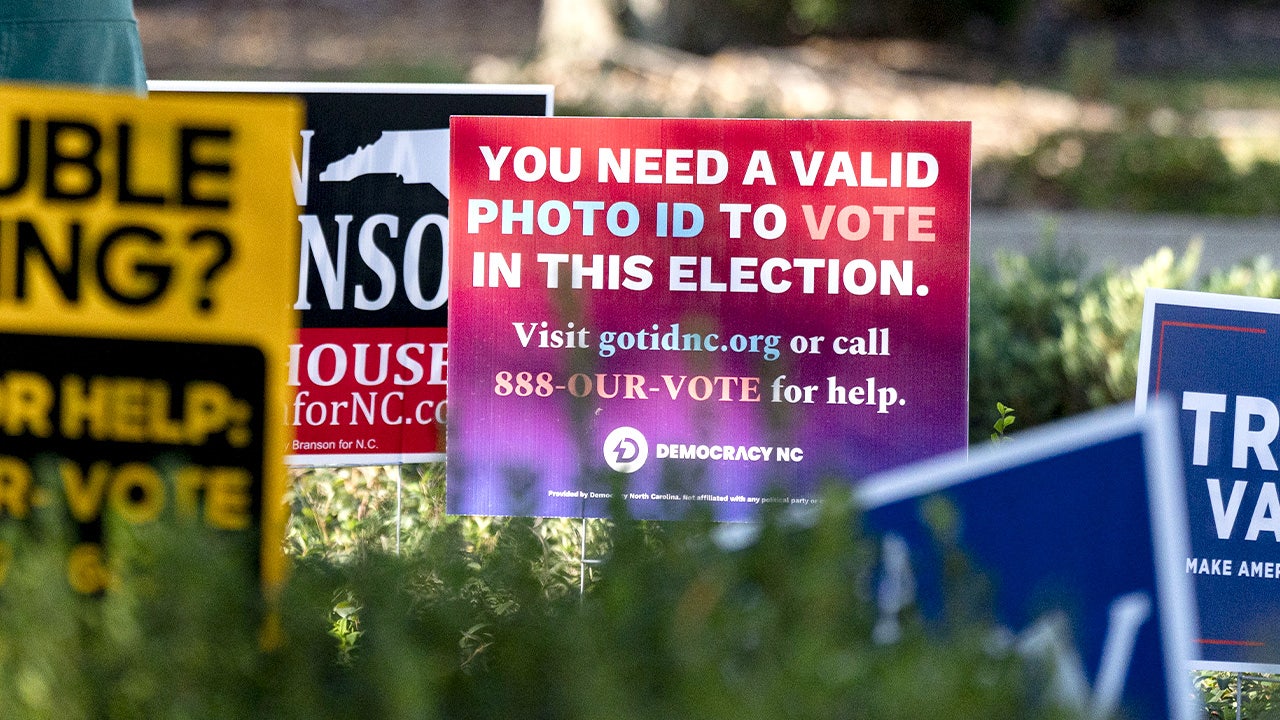
As Congress debates the SAVE America Act — which would require photo identification to vote in federal elections — the latest Fox News national survey shows broad support for that measure.
In a July 16 primetime speech, President Donald Trump urged Americans to contact lawmakers to support the legislation, saying it would address election system vulnerabilities. The act passed the U.S. House of Representatives in February, and is currently stalled in the Senate. The survey was conducted after his remarks (July 17–20, 2026).
The new poll, released Thursday, finds roughly 8 in 10 registered voters favor requiring photo identification to register to vote (83%) and to cast a ballot (77%). Support for requiring photo ID to vote has remained consistently high, between 77% to 85%, in Fox News polling since 2011.
FOX NEWS POLL: VOTERS WANT MAJOR CHANGE AMID ECONOMIC AND POLITICAL DISCONTENT
“It’s a testament to gridlock and partisan polarization that no one seems capable of crafting a legislative compromise that can win passage of a bill featuring policies where large majorities support them,” says Republican pollster Daron Shaw, who conducts the Fox News Poll with Democrat Chris Anderson.
Backing for voter ID spans the political spectrum, though intensity varies. Nearly all Republicans think it should be mandatory (96% to register, 95% to vote), as do roughly 8 in 10 independents (83%, 77%). Democrats are a bit less supportive, with 72% backing photo ID to register and 62% to vote. Outside party lines, most groups favor photo ID, including Hispanic voters (85% to register, 76% to vote) and voters under age 30 (82%, 75%).
Looking toward the fall midterms, most are broadly confident eligible voters will be able to vote (76%), though fewer feel sure ineligible voters will be prevented from doing so (61%). Confidence in eligible ballot access is high across party lines, while Republicans are less certain than Democrats and independents about ineligible voting.
FOX NEWS POLL: AN EARLY LOOK AT THE GEORGIA SENATE RACE
Nearly two-thirds (64%) favor universal mail-in voting, holding steady since September 2025. Partisan divisions persist, as nearly 9 in 10 Democrats and 7 in 10 independents support mail-in voting, while about 6 in 10 Republicans oppose it.
Despite majority backing, views are divided on the accuracy of mail-in ballots. A narrow 51% majority is confident they will be counted accurately, while 48% disagree. Two-thirds of Democrats trust the accuracy of the count, while roughly 6 in 10 Republicans and independents think it’s unlikely.
Most also favor counting ballots postmarked by Election Day, even if they arrive later. Seven in 10 support the practice, including large majorities of Democrats (88%) and independents (74%), while closer to half of Republicans oppose (53%).
In June, the Supreme Court upheld a Mississippi law permitting late mail-in ballots to be counted if postmarked by Election Day.
Regardless of voting method, more express confidence that votes will be counted accurately in their state (64%) than at the national level (53%). Democrats trust both, while more Republicans and independents are assured by state tallies. In addition, by a 2-to-1 margin, more voters think state governments (68%) rather than the federal government (31%) should have election authority, a view shared across all major political groups.
Overall, 6 in 10 are confident the final vote count will be fair and accurate, even if completing the tally takes several days after Election Day. Roughly 7 in 10 Democrats are confident, while more than half of Republicans are not. Independents are divided (52% confident, 47% not).
Conducted July 17-20, 2026, under the direction of Beacon Research (D) and Shaw & Company Research (R), this Fox News survey includes interviews with a sample of 1,003 registered voters randomly selected from a national voter file. Respondents spoke with live interviewers on landlines (70) and cellphones (681) or completed the survey online after receiving a text (252). Results based on the full sample have a margin of sampling error of ±3 percentage points. The survey includes an oversample of 200 voters aged 18-29, bringing the sample size for that subgroup to 350 (±5). Sampling error for results among subgroups is higher. In addition to sampling error, question wording and order can influence results. Weights are generally applied to age, race, education, and area variables to ensure the demographics are representative of the registered voter population. Sources for developing weight targets include the most recent American Community Survey, Fox News Voter Analysis, and voter file data.