

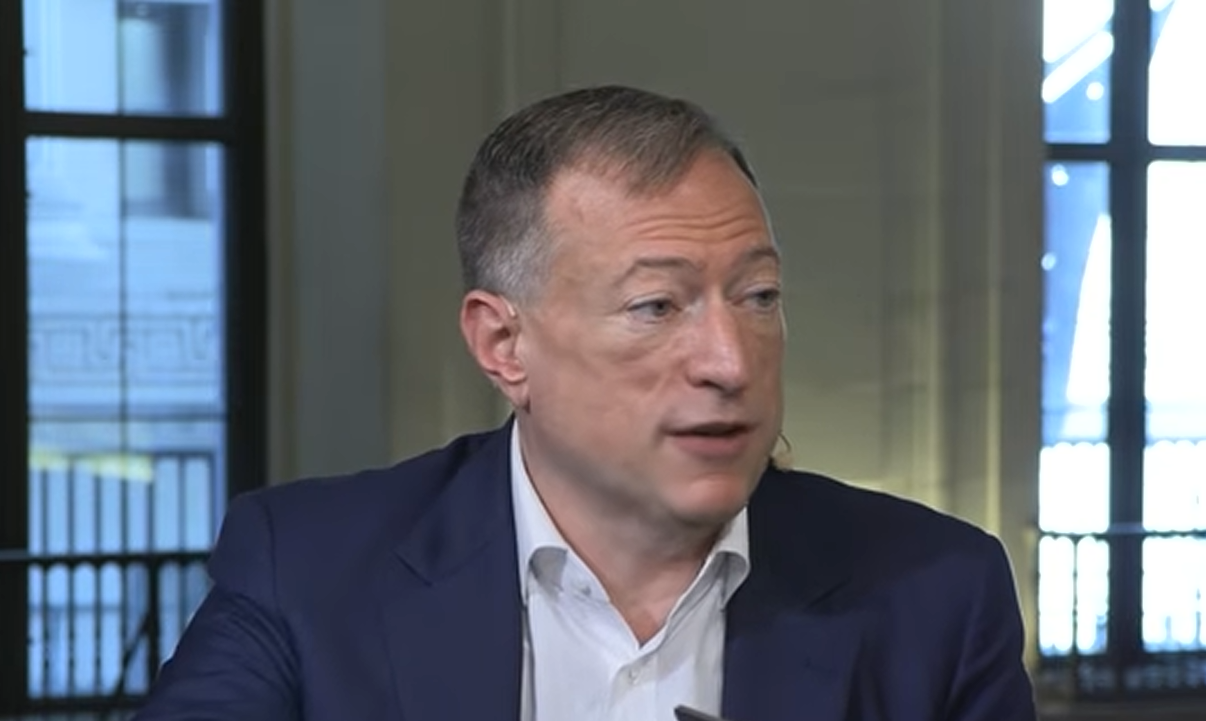
At the Hubbis Middle East Private Capital Forum 2026 in Dubai, James Bradie, Senior Executive Officer at Interactive Brokers U.K. Limited (DIFC Branch), joined Hubbis Founder and Chief Executive Officer Michael Stanhope for a Head-to-Head discussion on artificial intelligence (AI) in brokerage. Their conversation examined how individual investor clients can use familiar AI tools to explore their own portfolios, where the boundary lies between preparing and executing a trade, and what the change means for wealth professionals.
Their conversation explored how clients can use familiar AI tools to examine authorised information from their individual Interactive Brokers accounts and prepare trade instructions for review. It also considered what increasingly accessible AI capabilities could mean for investors and wealth professionals.
For Bradie, the opportunity lies in making a sophisticated global brokerage platform easier to navigate and use. Natural-language access can shorten the path from a question about portfolio exposure to targeted, well-researched information that supports informed decisions. However, security, client control, and professional judgment remain essential throughout that process.
Key Takeaways
- AI makes portfolio information easier to use: Clients can ask questions about holdings and exposures in an individual account through supported AI tools that connect to Interactive Brokers.
- Trade preparation is distinct from submission: The standard AI Integration discussed at the event could prepare trade instructions for clients to review before submitting the resulting orders through an Interactive Brokers platform.
- Security and client control are central. Direct authentication, authorised account access and clearly defined permissions are essential.
- The tools can support wealth professionals. Advisers and family offices can use natural-language tools to examine information within individual, multi-asset and multi-currency account portfolios more efficiently.
- Professional judgement remains essential. Faster access to portfolio information can give wealth professionals more time to focus on client objectives, risk tolerance and investment strategy.
A More Conversational Brokerage Interface
Technology and automation have long shaped Interactive Brokers’ approach. Bradie described conversational access as an important next step. “I think the most important shift is the conversational aspect,” he said. Clients can describe what they want to know in natural language instead of locating the right menu or function first.
“Interactive Brokers’ goal is to make sophisticated investment tools more accessible and intuitive to use,” he said. This can create a more direct path from portfolio research and analysis to a reviewed trade instruction.
Unlike a general conversation with an AI chatbot, a connected AI tool can work with authorised account information. Interactive Brokers has added AI features within its own platforms, including screening, research and news summaries. Clients can also connect supported AI platforms, including ChatGPT and Claude, as well as other AI tools that support Model Context Protocol, or MCP.
Bradie gave the example that a client might ask what an individual account holds, or which holdings have fallen by more than a specified range. The response can draw on authorised portfolio information rather than relying solely on a generic market description. For a user reviewing several holdings or asset classes, this can help turn an initial question into a more focused investigation.
From a Question to an Instruction
The same connection can help a client prepare a potential transaction. A client concerned that an individual holding has become too large could ask the connected AI to prepare instructions to reduce the position. Bradie illustrated this with a straightforward request: “Reduce my position in Nvidia by 50%”.
With the standard AI Integration discussed at the event, the request did not give the AI authority to execute the trade. Instead, it generated a trade instruction for review on an Interactive Brokers platform. The client can then examine the instrument, quantity, order type and other details before deciding whether to submit an order.
The distinction matters when natural-language tools are used to support investment decisions. They can shorten the route from analysis to a proposed action, while preserving the client’s responsibility to review the resulting instruction.
Security Before Convenience
Bradie also addressed the controls required when an external AI application connects to an individual brokerage account. Interactive Brokers’ MCP-based connection allows clients to authenticate directly with the broker without providing their Interactive Brokers passwords or API keys to the connected AI platform.
Clients determine the account information and capabilities they authorise through the connection.
For wealth-management firms and other professional users, these protections sit alongside broader questions of governance and permissions. A firm must determine what information an AI tool may retrieve, which activities it may support and who is responsible for its output.
Bradie cautioned against an experience in which an informal or spoken request, for example, could be mistaken for a financial action the investor intended to take.
His point was practical: the quality of an AI interface should not be judged only by how quickly it produces an answer. Its permissions and limits must be clear when a research question turns into potential financial action.
A Professional Tool for Cross-Border Portfolios
Bradie said these capabilities could help advisers, portfolio managers and family offices review authorised individual accounts. Portfolios often span multiple markets, asset classes and currencies, making it cumbersome to assemble a view of concentration or regional exposure from separate reports. Interactive Brokers provides access to more than 175 markets worldwide, giving internationally oriented clients a broad range of holdings and exposures to assess.
Natural-language queries can help professionals review authorised information within individual accounts, identify exposures that warrant attention and investigate possible alternatives using available market and research information. For Middle Eastern investors whose assets cross markets and jurisdictions, the ability to examine an authorised individual account quickly may be particularly useful when market conditions change.
The practical benefit is a more direct way to establish what an account owns, where its exposures lie and how a contemplated change could affect the portfolios, while keeping the resulting decision within the investor’s or firm’s established oversight process.
Connecting Market Discussion to the Platform
Bradie also discussed Interactive Brokers’ newly announced integration with X Cashtags, which is intended to provide a more direct route from selected market conversations on X to the Interactive Brokers platform.
This capability is separate from the MCP-based AI connection to authorised account information. The example illustrated how brokerage platforms may become more closely connected to the places where investors first encounter a market idea.
It also reinforced an important distinction: discovering an opportunity is not the same as determining whether it fits an investor’s portfolio, objectives and risk tolerance.
More Time for Advice
Bradie did not present AI as a substitute for understanding the client. Wealth professionals spend considerable time retrieving data, examining exposures and preparing materials. If some of that work can be done more efficiently, the opportunity is to spend more time on the objectives and circumstances behind a recommendation.
“Wealth management involves more than processing data,” he said. Clients still need professionals who understand their risk objectives, financial circumstances and tolerance for risk, and who can help establish an appropriate portfolio strategy.
AI may change how professionals prepare for informed client discussions. The judgement within those discussions remains human.
Final Thoughts: Control in a Faster Workflow
Bradie described a practical sequence for the standard AI Integration available at the time of the event: ask a question in natural language, analyse authorised information from an individual account, prepare a possible action and review the resulting trade instruction.
This can make a sophisticated brokerage platform more accessible.
For wealth managers and family offices, the immediate opportunity is to use these capabilities appropriately within individual account portfolios and established governance processes. As AI and brokerage capabilities continue to develop, clear permissions, security and accountability will remain important.
Less time spent assembling information may leave more time for better human judgement, portfolio strategy and client understanding on which sound financial advice depends.
Disclosures
AI Integration is not available in all regions.
Interactive Brokers does not guarantee the accuracy or completeness of the data and information provided through the AI service that client chooses. Information provided using AI integration is not investment advice or a recommendation from Interactive Brokers.
Interactive Brokers is not responsible for any investment decision client takes in reliance on information generated through the AI integration. Client should independently verify information before making any trading or investment decisions. Clients are responsible for carefully reviewing the Instructions, editing them as appropriate, and deciding if they wish to convert any Instruction to an order on the IBKR platform.
Interactive Brokers (U.K.) Limited (DIFC Branch) is established as a branch of Interactive Brokers and operates under Category 4 licence from the Dubai Financial Services Authority. The DIFC Branch is dedicated to personalised local client relationship management and services its clients in and from DIFC by arranging access to brokerage and custody services delivered by or through its head office – Interactive Brokers (U.K.) Limited – a company incorporated in England and Wales that is authorised and regulated by the Financial Conduct Authority in the United Kingdom.












Leave a Reply