
A group posing as a political polling firm said it released “fabricated numbers” on some of the most high-profile Senate races in this year’s midterm elections, gaining coverage in a number of national news organizations before admitting to the deception.
Operating under the name Wedgewood Polls, the group released fake results beginning in June on races in Georgia, Michigan, Texas and other states that could determine control of the Senate. Its numbers appeared in news articles and polling compilations that readers use to assess where candidates stand.
The admission came shortly after FiftyPlusOne, a website focused on polling and elections, said it questioned the group about its methods.
A tip led FiftyPlusOne to pay to recreate a recent poll released by Wedgewood, which resulted in different answers and fundamental differences in how respondents were identified. “As the results came in, it became clear that the red flags we had seen in the Wedgewood data were definitely still waving,” FiftyPlusOne said in reporting its findings.
In a letter posted on social media on Oct. 20, Wedgewood described the deception as an experiment intended to expose weaknesses in the polling industry and the scrutiny applied to newcomers.
“We wanted to test a simple hypothesis: How easy is it for an entirely fabricated firm to gain traction, be taken seriously, and expose how little scrutinization exists in media and public commentary?” the letter said.
Wedgewood’s results were cited by USA TODAY and included in polling compilations by The New York Times and Silver Bulletin, which is operated by statistician and political analyst Nate Silver. USA TODAY has attached editor’s notes to articles that cited the group and said it is removing references to its data. The Times said it removed 15 Wedgewood polls released between June and October.
Attempts to reach Wedgewood by email and social media were unsuccessful. Its website and email address are no longer active.

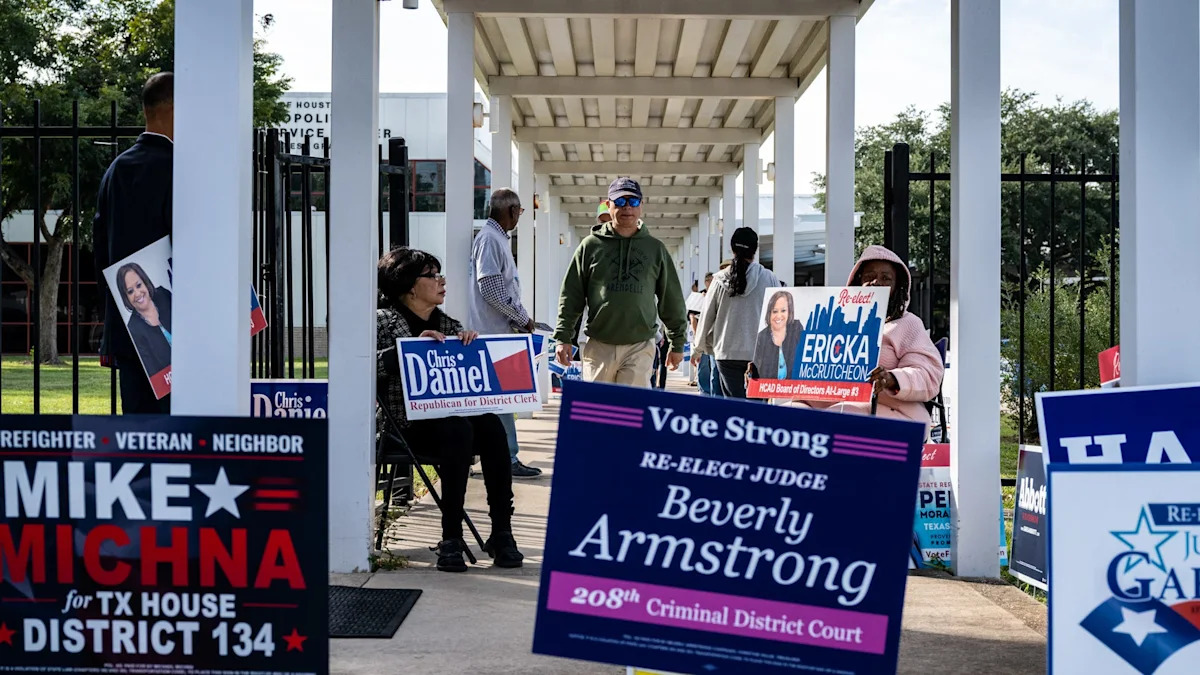
People arrive and depart a polling location on the first day of early voting in Texas for the midterm elections, at the West Gray Metropolitan Multiservice Center in Houston, Texas, on October 19, 2026.
The Wedgewood results in some cases were slightly more favorable for Democrats than other polls in the same race. For example, in the Georgia Senate race, an early October poll it created showed incumbent Sen. Jon Ossoff at 55% and Rep. Mike Collins at 45%. Meanwhile, YouGov in late September showed Ossoff at 52% and Collins at 43%, while aggregator Silver Bulletin had an average across polls of Ossoff at 51.8% and Collins at 43.1%.
The situation echoes two other groups – Median Strategies and Public Sentiment Institute – that were caught releasing false information about how voters felt about the 2026 election, said polling expert Charles Franklin, director of the Marquette Law School Poll. Median Strategies admitted to faking election data for races in Los Angeles, Wisconsin and Nevada. Public Sentiment Institute admitted it fabricated results to benefit one of its clients.
“These people get labeled as pollsters, but they’re emphatically not even pollsters. They’re just people making up data with or without the help of an AI,” Franklin said.
He said people can post anything on social media, where it can become part of the political conversation without being vetted.
“The bottom line is it’s hard to be sure when a new company appears whether it’s a completely legitimate new company with real expertise and real clients,” he said.
Franklin said he generally encourages Americans to trust aggregators to get a cross section of what multiple polls say about the same race.
“Those folks have the expertise and the familiarity with the polling to check it out and ask the right questions. But as the Times is living proof, that vetting that they did proved inadequate in a case of someone that was intent on” misleading the public, he said. “And I don’t know exactly how you deal with that.”
This article originally appeared on USA TODAY: Group admits faking polls cited by major news media outlets













Leave a Reply