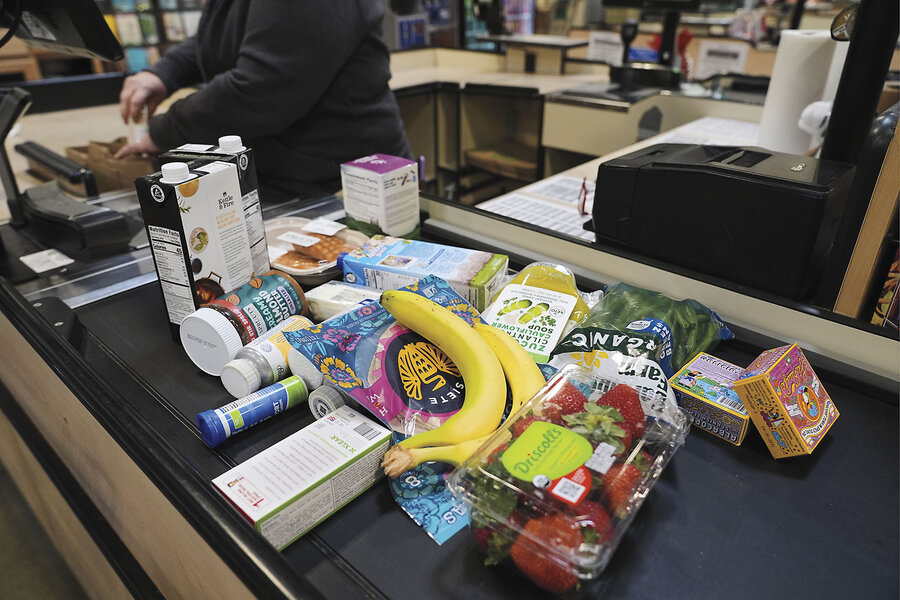
Move over, left versus right. Welcome, rotisserie chicken versus Coca-Cola. A food fight over restrictions on government nutrition assistance is generating controversies and court battles, all while scrambling traditional political boundary lines.
Legislators across the country, in states both red and blue, have spent the second Trump administration passing unprecedented restrictions and exceptions to the foods that lower-income Americans can buy with the Supplemental Nutrition Assistance Program, the program formerly known as food stamps. Less than halfway through President Donald Trump’s second term, the U.S. Department of Agriculture (USDA), which oversees the SNAP program, has approved 23 states’ requests for “junk food” restrictions.
These approved restrictions, known as “waivers,” grant states the authority to ban SNAP shoppers from purchasing soda or sweetened beverages, with several other states including other items such as candy or energy drinks. This helps “put real food back at the center of the program and empower states to lead the charge in protecting public health,” said Health and Human Services Secretary Robert F. Kennedy Jr., as Agriculture Secretary Brooke Rollins signed some of the waivers into action last August. “This is how we Make America Healthy Again.”
Why We Wrote This
Both parties have been enacting state-level bans on using SNAP benefits for soda and candy. On Monday, a federal judge said the new rules violate federal laws governing the food program.
But one of MAHA’s major achievements faced a major setback on Monday, when a federal judge sided with food stamp recipients in five waiver states who sued to halt these bans on certain foods. In a 68-page decision, Judge Amy Berman Jackson of the U.S. District Court for the District of Columbia agreed that these waivers violate federal laws guiding SNAP, writing that Ms. Rollins sought to waive “the very definition of ‘food’ as it was laid down by Congress.”
“The idea that taxpayer funds should not be used to purchase junk food should not be controversial,” the USDA tells the Monitor in a statement. “USDA will not be backing down from the fight to Make America Healthy Again, including for families and communities reliant on SNAP.”
In its pending battle to reinstate these restrictions, the Trump administration might have some unlikely allies. Unlike other debates over the size of SNAP, which has been a target of Republican lawmakers, elected officials from both parties have recently focused on the nutritional side of SNAP.
Along with the surge in soda and candy bans, the first of their kind, there is Congress’ Hot Rotisserie Chicken Act, which passed the House with broad bipartisan support and has gone to the Senate as part of the larger farm bill legislation, which includes SNAP. If signed into law, this bill would allow Americans to use SNAP funds for rotisserie chickens – a food product that would help time-stressed Americans put a healthy meal on the table, say congressional Republicans and Democrats alike – despite SNAP’s longstanding “no hot food” rule.
Proponents say these changes ensure that America’s tax dollars are helping the country’s most vulnerable grocery shoppers prioritize nutritious foods while banning the unhealthy foods that President Trump’s MAHA cohort has rallied against. To others, there’s something immoral in dictating what SNAP shoppers can buy, and the challenges to implementing these new rules may prevent hungry Americans from using their benefits.
“It happened in such rapid succession – the waivers being proposed and then accepted. We went from no states having any kind of waivers to now 23 states. We were all kind of shocked,” says Cindy Leung, a professor of public health nutrition at the Harvard T.C. Chan School of Public Health. “There is a lot of chaos trying to implement these policies, and that’s trickling down to SNAP participants and affecting their program participation. … It’s like the Wild West.”
The changing politics of food restrictions
This isn’t the first time localities have petitioned the USDA to implement SNAP restrictions. In 2004, Minnesota petitioned to implement a statewide ban on using benefits to buy soda or candy. A few years later, in 2010, then-Mayor Michael Bloomberg requested a New York City ban on sugary drinks like soda. Both times, the USDA denied the requests, citing potential confusion and possible stigmatization – the same two reasons that many food policy experts cite in their criticism of the waivers today.
In a sign of just how much the politics on this issue have been scrambled, Mr. Bloomberg’s soda ban at the time was held up by Republicans as an example of Democratic overreach. Former Alaska governor and GOP vice presidential candidate Sarah Palin drew laughs at a conservative conference in 2013 when she sipped from a Big Gulp of soda on stage.
“Oh, Bloomberg’s not around, our Big Gulp is safe,” joked Ms. Palin to the cheering crowd.
Now, most of the approved waiver states are Republican-led, but Democrat-controlled Colorado, Hawaii, and Virginia all have soft drink restrictions set to be enacted later this year. At least four more states – Mississippi, Alabama, South Dakota, and Wisconsin – have waivers either submitted or in the process of being submitted, and more than a dozen other state legislatures have considered laws to bring about their own waivers.
“This is pretty unprecedented both in terms of the number of states … and the kinds of restrictions states are taking up,” says Ben Chrisinger, a professor who studies food access at Tufts University’s Department of Community Health. “It’s widespread.”
Because of that, some food policy experts worry the waivers’ confusion could be widespread as well.
Take Louisiana: Small chocolate candies are no longer eligible for SNAP funds, but chocolate chips for baking are allowed. Because Utah’s definition of “soft drink” is “any nonalcoholic beverage that is made with carbonated water,” carbonated lemonade is not allowed, but regular lemonade is allowed. Iowa’s waiver is particularly complex, with a slice of ready-to-eat cake potentially permitted depending on if a fork is provided in or out of the container. And in many states, super sweet drinks are allowed as long as they contain at least one drop of milk, and candy is allowed if it includes flour.
“We’re getting bogged down in how we define candy or processed food,” says Kate Bauer, director of the Institute for Food, Nutrition, and Health Policy at the University of Michigan. “The reality is that our general definitions of those things are OK, but the reason people aren’t consuming the diets we would like for them to consume is food cost, scarcity, and stress, and we have done nothing to address those issues.”
Will some stores stop accepting SNAP cards?
To many like Dr. Bauer who study food security and nutrition, another worry is that new rules could curb access to nutrition assistance that is already being squeezed.
Last year, Congress passed President Trump’s One Big Beautiful Bill that tightened the number of people eligible for SNAP by increasing work requirements for eligibility and making some noncitizens, such as refugees and asylees, ineligible. Since then, there have been SNAP participation declines in every state and a 10% drop nationally from the previous year. The USDA’s most recent SNAP participation numbers show just under 38 million people receive some level of SNAP benefits, which comes out to roughly 1 in 10 Americans – a decline from just about 1 in 8 Americans last year.
Some experts worry that health wasn’t the true motivation behind the junk-food restrictions, but rather an effort to push participation rates down further. Americans may choose to forgo benefits that they qualify for because of confusion, and some retailers may rethink accepting SNAP benefits for the same reason. A September report from grocery and food industry groups suggests that these new restrictions could cost supermarkets hundreds of millions of dollars and convenience stores up to a billion in both upfront and ongoing costs, such as updating check-out technology to flag newly banned items. States will have their own SNAP rethinking to do, given that the OBBB has set up a cost-sharing system that will require states to pay a percentage of the program – for the first time ever – if their rate of improper SNAP payments is above 6%.
Defending the waivers to the USDA, governors across the U.S. argue the SNAP program is intended to help Americans afford nutritious foods, not to subsidize unhealthy foods.
“I think the program was always set up to tell Americans what to eat, which is healthy foods,” says Angela Rachidi, a senior fellow at the American Enterprise Institute who has advocated for similar kinds of waivers for over a decade. “To me, it is a nutrition program.”
Though Dr. Leung agrees with the soda restrictions, she says restrictions alone likely won’t “move the needle on nutrition,” and would be more effective when paired with incentives. She points to the USDA’s SNAP Healthy Incentives Pilot in 2012, when SNAP users in county in southern Massachusetts received 30 extra cents in benefits for every SNAP dollar spent on fruits and vegetables and ended up buying far more of these foods than SNAP users outside this pilot program. Similarly, Dr. Bauer points to studies that showed how SNAP users bought healthier foods when SNAP benefits were expanded during the COVID-19 pandemic.
“A key component of the program is that we treat SNAP shoppers like everyone else,” says Dr. Chrisinger. He notes that the SNAP Equal Treatment Rule requires retailers to treat SNAP shoppers the same prices and terms. “Adding these extra restrictions creates a risk of spotlighting people at checkout because of the choices they are making in a way that the rest of us just pass through.”