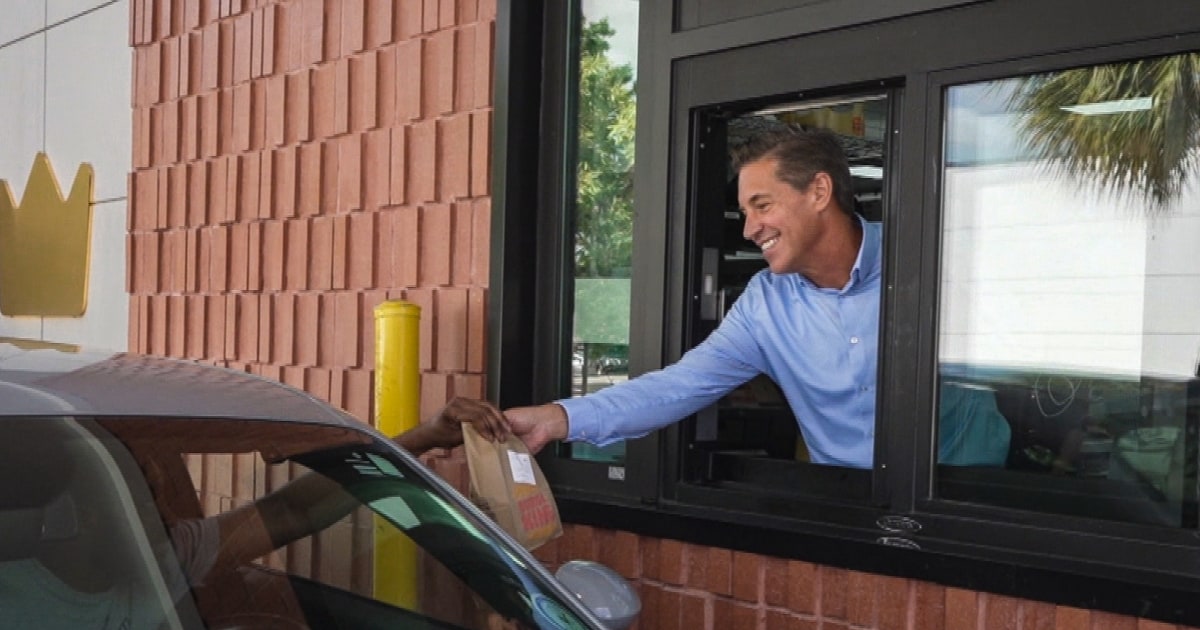
As weight loss drugs reshape how Americans eat, Burger King is gearing up for a future where customers still want fast food — just less of it.
Subscribe to read this story ad-free
Get unlimited access to ad-free articles and exclusive content.

“My impulse has always been that this GLP-1 movement is going to have a profound impact on the industry,” said Burger King’s president of U.S. and Canada, Tom Curtis, in an interview in Miami for NBC’s Business in America franchise.
“We haven’t seen it yet, so I keep telling the team, ‘Hey, we need to be prepared for this,’” he said. At Burger King, the preparations have already begun.
Curtis said the chain is testing menu items like Whopper Bites and protein-forward bowls, partly to accommodate the shifting tastes of GLP-1 users.
The goal isn’t to completely reinvent Burger King, but to make sure it stays relevant as Americans consume fewer calories and increasingly seek out protein-rich meals.
The evolving strategy comes as fast-food chains brace for what could become one of the industry’s biggest long-term challenges.
GLP-1 medications are on the rise, raising questions about whether consumers will permanently scale back on burgers, fries and other staples that have fueled quick-serve restaurant sales for decades.
A July Gallup poll found that 11% of U.S. adults are currently on a GLP-1 medication, nearly four times the share just two years ago.
In a separate survey by the National Restaurant Association, nearly half of GLP-1 users said they had cut back on dining out since they began taking the medications.
As the drugs become more affordable and accessible, the pace of change could accelerate.
The federal government is piloting a program aimed at increasing access to GLP-1s for Medicare enrollees. Meanwhile, manufacturers are under pressure from all sides to slash the cost of GLP-1 therapy.
Curtis said Burger King wants to be ready before Americans’ changing eating habits show up in BK’s sales – and he made clear they haven’t yet, pointing to the strong Whopper sales.
“What’s important for us is that we have all of the variety and innovation available in a smaller package,” he said.
Recent data suggests that Burger King and other fast food restaurants have good reason to adapt now, before it’s too late.
An April survey of 300 GLP-1 users by the equity research firm William Blair found that 72% were specifically cutting back on hamburgers.
Wall Street also expects the ripple effects of GLP-1s to extend well beyond individual restaurants.
JPMorgan estimated in February that the rise of GLP-1s could erase between $30 billion and $55 billion in annual revenue for the food and beverage industry by as early as 2030.
For Curtis, however, the answer is not to rush dozens of niche menu items into BK restaurants.
“We need the demand there before we really complexify, if you will, the menu, because simplicity is king in the fast food business,” he said.
The chain’s measured approach to changing American palettes also comes amid a broader turnaround strategy, dubbed “Reclaim the Flame.”
Curtis said Burger King has poured over $2 billion into branding, remodeling restaurants and upgrading menu offerings like its signature Whopper.
Early indications suggest BK’s customers are taking notice.
In the first quarter of the year, Burger King U.S. saw a 5.8% increase in comparable store sales, compared to a 1.1% drop in sales the first quarter of last year.
Despite broader concerns about the impact of GLP-1s on the industry, Curtis was quick to reject the idea that they might kill off fast food chains any time soon.
“Absolutely not,” he said. “Fast food is about convenience. It’s about great flavor and great value. I still think you need that.”