You can tell where Emily Sweeney is from the minute she says “coffee.”
If you want to imagine her speaking, picture her saying the following words like Ben Affleck: “Park the car in Harvard Yard.”
The Boston Globe social video journalist went viral earlier this year for her accent while reporting on crime in Massachusetts, where the way you speak is filled with cultural authenticity and central to identity — much like other parts of the United States, across which dialects have been evolving since the nation’s founding.
The prevalence of certain dialects is thanks to people like Sweeney, and the changes, according to linguists, usually happen once teenage girls say so.
“Consistently across every dialect that we have ever studied, it is adolescent girls who are half a generation to a full generation ahead of the curve,” said Betsy Sneller, an associate professor of linguistics at Michigan State University. “What they’re doing is where language is gonna go.”
Sneller, who studies sociolinguistic change in the U.S., said teenage girls have the most power to determine where vernacular goes during the “adolescent peak.”
“If you really want to get a snapshot of the future of a language, record a 20-year-old woman talking crap about somebody,” Sneller said.
Sneller received her doctorate from the University of Pennsylvania, which pioneered research on American dialects and their changes through the Telsur Project in the 1990s. More than 700 people from all major U.S. urban areas were surveyed about pronunciation variations, different word preferences and syntax.
“Do you call it a firefly or do you call it a lightning bug?” Sneller said. “Do you say ‘day-uhd,’ or do you say ‘dahd?'”
The research found that there are eight major dialects in the U.S.: Northern, Southern, Eastern New England, Western New England, Mid-Atlantic, Western Pennsylvania, the Midlands and the West, Sneller said.
There are exceptions, including Florida, where researchers say there is a high level of dialect mixing.
There’s also African American English, which shares origins with Southern English, but has variations that evolved differently based on the timing of segregation, according to Salikoko Mufwene, a linguistics professor at the University of Chicago.
“Central to your identity”
The notion of Black English stems from the development of plantations in the American colonial economy, Mufwene says. He distinguishes between coastal areas, especially in South Carolina and Georgia, where rice fields were prominent, and other kinds of plantations farther inland.
On the rice fields, a “Black majority” meant slaves were already segregated in the early eighteenth century, he said. By communicating more among themselves, rather than with European settlers, the Gullah Geechee language emerged.
Meanwhile, in the areas with tobacco and cotton plantations, slaves were generally a minority. The English they spoke had only minimal differences from how the European settlers spoke, until the abolition of slavery and the start of segregation under Jim Crow laws, Mufwene explains.
“We are talking here about two centuries of difference in the timing of residential segregation,” he said.
Now, the prevalence of African American English tells the history of segregation in the U.S., Mufwene said.
“When did the notion of White America start?” he said. “Until the 19th century, there was no White America. There were the Anglos, there were the Germans, there were the Italians, the Poles, and all those nationalities … And there was a time when people spoke German English, Italian English, Polish English, and all those varieties.”
Those varieties have now died, he said, but African American English has not.
Part of why is a lack of assimilation and discrimination, Mufwene argues, which “leads African-Americans to develop most self-identification as different and to stick to what makes them different.”
“So they maintain African American English because it is part of their cultural identity,” he said.
Mufwene also highlights that many African Americans are “bicultural and bi-dialectal,” especially those who grow up in racially integrated communities.
“You want to fit with the people that you are interacting regularly with,” Mufwene said. “And for some people, because you navigate between different social classes, between communities, belonging to two different races, then you learn to speak both.”
Identity is a vital part of dialect, according to linguists, but certain cultural markers can lead to prejudice.
“Your language is so central to your identity,” Sneller said. “Whatever the language is, it has that flavor of home, like, this is what it sounds like to be yelled at by my grandma to clean up my room in Mandarin.”
“So if you hear somebody speaking in New York English, you know, ‘Hey, give me a coffee,’ immediately in your mind, you’re thinking of like rough and tumble, I’m tough,” Sneller said. “That’s the vibe of a New York accent, and you see this in media, like when movies want to portray somebody as being tough, they use either a New York accent or a Boston accent.”
For Sweeney, who is from Boston’s Dorchester neighborhood and has a “Dot Rat” tattoo across her back to prove it, her accent’s punch takes her back home.
When she hears another Boston accent, she identifies the person as someone who knows “what’s up,” she said.
“It just denotes, you have wisdom, you know what I mean?” she said. “You probably know more than I do, so it communicates a lot actually.”
Maintaining Southern twang and values
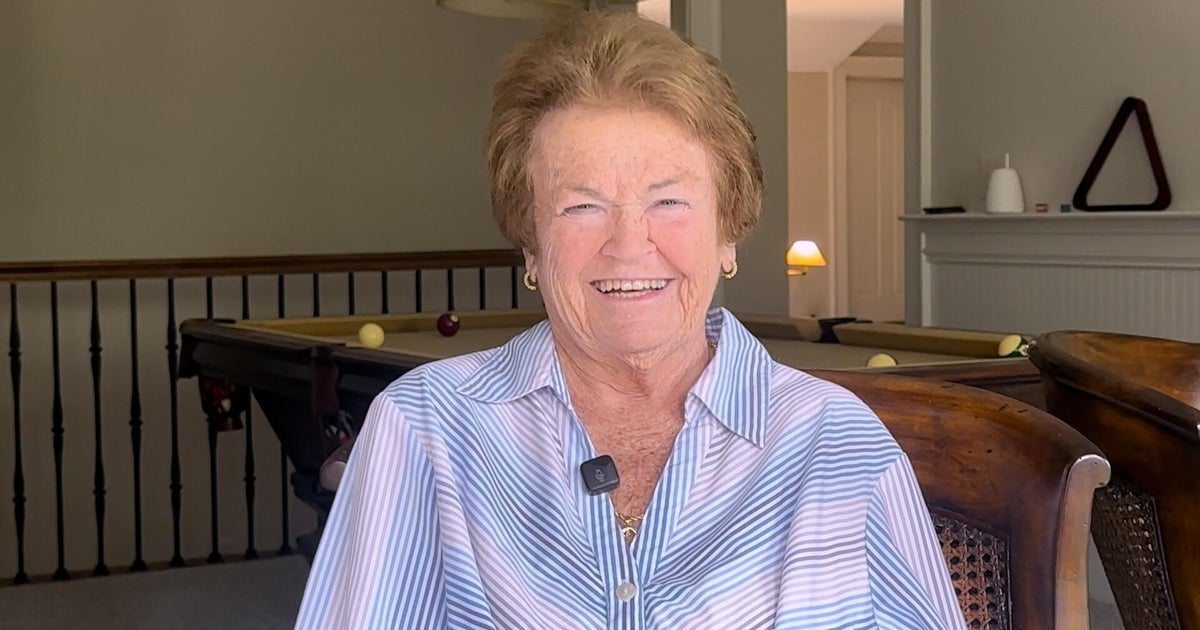
Karen Norris Newsome, 74, who was born in Darlington County, South Carolina, says she gets teased for her Lowcountry accent that can pack two syllables into four letters.
She sounds like a character from “Forrest Gump”: “I’m a very proud Southern woman,” she says. “I am very hardworking and very strong as magnolias.”
Newsome, who was raised on a farm where her parents kept animals and grew fruits and vegetables, and has fond memories of her mom’s fried chicken and July Fourth picnics, is still keeping her accent and values intact.
Although her Southern twang may not be as prevalent in younger generations, Newsome still hopes the values she grew up with will be passed on.
“I think we’re gonna lose the personal touch that I was raised with, the respect I have for my neighbors,” she said. “I think you better get out, take a plate of cookies over to them, and meet them, because you never know whenever you may fall in the yard and need them to come help you up, which has happened to me before.”
Newsome described herself as “very patriotic.”
“I think America is the land of the free, it still is, but I think we don’t appreciate it as much as we used to,” she said.
“I think the average American is just so busy, they forget how to just sit back on the porch, in a swing with a glass of iced tea, just to relax.”
Join CBS for “The Great American Block Party 250,” a primetime special on Saturday, July 4, hosted by CBS Evening News anchor Tony Dokoupil and Entertainment Tonight’s Nischelle Turner, featuring live musical performances, celebrations around the country, and the largest fireworks show in history in the skies over the nation’s capital. Tune in July 4 at 8 p.m. ET on CBS and stream it on Paramount+ and CBS News 24/7.