
The advent of OpenAI Ads has provided just another shake up in the ever-turbulent world of marketing this decade. Each time something new comes along, we (marketers) collectively fear for the changes that will come along with it. But what if I told you that this time it was different?
What if I told you that the new thing in town actually heightened the necessity and importance of a marketing lever that we all have come to know and love?
In January 2026, OpenAI announced it would begin testing ads inside ChatGPT, and by February 9th, the rollout was officially live. Ads are contextual, appearing at the bottom of chat responses, clearly labeled as “Sponsored” and separated from the AI’s answer. OpenAI has stated that ads will not influence ChatGPT’s responses, and that it will never sell user data to advertisers.
For marketers, the implications are immediate: AI is no longer just an organic play. Paid and organic strategy inside AI platforms are now inseparable, and brands that haven’t established a presence in ChatGPT’s conversational answers organically prior to buying ads will find their spend has nowhere solid to land.
In short, brands that haven’t established themselves in LLMs already will fall behind at an accelerated pace. And what’s the best way to establish a brand’s presence and authority online? You guessed it: good old SEO.
This article will get into why ads on ChatGPT make organic strategy more critical than ever.
The Ad-Organic Dynamic: Ads Require Organic
It’s important to understand the difference between ChatGPT and Google ads (spoiler, you can’t buy your way to the top anymore).
While Google Ads follows your traditional “pay to play, but the more you pay the better you play” system, OpenAI ads appear below the conversational answer, meaning that if your brand isn’t already organically part of the answer served, your ad has no relevant context to attach to.
Again: if you didn’t earn the visibility already, you can’t buy it.
This creates a higher bar for content quality across the board. Because a competitor’s ad can appear immediately after the AI mentions your brand (or worse, immediately after a “cons” section about your product) then your organic presence needs to be strong enough to shape the narrative before the ad slot even enters the picture.
Simply put: OpenAI ads amplify your organic position; they don’t replace it. A well-placed ad following a favorable organic mention can drive strong conversion rates. An ad following a weak or absent organic mention is just money wasted. Organic authority is a prerequisite.
Not Just SEO, But AEO & GEO, Too
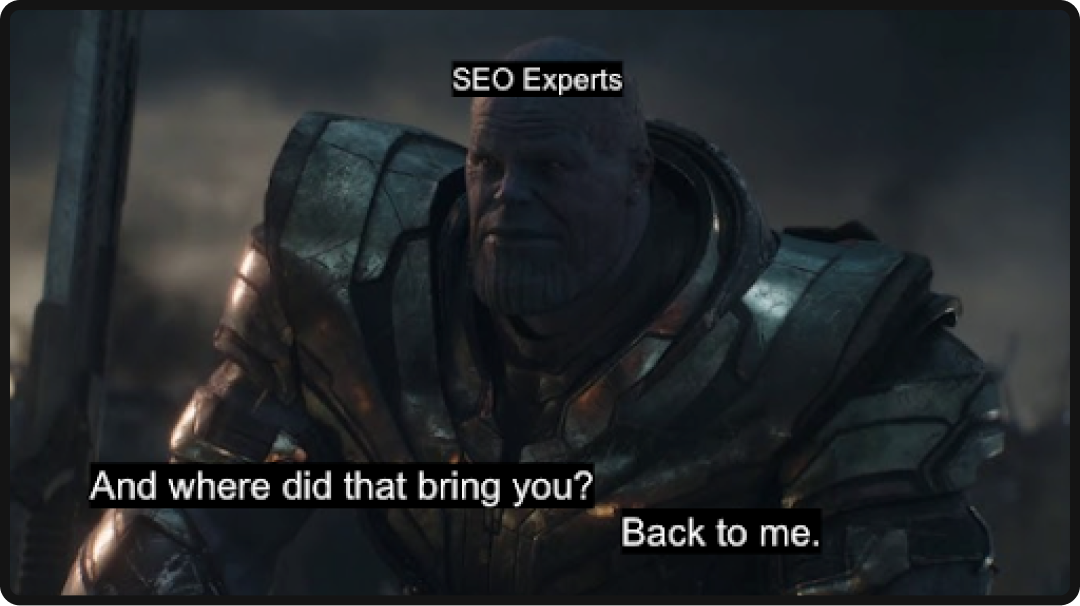
I have made several allusions to SEO (as well as made a meme to enshrine the greatness of this marketing sector), but I haven’t yet actually hit the nail on the head.
The most important thing for AI optimization is authority, which means that we’re not actually gunning after the same exact things as classical SEO. As AI becomes the first stop for high-intent questions, the brands that excel organically won’t be the ones who optimized for pure search rankings, but those whose content is structured to think like an advisor.
That means two things practically:
- First, your technical foundation matters more than ever. ChatGPT favors sources with high topical authority, recent citations, and clean structured data. This includes schema markup that makes it easy for AI to parse and cite. If the model can’t cleanly extract your expertise, it will look elsewhere.
- Second, and more importantly, the type of content you create needs to change. Answering complex questions thoroughly, credibly, and in a format that AI can summarize will get you cited. And that’s the new metric that matters.
Understand that intent is king for AEO, and adjust your strategy accordingly.
Zero-Click and Brand Authority
With AI search, most users aren’t clicking through to your website anymore. In fact, as of March 2026, an astounding 60% of all searches are zero-click. That is a massive increase if you compare it to just three and a half years ago, when just 26% of searches were zero-click.
This is because when an LLM gives a confident, direct answer, the conversation ends there. No click, no visit, no conversion opportunity.
This is the zero-click problem, and it fundamentally changes what “winning” looks like in organic strategy. Driving traffic to your site is no longer the primary goal. Being the brand the AI reaches for repeatedly is.
Every time ChatGPT cites your brand as the trusted answer in your category, that’s a brand impression for an audience that was actively seeking advice. Over time, those citations compound. Users begin to associate your brand with authority before they’ve ever visited your site, read your blog, or seen a single one of your ads (on ChatGPT or otherwise).
The organizations succeeding in this environment are shifting their success metric from traffic to trust. And trust is built through consistent quality, third-party mentions, and topical depth.
The Defensive Organic Strategy: Protecting Your Brand
With ChatGPT ads now live, there’s a threat most brands haven’t fully reckoned with yet: competitors can buy the ad slot directly beneath an organic mention of your brand. In a “pros and cons” response (which ChatGPT constantly utilizes for high-intent queries), a rival can place their product in front of a user at the exact moment the AI is airing your weaknesses.
That’s a significant vulnerability.
So, do you fight fire with fire by tripling your paid spend? No. You shore up your defense by doubling down on organic. This works because the ultimate goal is to build such a strong, positive brand signal across the web that the AI’s overall portrayal of your brand is favorable enough that no single ad placement can undo it.
That means improving the technical accessibility and extractability on your site and proactively increasing your brand mentions on trusted third-party sites that LLMs already love to cite (industry publications, review platforms, authoritative blogs), so that the model consistently associates your brand with credibility and positive outcomes.
The brands most at risk are those with thin or inconsistent third-party coverage and poor accessibility for LLMs. If the only place where your brand story is told is on your own website, and even your own site isn’t optimized, you’re ripe to be taken over by competitors.

The New Playbook
To sum all of this up, the arrival of ChatGPT ads just provides another evolution in organic marketing. The brands that treat paid and organic as separate workstreams will struggle. The ones that understand they are now two parts of the same system will have a significant advantage.
The division of labor going forward has become clear: paid drives immediate, high-intent conversions; organic builds the trust and authority that makes those conversions possible in the first place. Neither works as well without the other (sound familiar?)
Oh, and one other thing to mention: these ads are only for “Go” and Free tier users. So keep in mind that Plus, Pro, and Enterprise subscribers (arguably the highest-value audience on the platform) will only ever see your brand through organic mentions. For those users, your content strategy is your only strategy.
To win in paid ads (and organically), your brand needs to have trust. This trust is proven by being cited repeatedly, mentioned consistently across the web, and structured to answer the questions customers are already asking. Build that foundation now, and paid amplification becomes a multiplier.
Skip it, and no amount of spend will save you.