Mustafe Denbil runs an agricultural shop and farm in northern Somalia, but three months after ordering fertilizer and pesticides, the supplies his business needs are still stranded in Dubai.
Subscribe to read this story ad-free
Get unlimited access to ad-free articles and exclusive content.

Denbil, chairman of Horn Gardens in the city of Hargeisa, says the delays, driven by disruptions linked to the war in the Middle East, are now hitting farmers and families across the country, as soaring food and fuel prices deepen an already severe hunger crisis and push Somalia closer to famine.
“Now, when families come to our store, they may not get all what they need as they used to five months ago,” he told NBC News by phone. “The small farmers cannot even afford to buy at this new price.”
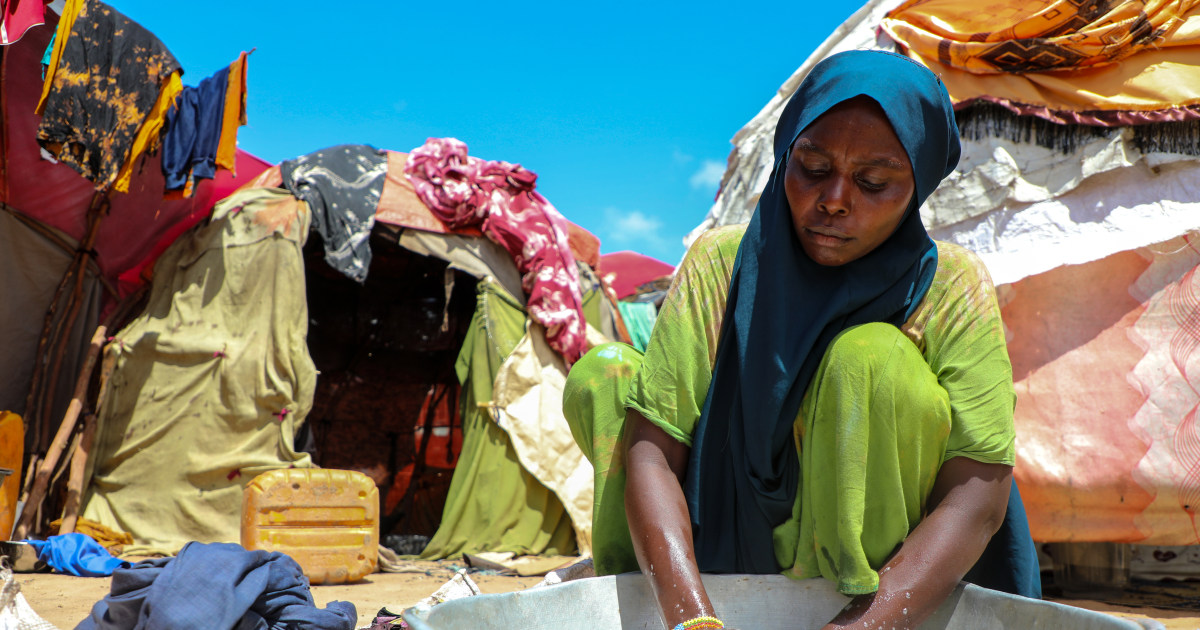
The East African nation was already facing one of its worst food security crises in years.
Six million people, about 31% of the population, are experiencing high levels of acute food insecurity, including 1.9 million people facing emergency conditions, the Integrated Food Security Phase Classification (IPC), the world’s leading body on hunger, said this week.
Now, poor rains and renewed climate shocks are again pushing harvest expectations down, while global supply chain disruptions linked to the Middle East conflict are pushing up fertilizer and food costs, the body warned.
These conditions, the United Nations and aid agencies say, could rapidly tip parts of the south into famine conditions, as overstretched aid groups struggle to keep pace with rising needs.
Denbil said poor rainfall had also impacted his business, but that the war in the Middle East was “the major problem.”
“We’re really hoping that war to end, because it’s life-threatening to us,” he said.
“The humanitarian context in Somalia is worsening faster than we originally projected and expected,” said George Conway, the U.N.’s top aid official in Somalia. “Nearly 2 million young children are acutely malnourished,” he added, with half a million so severely malnourished that they require urgent treatment to survive.
The IPC report said that diesel and gas prices had surged by up to 60% in parts of Somalia, linking this to the U.S.-Israeli war against Iran.
This has pushed up transportation costs and disrupted supply chains in Somalia, which depends largely on food imports to meet internal food requirements.
Aid bodies also raised concerns about the soaring price of fertilizer, critical to agriculture, as a result of the Middle East conflict.
Liquefied natural gas is an essential ingredient in producing nitrogen fertilizers, including urea, a widely used agricultural product that helps plants grow and boosts yields.
Roughly one-third of all globally traded fertilizer shipped by sea passed through the Strait of Hormuz before the war, meaning any sustained disruption risks rippling quickly across food production and prices, straining already fragile food systems in which millions are already struggling to afford basic staples.
The International Rescue Committee said the price of urea fertilizer had risen from $40 to $65 per 50 kg sack, a 62.5% increase compared to precrisis levels, while DAP fertilizer prices have risen by 20%.
Meanwhile, sugar prices have increased by 13.3%, rice by 9.6%, flour by 16%, cooking oil by 21.4%, and milk by 42.8%.
The IPC’s report found there was a “risk of famine” in Somalia’s Burhakaba district, with “acute food insecurity and acute malnutrition” present across the country.
Famine occurs when at least 20% of households in an area face an extreme lack of food, at least 30% of children suffer from acute malnutrition, and two out of every 10,000 people are dying each day because of hunger. The IPC has only declared famine in a handful of cases, including in Somalia in 2011, South Sudan in 2017 and 2020, as well as parts of Sudan’s western Darfur region. The most recent famine was declared in Gaza City last year.
Ricardo Pires, a spokesperson for the U.N. Children’s Fund, said there were “numerous places” where healthcare to treat diseases linked to hunger was no longer available or stretched thin, “due to all the disruptions that are happening in the Middle East.”
Across the wider region, experts warn that the shock from the Hormuz crisis is cascading through East Africa’s heavily import-dependent food systems.
“All of us are exposed,” said Seleshi Bekele Awulachew, Ethiopia’s former minister of water, irrigation and energy, “be it Kenya, Tanzania, all the way down to South Africa.”
“Scarce fertilizer supply means you don’t apply adequate fertilizer, or you may not even apply fertilizer,” he told NBC News. “So it will create really serious crisis in the region if this problem persists.”
But Somalia is among the most exposed to the combined shocks of extreme weather, aid cuts and import dependence.
Between 2021 and early 2023, Somalia suffered through the longest recorded drought in its history. Crops and cattle perished, pushing the nation to the brink of famine and killing at least 43,000 people, while displacing more than 1.5 million.
Meanwhile, global cuts to foreign aid, including by the United States, have substantially reduced support to Somalia.
The IPC report said humanitarian assistance for the current three-month period had increased significantly, but still covered only 12% of those facing crisis levels of food insecurity.
Overall humanitarian funding for Somalia in 2026 stands at $160 million and was $531 million last year, according to U.N. data, compared to $2.38 billion during the last drought in 2022.
“This is a crisis of access, affordability and global political failure,” said Richard Crothers, the International Rescue Committee’s country director in Somalia. “Somalia risks becoming one of the clearest examples of what happens when early warnings are ignored and humanitarian systems are allowed to erode.”