
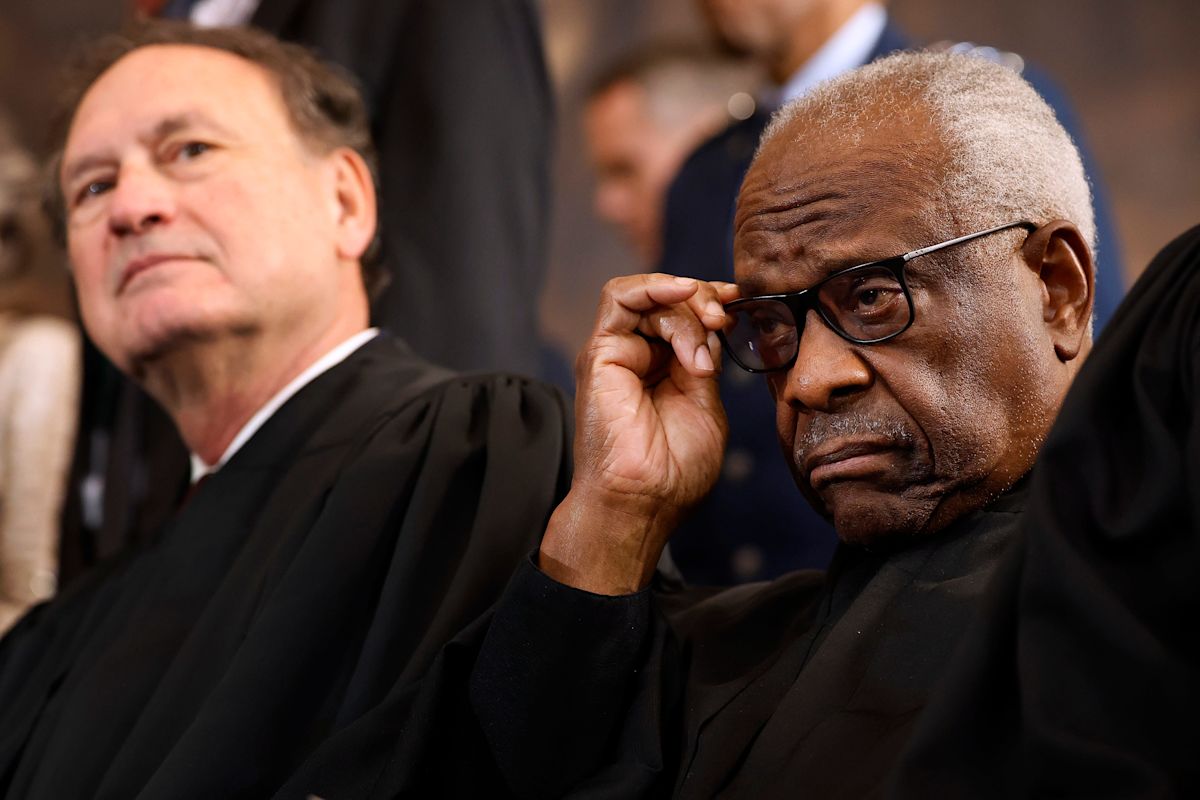
In a major Supreme Court loss for President Donald Trump on mail-in ballots, the president had only two of the six-member conservative bloc writing a dissent on his side: Samuel Alito and Clarence Thomas.
The two justices were the only noted dissenters as the Supreme Court handed down a Sept. 14 decision to that maintains a block on the U.S. Postal Service from implementing new rules ahead of the November midterms to tighten mail-in voting.
The opinion was a win for a group of Democratic-led states and voting organizations that challenged the Trump administration effort. A federal court in late August blocked the implementation of the new rules to the Postal Service, and the government appealed to the Supreme Court, hoping that the justices would pave the way in the last few weeks ahead of the midterms.
More: Supreme Court won’t clear way for Trump’s mailed ballot rules
The two, who are the most conservative justices on the court and ruled for Trump in all the cases that were his top priorities this recent term, disagreed with the new opinion, comparing the states’ move to the football play where at the end of a game, a team tries to throw a very long pass into the endzone for a last-second touchdown.
“That Hail Mary pass is unlikely to be successfully completed here,” Alito wrote, on behalf of himself and Thomas. “The Postal Service has broad authority to regulate the mail.”
More: Justice Alito still doesn’t like court’s gay marriage decision but said it’s precedent
No noted dissent came from Trump’s three conservative appointees – Justices Brett Kavanaugh, Amy Coney Barret and Neil Gorsuch – nor from the conservative Chief Justice John Roberts.
The court issued a brief, unsigned opinion that said the high court declined to lift the block, but Kavanaugh issued his own concurring opinion to explain his reasoning that was different from, but still led him to agree with, the decision.
Kavanaugh said that while he thought the rule fell within the Postal Service’s authority, he found that “applying the rule in the 2026 elections would be arbitrary and capricious” because “state and local election officials do not have sufficient time to reasonably implement the rule before the elections.”
Speculation swirls around Alito: Will Trump get a fourth Supreme Court justice?
Alito and Thomas said that the states that sued the government “share the blame for the ruling’s timing” because of the litigation that spanned for months, beginning in April that “cast a cloud over the Government’s ability to issue a final rule.”
“The plaintiff States invoke the practical effects of implementing the rule close to the midterm elections. I take that problem very seriously, but it is not enough to convince me to deny the application,” Alito wrote. He later added that the states “cannot claim the timing of the rule tilts the equities in their favor when they, and courts hearing their claims, are responsible for so much of the delay.”
This article originally appeared on USA TODAY: In controversial mail-in ballot ruling, Trump has only two Supreme Court allies







Leave a Reply