
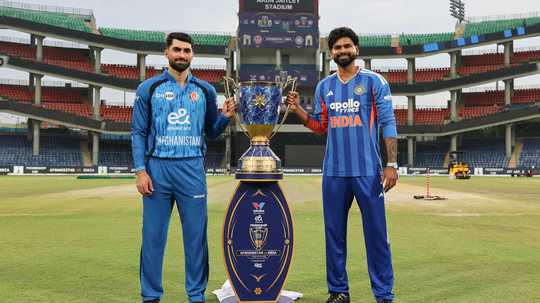
Every great party comes with a hangover. India had barely finished celebrating their successful defence of the T20 World Cup crown when the first symptoms appeared. Under new leadership, a setback followed almost immediately – in Ireland, and when it was least expected. England made it considerably worse. A series sweep in Zimbabwe restored a bit of normalcy for the new-look side. Now, six months after that historic night in Ahmedabad, the reigning champions return home with Afghanistan ready to challenge what Shreyas Iyer’s India wants to be.
Technically, this is an away series. Afghanistan are the official hosts, even if their ‘home series’ against India will unfold entirely at the Arun Jaitley Stadium in the national capital. In every other sense, though, this is India’s first test of the Iyer era at home, and a chance to formally put the ghosts of that forgettable Englsih summer to rest where they went from being nearly untouchable to six straight defeats.
And Iyer could hardly have asked for a more fitting venue than a ground that has already been the setting for one of his most memorable conquests in T20 cricket. It was here that the Iyer-led Punjab Kings chased down 265 against Delhi Capitals in IPL 2026, the highest successful chase in T20 cricket. He returns to the same venue in a very different capacity – now in-charge of the national team and all the expectations that come with it.
If the opening six months of the new World Cup cycle were about testing fresh talent, the Afghanistan series should be where India begin turning those experiments into a more settled plan. That makes this three-games series, squeezed inside a festive week just ahead of the 2026 Asian Games, little more consequential for Iyer & Co. Afghanistan are arguably India’s strongest Asian opponent in this format and – with the continental event approaching – also the primary threat to India’s gold-medal ambitions.
On paper, India have never lost a game to Afghanistan. But that unbeaten record comes with an asterisk. Their last bilateral meeting ended in a double Super Over in Bengaluru, serving a strong reminder that Afghanistan may still lose the big games to India more often than not, but they have long since stopped being a team India can afford to take lightly.
Afghanistan have taken their time to familiarise with the surroundings even though Delhi already has a special place in their white-ball history. They arrived early, trained at the Yamuna Sports Complex, and have roughly two-thirds of a squad that knows Indian conditions intimately through the IPL, leaving little mystery about the demands of playing Indian superstars in India. That said, they’re transitioning into a new T20I era under the leadership of Ibrahim Zadran, who takes over from Rashid Khan. Around him, however, is a settled core with considerably more experience – Rashid, Mohammad Nabi, Rahmanullah Gurbaz, Noor Ahmad and others who have played enough top-flight cricket around the globe to know that reputation counts for very little once the game begins.
For India, most of the first-choice players return. Jasprit Bumrah is back in the T20I side for the first time since the World Cup final in March, while Arshdeep Singh and Varun Chakaravarthy are also in line for their comeback. Nitish Kumar Reddy and Washington Sundar are back from injury as well. But even with a nearly full-strength squad at their disposal, the selection decisions don’t necessarily get any easier.
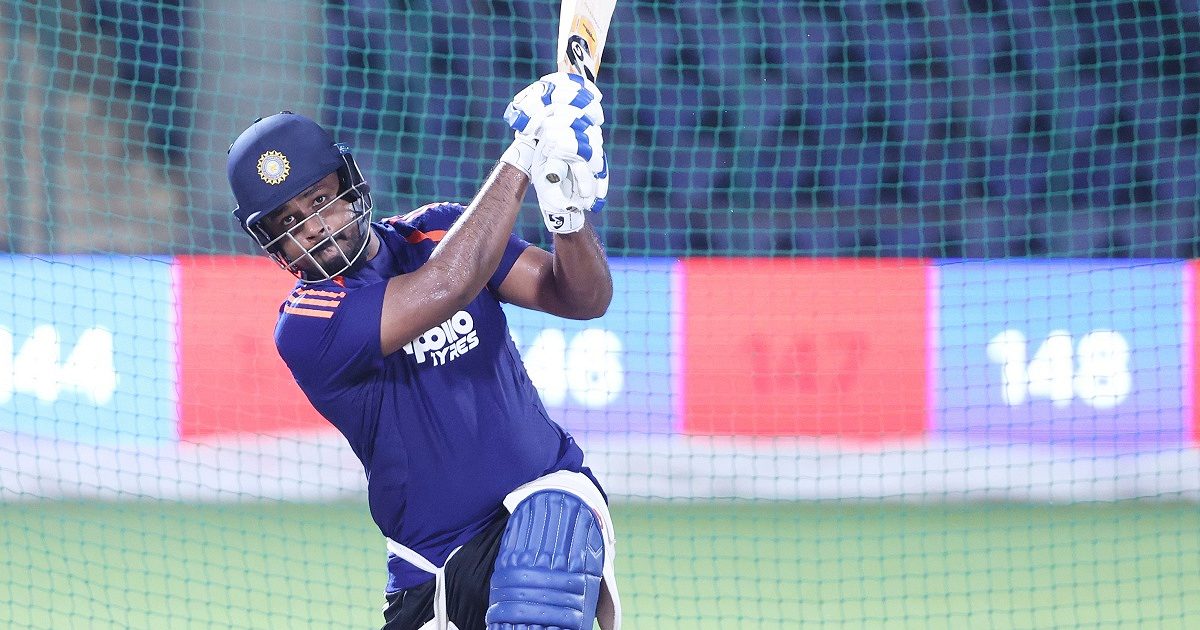
Sanju Samson’s return adds a much-needed right-handed option to India’s batting even though it may seem surplus to the requirements given their tendency to increasingly embrace the Abhishek Sharma-Vaibhav Sooryavanshi pairing. He made single-digit scores in both games in Ireland and again in the first game of the England series before being dropped for the next three matches, when Sooryavanshi was given his chance. The 15-year-old batting sensation had a difficult initiation into international cricket before Samson returned for the final game of the England series. Then came Zimbabwe, where Samson was rested and Sooryavanshi responded with two fifties in three matches at a time when Abhishek endured a lean patch.
Having to make a choice between Samson, Sooryanashi and Abhishek is a happy headache for the management. Or as skipper Iyer put it, “a luxury to have for any side”. The trade-off is essentially between Samson’s experience and Sooryavanshi’s unencumbered approach. And while experience offers an understandable sense of security for a side seeking redemption, leaning on it would risk overlooking the reason Sooryavanshi was given his opportunity at 15 in the first place. India have spent the better part of this transition trying to build a T20 side that is aggressive almost by instinct, and this opening pair could become central to that identity.
And then there is Bumrah.
His return from a long injury layoff makes India a bowling attack markedly different on paper, but his own recent T20 numbers offer a reason not to assume that everything will simply fall back into place. Bumrah’s IPL 2026 campaign was uncharacteristically difficult: just four wickets at an average of 102.5, with an economy rate of 8.36 that is well above his tournament career average. For a bowler whose presence has so often been a source of reassurance for India, any question marks over his rhythm and workload are worth keeping an eye on. The Afghanistan series therefore doubles as a chance for India to rebuild its attack around its epicentre, and for Bumrah to rediscover his T20 rhythm before the Asian Games and a packed calendar leading upto what promises to be a historic 2028.
“As a player comes out of an injury, it’s important that he gets game time. You need that sort of confidence when you’re returning to cricket,” Iyer said on the eve of the series opener. “Bumrah has played so much of cricket over the years, he’s immensely experienced, but at the end of the day, if you would ask me as an individual who’s coming out of an injury, I would want more game time and more confidence leading up to a certain tournament. I interacted with him yesterday, and he’s in that mindset where he wants to come and perform for the team and see to it that we win championships,” he added.
Delhi should help make the examination fairly honest. The Arun Jaitley Stadium has the reputation of being a high-scoring venue and, with conditions around the city having been cloudy and wet in the build-up, the weather may have a say early in the game given the forecast of rainy afternoons. Should the surface play as expected, this is a venue where 200 is very much on the table every game.
That puts the spotlight back on the batting approach India have been developing: whether they can sustain the aggression, absorb the occasional failures and still trust the combination they choose. That may ultimately be the narrative. As desperate for redemption as they may be, India do not need to prove that they can beat Afghanistan. Instead, India needs to show what happens when they’re tested by an opposition good enough to push back.
The Irish and English debacles showed how quickly the halo of invincibility can disappear. Zimbabwe gave some room to breathe again. Afghanistan now is a true litmus test. Six months into a new cycle, the hangover should be over. India need to know where this party is headed.








Leave a Reply