


Content warning: This story contains mentions of suicide.
At the end of the series premiere of Lanterns, creators Chris Mundy, Damon Lindelof, and Tom King implemented a bold creative decision: They killed Hal Jordan.
“It’s the way that we’re showing the audience that we’re serious about this,” Lindelof told The Ringer in August, just days before that first episode aired on HBO. “There’s one ring; there’s two guys. Only one of them is gonna get this thing at the end. And instead of watching them tug-of-war for eight episodes, we’re gonna tell you right now that John [Stewart] is gonna end up with it. Probably.”
Killing off a Green Lantern in a show called Lanterns would have made waves regardless of when and how it happened. But to do it so soon after Jordan was reintroduced on-screen almost seemed like a slap in the face to fans who had waited so long to see this beloved character get a proper live-action portrayal after 2011’s Green Lantern film flopped. Thus, the twist was not undertaken lightly.
“We better really make sure that this feels like it’s the right move,” Lindelof continued. “And I think that if we’re doing our jobs right, there are gonna be a lot of angry people on Sunday night—but how do they feel at the end of the eighth episode? That’s the thing that really matters most. Was it exploitative? Was it gimmicky? Did we just do it because we could? Or did it feel earned and, most importantly, in service of launching John on his journey?”
In the episodes that followed the premiere, the Lanterns creators doubled down on their audacious take on Jordan by depicting him as an aging hero who was losing his way. Hal almost killed his trainee, Stewart, in a desperate attempt to hold on to his power ring. He let innocent people die in Rushville, then went to prison in shame. All of that led to his death, and a pitiable funeral that only three people attended. Hal’s eulogy, which he wrote himself years earlier, ends with a devastating final line: “I hope I mattered.”
Any fans who felt as if Lanterns had been disrespecting the character with these narrative choices, or that Hal’s early death was a gimmick, may have changed their minds after watching Sunday night’s episode.
Episode 7, “The Jordan Boys’ Legacy,” directed by Alik Sakharov and written by Lindelof and King, is a revelatory tribute to Hal Jordan. The installment traces Hal’s life back to his childhood to introduce the man who shaped him—his father—not unlike how Episode 3 revealed that John’s parents groomed him from an early age to become the Green Lantern. It also provides an extended look at the person Hal once was before time and experience took their toll. Powered by Kyle Chandler’s brilliant performance and the creative team’s poignant storytelling, Lanterns delivers an impactful penultimate episode of the season that repositions the superhero as a tragic character.
“The Jordan Boys’ Legacy” begins in 1975, as young Hal is getting reprimanded by his baseball coach for not being a team player in their latest game. Hal had been pitching a near no-hitter with the team up by two runs and only two outs left in the last inning when the coach tried to pull him from the mound—and Hal refused to leave. The pitcher proceeded to fight each of his teammates, which caused the team to forfeit the game. Even as he sits in the coach’s office hours later, Hal’s still holding the ball in his hands.
When Hal’s dad, Martin, arrives, the coach expects Mr. Jordan to side with him and tell Hal to apologize for his selfish actions. But Martin does exactly the opposite. After hearing the story from his son’s perspective, he asks the coach how good the next kid coming in to replace Hal was. When the angry coach says it doesn’t matter, Martin steps up to his face to reply: “Brother, it’s all that fucking matters.”
The scene shows where Hal got his stubborn attitude (and his willingness to take a punch), which gives us some insight into the making of the man who will one day refuse to relinquish the power ring, even as the Guardians try to pull him from the game.
Before the episode returns to the present, Lanterns provides another illuminating window into young Hal’s childhood and his relationship with his father. Later the same day, as Hal and Martin eat popsicles at a flight test airfield, Martin gives his son the key to his safe. In the event that he dies, Martin says, Hal will be responsible for what’s inside it. All of Martin’s secrets will be entrusted to Hal, and Hal alone. It’s a tradition that was passed down from Martin’s father, and his father before him. The Jordan boys’ legacy, Martin calls it.
Before Martin dies in a plane accident in the montage that follows, he leaves Hal with one last lesson. Seeing that his son is still holding the game ball, Martin tells him that he can’t hold on to it forever, “because it’s fucking exhausting.” He says to throw it away. To let go. And so Hal chucks it across the nearby fence. “That’s a great arm, kid,” Martin says.
Fifty-one years later, Hal is dead, but his sentient backup—the Halogram—is helping John Stewart solve the mystery of the real Hal’s murder. And as John paddles their boat through the waters of a dying alien world, this ghostly projection of Hal tells John that his father, a test pilot, didn’t really die in an accident. He took his own life.
“My old man, he was convinced we’d be better off without him,” Hal says, citing the note he had found in his father’s safe as a child. “He said he had that pain his whole life. Said it was getting worse. He couldn’t hide it. He couldn’t bear to let us see it. Couldn’t bear to let us see him. He told me all this because my grandfather left it in a note to him. Had the same pain. Passed down generation to generation, father to son. They called it the Jordan boys’ legacy. Man, I’m not fearless ’cause I’m brave. I’m fearless ’cause I’m broken.”
Hal’s vulnerable revelation explains a lot about the HBO show’s take on the character. It is exceedingly rare for superhero stories to explore mental health issues, but King had already provided one of those exceptions, as his 2018 DC Comics limited series Heroes in Crisis explored how superheroes handle PTSD. Hal’s struggles with depression represent another way that Lanterns continues to take a grounded, human approach to the fantastical world of superheroes.
More on ‘Lanterns’
Amid a town full of potential murder suspects, the Halogram sheds doubt on whether a murder was committed at all. Hal hadn’t backed up a version of himself in the power ring’s hologram system since 2006, long before the events of the series would rob him of his purpose in life as Earth’s one and only Green Lantern. Yet this sentient, living memory confesses that he felt broken, even then. There had been other signs of Hal’s depression across the season as well. John found Hal’s Coast City home almost entirely empty in Episode 2, save for a mattress and some photos hanging from the walls, despite Hal having lived there for eight years. But Sheriff Kerry said it best in the series premiere, as she pushed back against John’s admiration of Hal’s fearlessness.
“First time he strutted up to me, I could tell Jordan doesn’t care about anybody,” Kerry said. “And nobody cares about him. He’s not fucking fearless. He’s lonely.”
As the Halogram shares the story of his (or Hal’s) generational trauma with John, the bonding moment brings them closer than they’ve ever been. Throughout Episode 7, John and Hal’s backup are constantly bickering, just as John and the real Hal did in their brief time together in Rushville all those years ago. The Halogram is initially suspicious that his would-be trainee is the killer they’re searching for, and John has to sing Outkast to himself to force the irritating projection of Hal from his mind. But by the end of “The Jordan Boys’ Legacy,” their relationship is already healing and evolving. There’s a tragic irony in the reality that, with the real Hal gone, this partnership won’t be able to keep growing.
Episode 7 shows what the dynamic duo of John and Hal could’ve been, as did that amicable stretch in Episode 4 when they sought out the Manhunter together (before Hal decided to crash their rental into a telephone pole and leave John in a flaming death trap). Although this earlier simulacrum of Hal has trust issues and the same stubbornness that he’s had since childhood, the Halogram represents an idealized version of Hal from a bygone era, when he might’ve embraced the role of mentor. He doesn’t hesitate to compliment John when he sees him maintain a construct after taking off the ring, whereas his elder counterpart had too much pride to acknowledge his replacement’s rare talent. Chandler softens some of Hal’s rougher, wearied edges as he makes subtle adjustments to his performance to capture a more righteous man whose own needs haven’t yet eclipsed his morals. “Whatever I am, I’m not him,” the Halogram tells John.
Toward the end of “The Jordan Boys’ Legacy,” John and the living memory of his former partner travel through the portal they find in Hal’s lockbox. The fear-inducing toxin swirling around the dying planet’s atmosphere causes John to see images of his father and his younger self, as he’s haunted by the trials of his childhood and the pressure to become the Green Lantern. And amid these fleeting images and painful recollections of flawed fathers, a dysfunctional family tree of Lanterns emerges. Hal’s former mentor and father figure, Sinestro, takes the Halogram hostage before John punches the alien fugitive, knocking him to the ground. Before disappearing, Hal quotes his proud father: “Great arm, kid,” he tells John.
As Lanterns teases Sinestro’s return in the season finale, following his escape from space prison, “The Jordan Boys’ Legacy” concludes with young Hal returning to the airfield—still wearing the suit from his father’s funeral—to retrieve his game ball. He never did learn to let go.
Who killed Hal Jordan?
Noah Macon
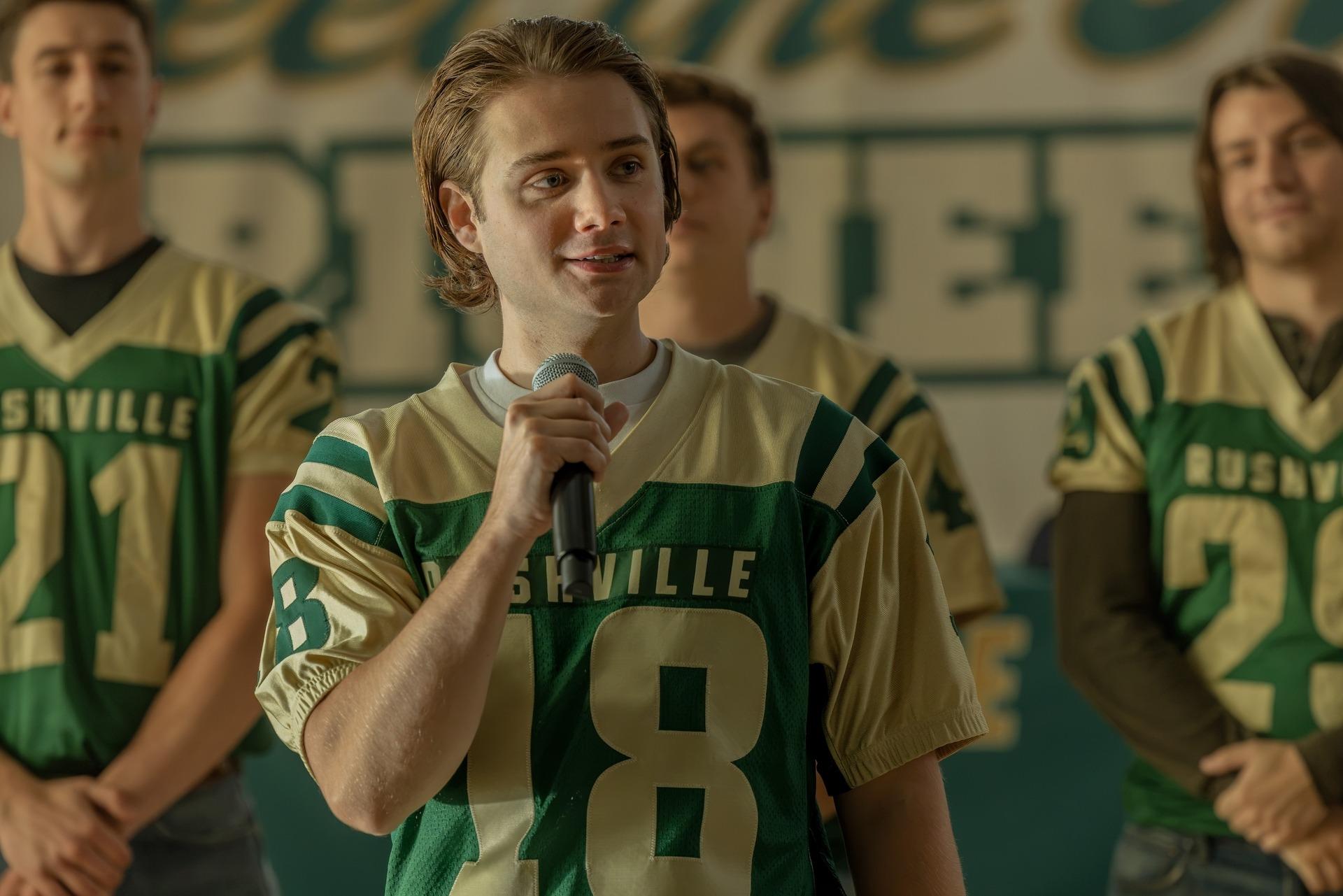
Noah remains a prime suspect in Hal’s murder, even as he does little to implicate himself in the crime. Let’s just say it’s one of those gut feelings that Hal’s always talking about.
The teenager continues to be suspiciously perfect for a kid who lived through a traumatic event that clearly still weighs on everyone else in town. Just look at how Maggie—John’s young blackmailer—turned out. As Noah’s mother revealed in the previous episode, he has his eyes set on becoming a senator, as a stepping stone to the presidency. He kindly dropped off a suit for the man who killed his grandmother and just beat up his dad. And in Episode 7, the high school star quarterback delays his much-anticipated hat ceremony in a selfless effort to keep the attention on the team’s upcoming championship game instead of himself.
It could be that Noah is simply the most well-adjusted human in Rushville and a good kid who’s hoping to lead his town past a horrific tragedy. Or maybe that’s all a carefully constructed facade. Perhaps he’s not even human: As I covered in last week’s recap, Noah could be the true last Manhunter, or some sort of Manhunter-human hybrid, who aims to fulfill his grandmother’s dying wishes.
Sheriff Kerry Kane
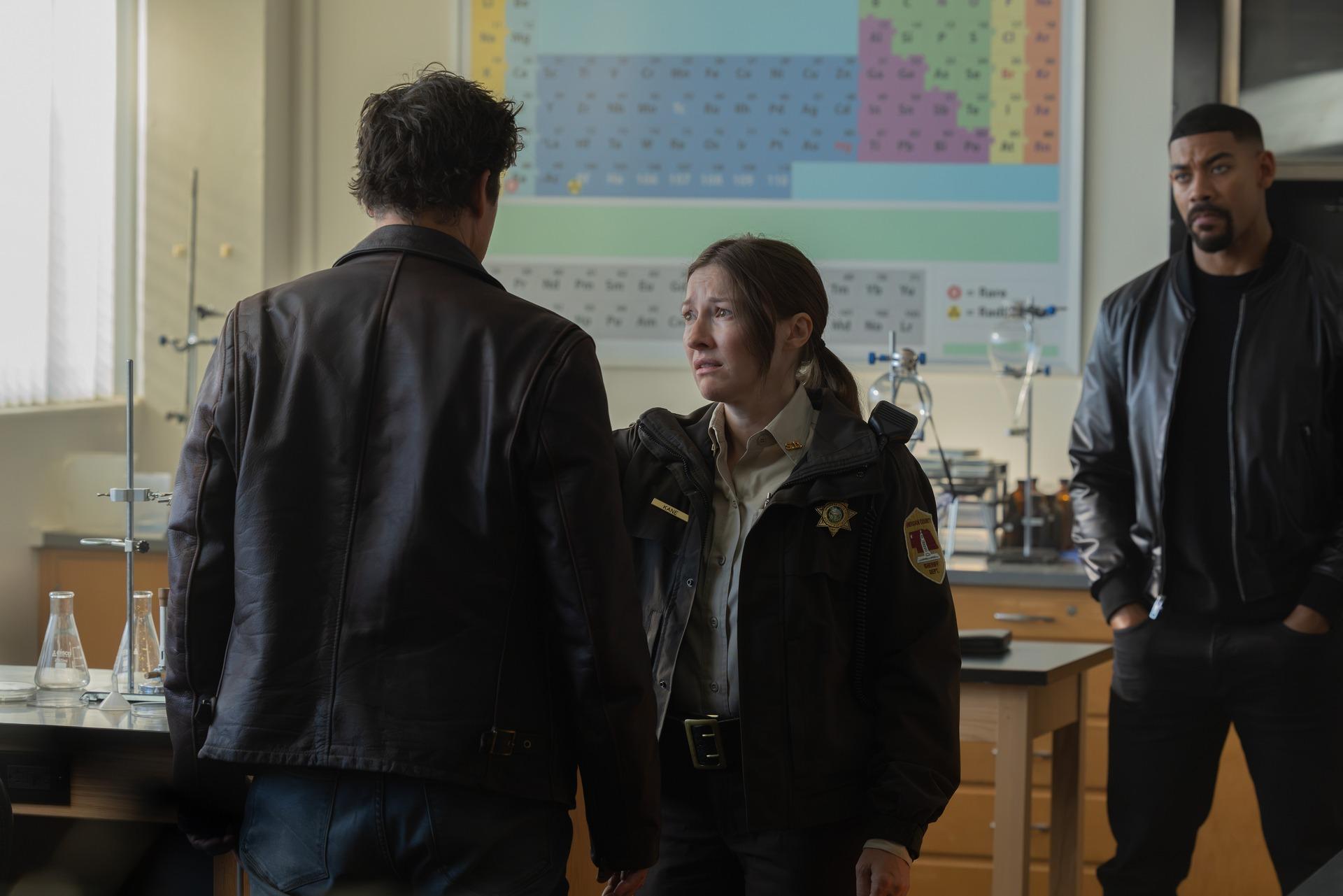
It’s about time we talked about one of the more obvious suspects in the case: Sheriff Kerry Kane. Kerry brings this possibility to light herself in Episode 6, when she urges John to ask her the question she assumes he is contemplating.
“Go ahead, ask me if I killed Hal,” Kerry says. “We were having a relationship. I called you, told you to come all the way here, faked a little cry. Pretty smart move to deflect suspicion.”
But John doesn’t take the bait. “You’re too real to fake cry,” he says in response.
Yet Kerry has lied before. Throughout the first five episodes of the season, she hid the town’s many secrets, including the identity of the Manhunter, from John and Hal. She very convincingly mourned Zoe’s death after she was blown up in Episode 4, despite being well aware that Zoe had survived and that the Manhunter was merely leading Hal and his partner down false trails. (Kerry didn’t go as far as fake crying then, but she was shaking.) When Hal confronted her for these deceptions in Episode 5, Kerry said that she was trying to protect her town and her son, but also that she owed Zoe for giving her a “miracle.”
That “miracle” could’ve been the new pinky that Zoe provided Kerry with years earlier, after the latter had to give up a finger to send back to Gotham as proof of her death. It could’ve been her second chance at life that came as a result of this ruse. Or maybe Noah was the miracle, a child whom Kerry and Billy Macon may otherwise not have been able to conceive.
Kerry has proved time and again that she’s willing to do whatever it takes to protect her town and Noah. If Hal had unearthed any more buried secrets in Rushville, Kerry might’ve chosen to kill him rather than put them all at risk again. And Hal was shot in the head by a 9mm pistol, a standard-issue handgun for law enforcement.
In Episode 7, after the Halogram and Kerry meet for the first time for a touching reunion, the sentient projection shares his own suspicions with John almost as soon as they exit the building: “Fuckin’ A, she killed me!”
“The way she touched my face, the way she was looking at me, I know guilt when I see it,” he continues.
“Do you know love when you see it?” John asks in disbelief.
“OK, fine, she loved me, and she killed me,” the Halogram replies. “Seems very on brand.”
But before the episode ends, the Halogram revises his accusation. He opens up to John and explains the Jordan boys’ legacy, prompting John to ask whether he believes that Hal killed himself, and whether he still thinks that Kerry committed the crime. “Maybe she just found my dead body and tossed the gun away, covered it up to protect me,” the Halogram suggests instead.
Kerry could’ve had a reason to kill Hal, but her love for him seems to be genuine. In her place, the Halogram presents the most likely suspect coming out of Episode 7: Hal Jordan himself.
Hal Jordan
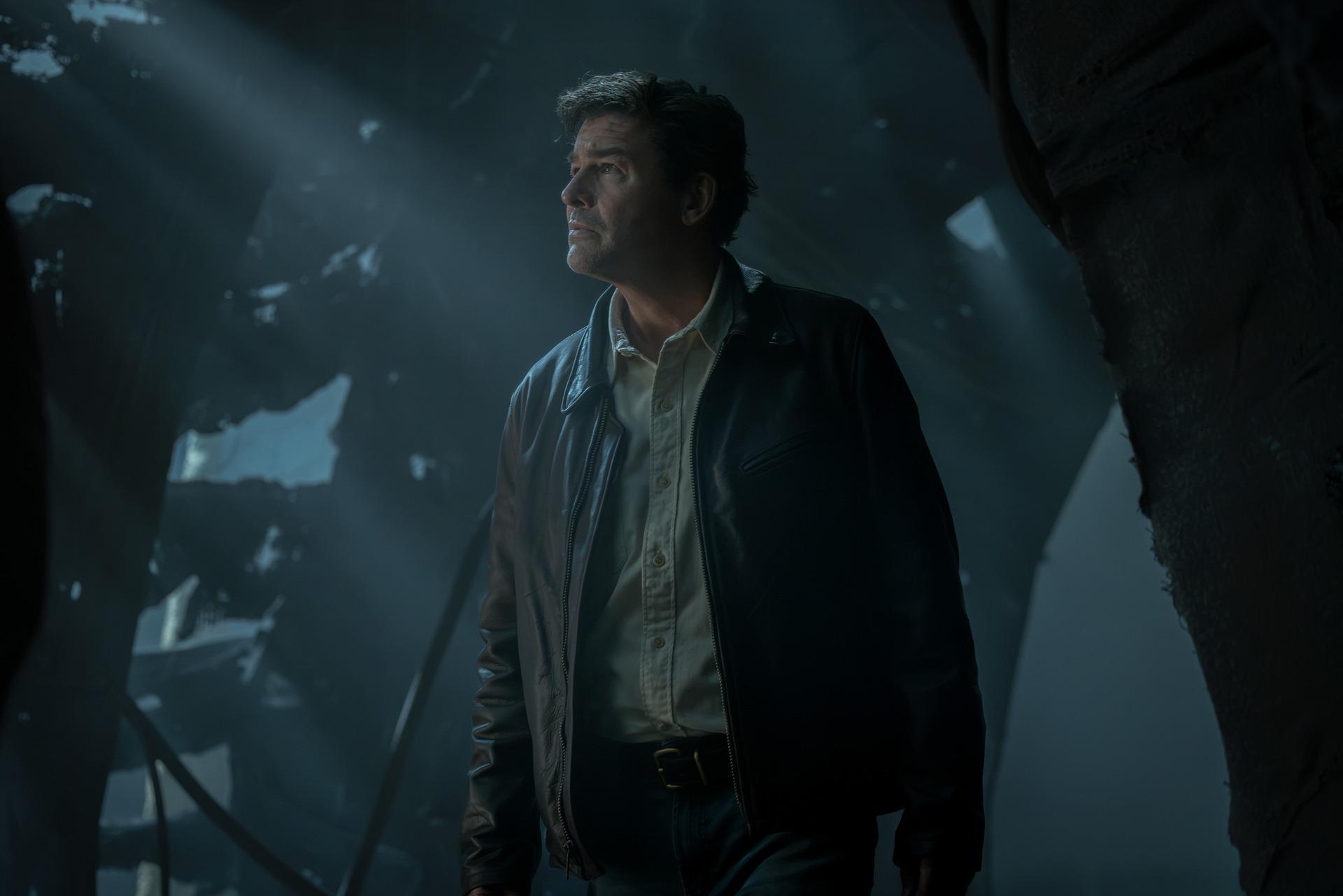
The Halogram offers plenty of insight into the pain that Hal carried throughout his life. In addition to the generational trauma he inherited as part of the Jordan boys’ legacy, Hal lost the ring in a shameful, widely publicized incident. After a lifetime of superhero service, he was cast aside by the Guardians and replaced by a gym teacher with a gold tooth. He endured the better part of a decade in prison, and he returned to live in a town where just about everyone hated him. As the Halogram suggests to John, the key found on his body may lead to a note that offers answers, just as Hal’s father’s note did for him.
Although there are signs that point to Hal’s potential suicide, there are still missing pieces to this mystery. Hal’s insistence that John tell no one that he was in Rushville in Episode 6, just hours before his death, could have been his way of protecting his former trainee from the dangers he knew were coming. The midseason trailer also teased that Hal’s business with the last Manhunter might not have ended on that fateful day in Rushville, as the clip revealed that he had been exposed to the same type of alien technology that Zoe used on John to regrow his burned skin in Episode 5. And it’s no coincidence that the portal in Hal’s lockbox led to the same alien planet where Antaan’s entire race was wiped out by the Manhunters, and where Sinestro now hides with a hidden agenda that Hal might’ve had a part in.
For as much as “The Jordan Boys’ Legacy” is about Hal’s painful past, it’s also about his unshakable fortitude. Even after his dad told him it’d be too exhausting to hold on to that game ball forever, the kid went back for it anyway. Hal might not have given up on his lost power ring easily either, or whatever reason he had for returning to Rushville beyond his romantic pursuit of Sheriff Kane.
If Lindelof and the other Lanterns creators’ hopes were to make Hal’s death feel earned by the end of the season, they’re well on their way. But the success of the season’s structure will come down to how this investigation is tied up in next week’s finale.

Daniel Chin
Daniel writes about TV, film, and scattered topics in sports that usually involve the New York Knicks. He often covers the never-ending cycle of superhero content and other areas of nerd culture and fandom. He is based in Brooklyn.




Leave a Reply